
Last updated September 23, 2026
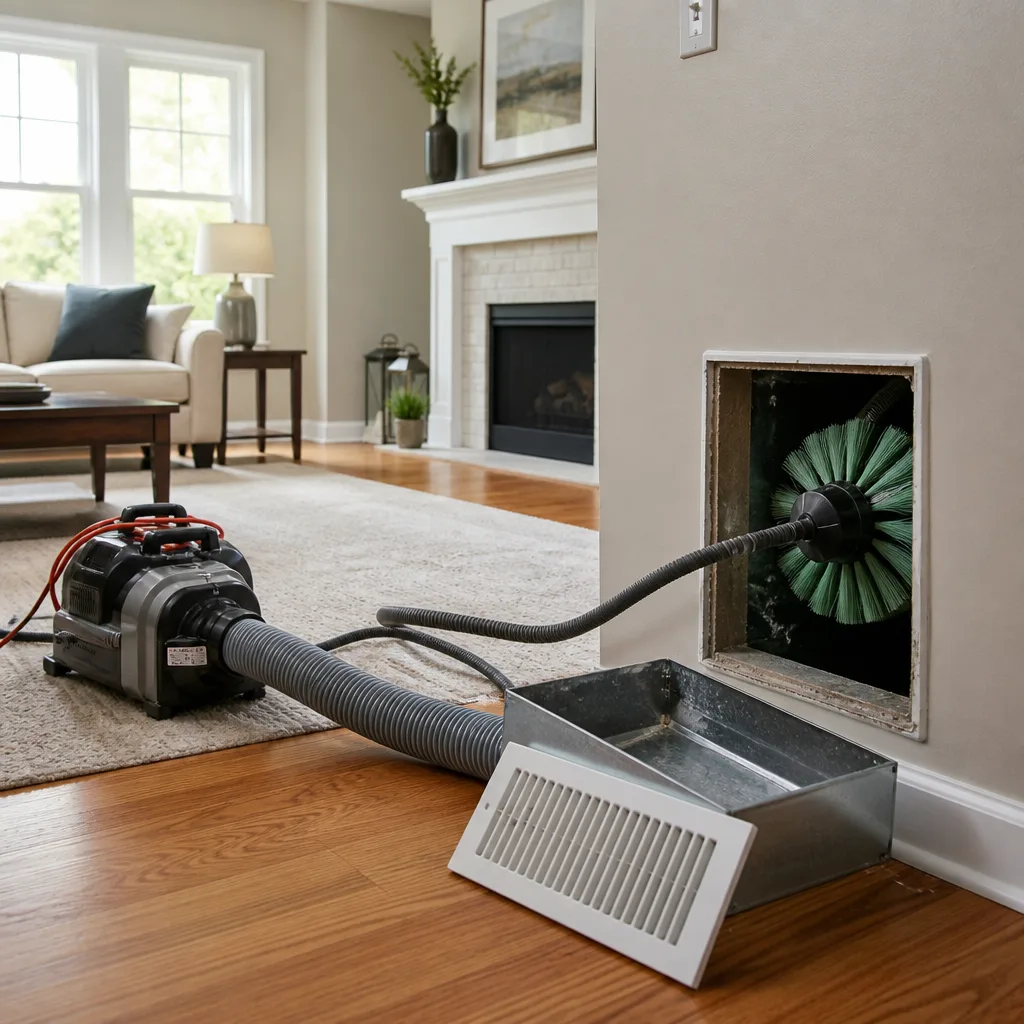
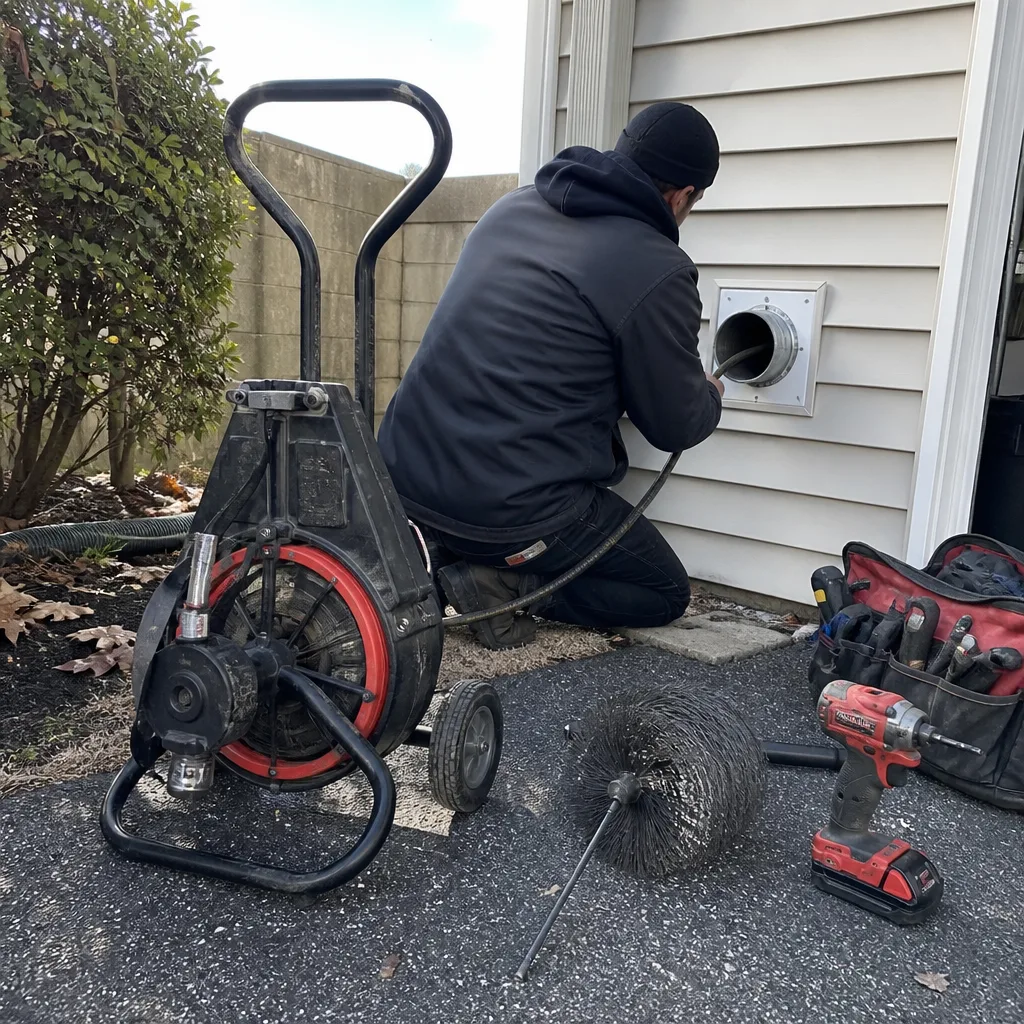
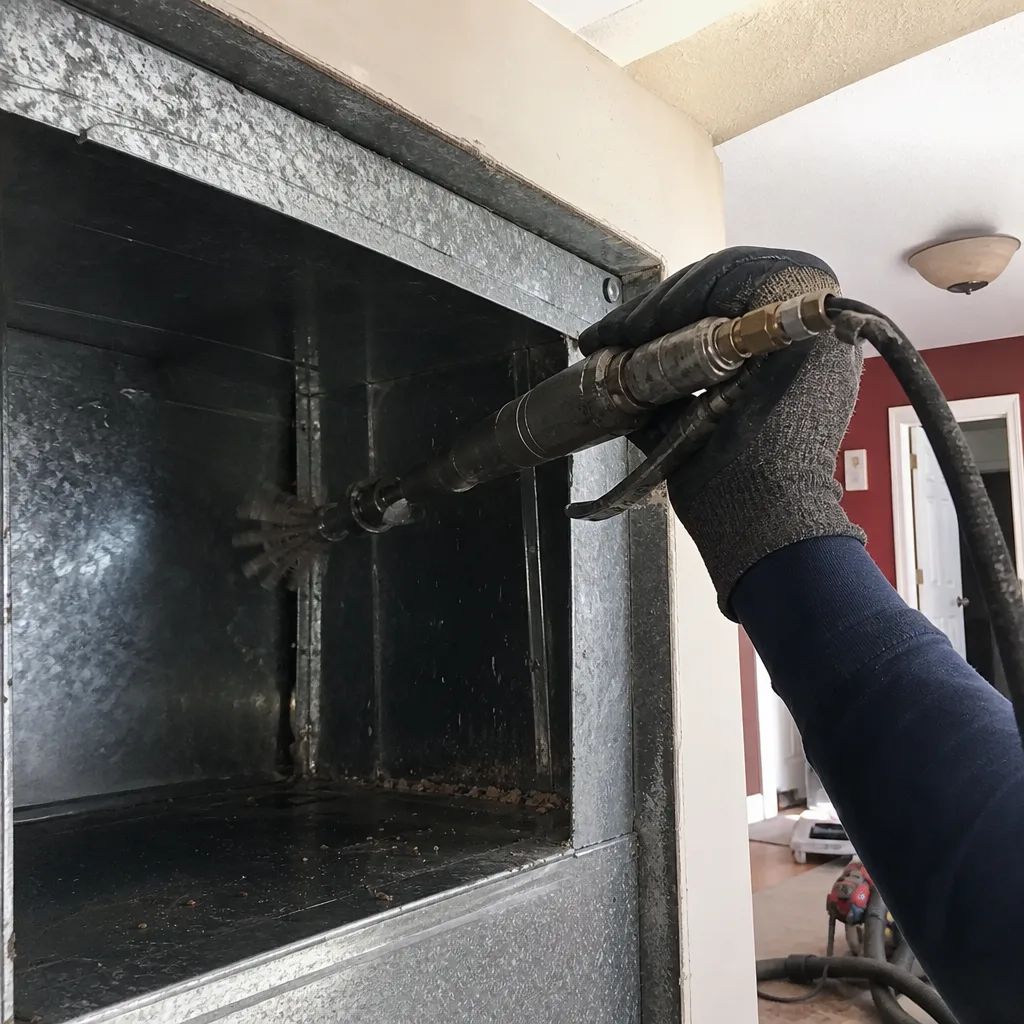
Whole-system duct and dryer vent check with before-and-after photos - you see exactly what came out of your vents
That "$99 whole-house special" is a bait ad - the real number appears once they are in your hallway, or the "clean" is a shop-vac at the register. We photograph the inside of your ducts before and after instead.
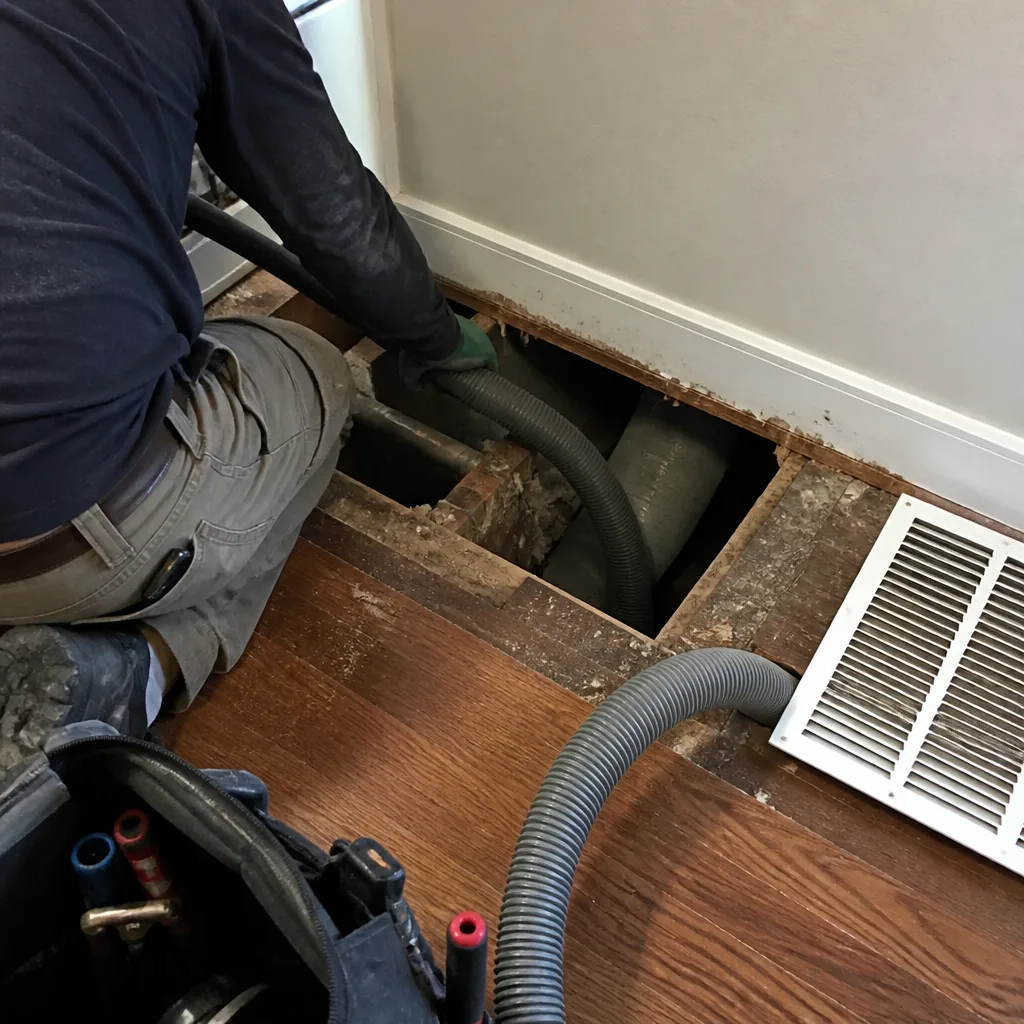 Before
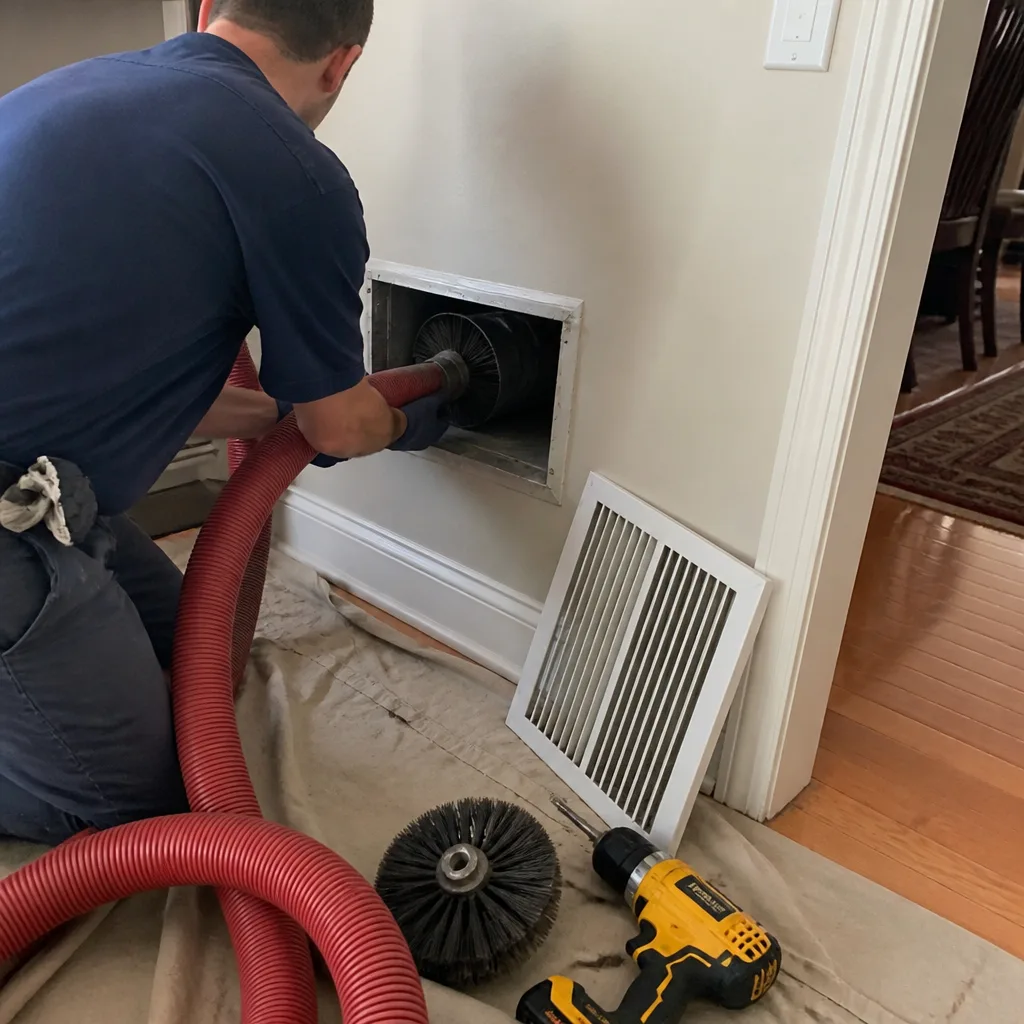 After
After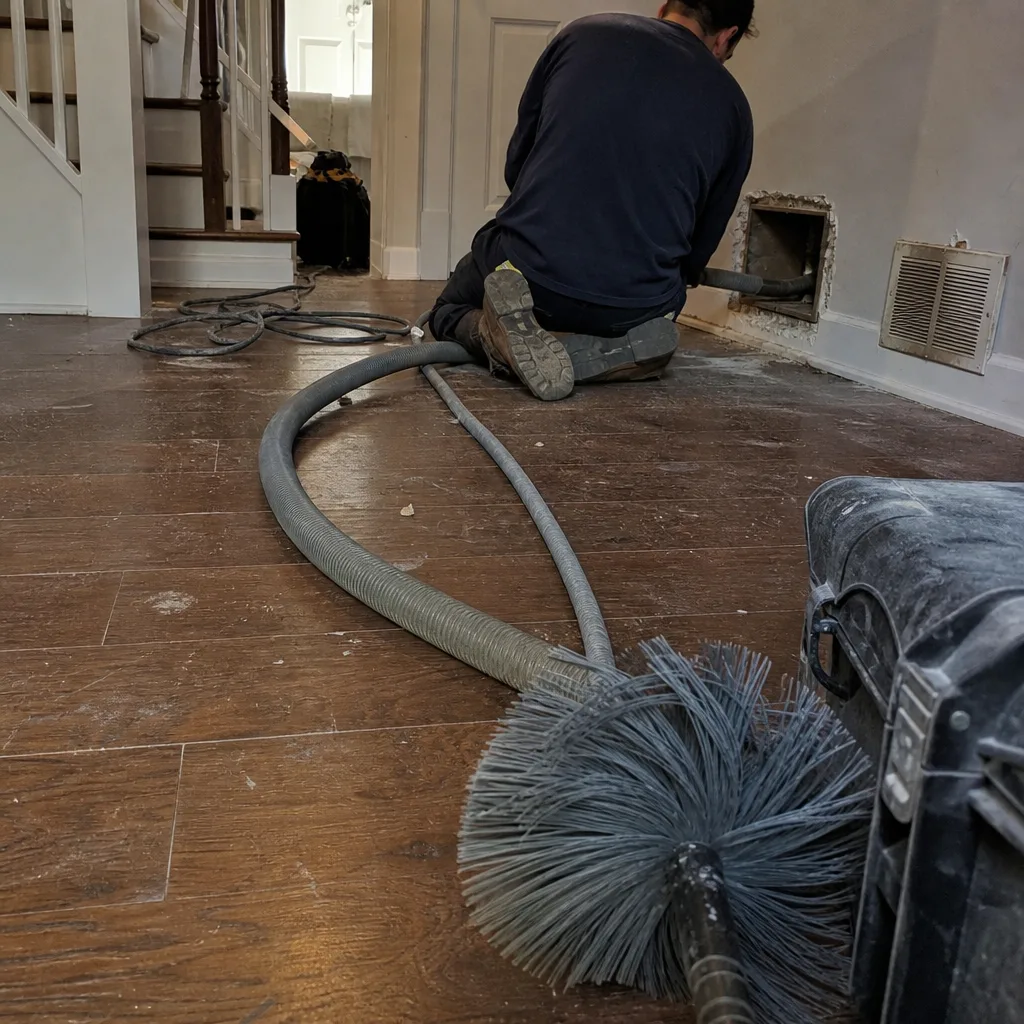 Before
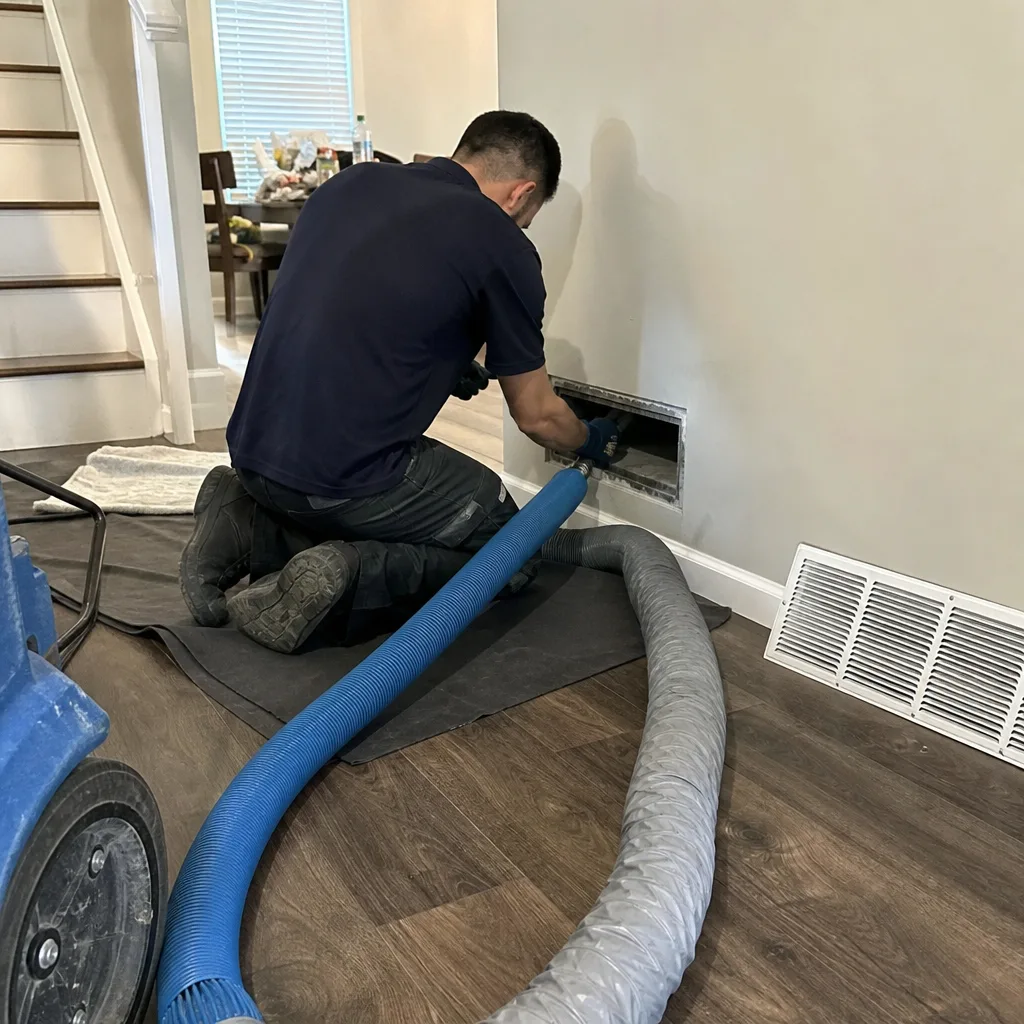 After
After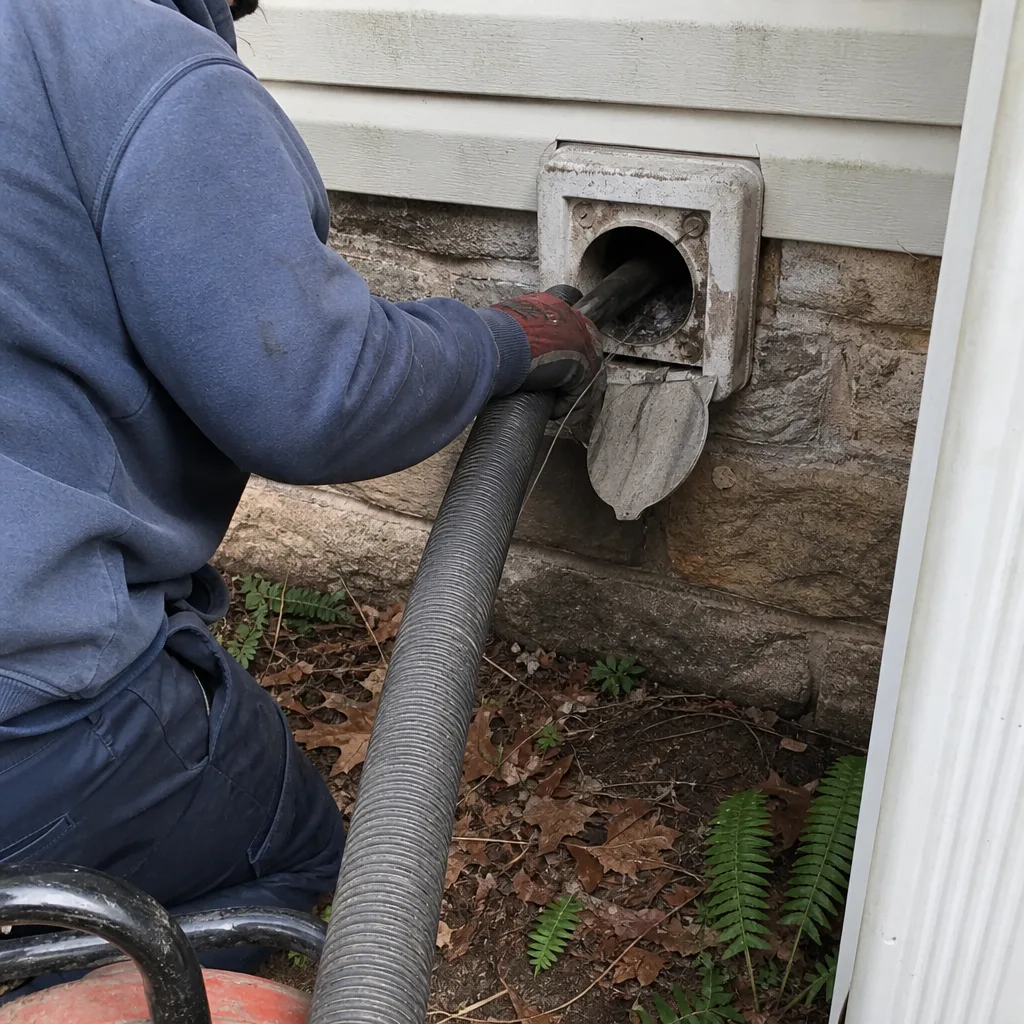 Before
 After
AfterAir Duct Cleaning Maintenance Checklist for Rockville Homeowners
Changing your filter every 90 days without ever looking at what’s collecting on it is the duct-maintenance equivalent of checking the oil light instead of the dipstick - you’re reacting to a failure signal instead of tracking a condition. In Rockville, where Montgomery County’s humidity swings from bone-dry February air to sticky July afternoons that top 80 percent, the debris collecting inside your ductwork tells a story that calendar reminders alone cannot read. This guide gives you a repeatable inspection routine you can perform yourself, with nothing more than a flashlight, a smartphone camera, and a notebook. You’ll learn what to photograph, what to log, and which observations mean it’s time for professional service - before your HVAC system starts sending distress signals through your energy bill or your indoor air quality.
Quick Answer
A complete air duct maintenance checklist for Rockville homeowners includes monthly register inspections, filter condition logging at every change, seasonal humidity-aware checks of accessible ductwork, and annual documentation of damper function, flex duct integrity, and seal condition. Perform these checks yourself to track actual conditions; schedule professional Air Duct Cleaning when you observe debris buildup beyond normal dust accumulation, musty odors from supply vents, or visible mold anywhere in the system. In Rockville’s climate, the highest-risk windows for microbial growth run from late May through September and again during January thaws when condensation forms in unconditioned attic spaces.
Table of Contents
- The Room-by-Room Register Inspection You Can Photograph Yourself
- How to Log Filter Condition and What It Predicts
- Montgomery County’s Humidity Calendar and Your Risk Windows
- Three Mechanical Checkpoints for Non-Technicians
- Building a Home Maintenance File That Makes Contractor Comparisons Meaningful
- What Professional Air Duct Cleaning Costs in Rockville
- Common Mistakes to Avoid
- When to Call a Professional
- Frequently Asked Questions
 Before
 After
AfterThe Room-by-Room Register Inspection You Can Photograph Yourself
Every register in your home is a sampling port. What collects on its surface mirrors, in rough proportion, what is circulating through the connected duct run - the continuous channel of metal or flexible tubing that carries conditioned air from your air handler to that room. A monthly register inspection takes ten minutes and creates a visual record no contractor can dispute later.
Here’s the procedure we teach homeowners who ask what they can monitor between visits:
- Remove the register cover. Most pull straight out or lift off after releasing two spring clips. Set it on a white sheet of paper under good light.
- Photograph the underside. Use your phone’s flash. Capture the full surface, not just the dirtiest corner. The underside collects what the top side hides.
- Note the debris pattern. Even, light-gray dust across the entire surface is normal. Dark streaks, clumped material, or greasy residue indicate a problem upstream.
- Shine a flashlight into the duct opening. Photograph what you can see. In Rockville’s older neighborhoods like Twinbrook or Lincoln Park, we’ve found that galvanized steel ducts from the 1960s and 70s show surface corrosion that traps debris; the photo lets you distinguish new buildup from old scarring.
- Reinstall and log the room, date, and any odor. A musty smell from a supply vent, especially in basement-level rooms, is a flag for moisture intrusion.
What you’re looking for is change over time, not absolute cleanliness. A register that looked like this in March and looks like that in June is telling you something. A register that always looks the same, even if dusty, is stable.
Normal dust accumulation in Rockville is light gray, dry, and evenly distributed. It brushes off with a fingertip. Debris that warrants a call includes:
- Dark, greasy buildup that smears when touched - often indicates cooking oil vapor that has bypassed the range hood and condensed in the duct
- Clumped or stringy material - possible insulation breakdown or pest activity
- Black, sooty deposits - combustion byproduct backdraft, especially critical if you have a gas furnace or water heater sharing the airspace
- Any visible moisture or water staining - Montgomery County’s summer humidity makes this a priority flag
Store these photos in a dedicated album. When you do call for service, you have evidence of progression, not just a current state. This is the same documentation principle we apply on every Air Duct Cleaning in Rockville job: the photo record exists so you can verify, not just trust.
How to Log Filter Condition and What It Predicts
The filter is the one component every homeowner touches, yet almost no one documents what they find. That documentation gap wastes information. The weight, color distribution, and odor of a spent filter predict conditions inside the ductwork with surprising accuracy.
At each filter change - monthly during heavy-use seasons, every 60-90 days otherwise - record these four observations:
- Weight. A new 1-inch pleated filter weighs roughly 8-10 ounces. A heavily loaded filter can exceed a pound. The difference is captured particulate. If your filter weight doubles between changes, your duct system is either pulling from a dust source or the filter is undersized for your runtime hours.
- Color distribution. Even gray loading across the full media surface means the filter is doing its job and air is distributing evenly. A dark band across the bottom third indicates the filter is bowing or the return grille is undersized, creating a high-velocity channel. Dark spots in isolated patches suggest air is bypassing the filter through gaps in the frame.
- Odor. Neutral is normal. Musty or sour indicates microbial activity somewhere in the return path. Acrid or oily suggests VOC sources or combustion proximity. In Rockville’s newer construction near King Farm or Fallsgrove, we’ve traced “new house smell” filters to off-gassing from flexible duct adhesive that degrades under heat.
- Physical integrity. Torn media, collapsed pleats, or separated frames mean the filter has failed structurally and unfiltered air has passed through.
What does this predict about duct interior condition? A filter that loads heavily and evenly suggests the duct system is intact but the home has high particulate generation - pets, renovation residue, or outdoor dust intrusion through envelope leaks. A filter that loads unevenly or tears repeatedly signals pressure imbalances that scour debris from duct walls and deposit it unevenly. The former needs more frequent filter changes; the latter needs duct inspection for leaks or restrictions.
We recommend a simple notebook entry:
Date / Filter size & MERV / Weight (oz) / Color pattern / Odor / Notes
After three changes, you have a baseline. After six, you have trend data. When you call for CleanRun Air Duct Cleaning Rockville home service, that trend data lets us target our inspection instead of treating every system identically.
Montgomery County’s Humidity Calendar and Your Risk Windows
Rockville sits in the Piedmont climate zone, and Montgomery County’s seasonal humidity pattern creates specific windows when duct interiors are vulnerable to microbial growth. Understanding that calendar lets you time inspections when they matter most, not just when your phone reminds you.
The critical periods are:
- Late May through September: Outdoor relative humidity routinely exceeds 70 percent, and air conditioning runs long enough that supply plenums - the central distribution box where cooled air first enters the duct network - operate below the dew point of surrounding attic or crawl space air. Condensation on duct exteriors is visible; condensation on duct interiors, where cold supply air meets humid return air at mixing zones, is not. This is the peak window for mold spore germination on debris-coated surfaces.
- January thaws: Rockville’s winter temperature swings can push attic spaces from 20°F to 50°F in 48 hours. Metal ductwork sweats as warm, humid indoor air contacts cold surfaces. We’ve documented this pattern particularly in homes near Rock Creek and its tributaries, where groundwater keeps crawl space humidity elevated even in winter.
- Shoulder seasons (April, October): Minimal HVAC runtime means reduced air circulation through ducts. Debris that accumulated during heavy-use seasons sits undisturbed, and humidity equalizes slowly. These are good months for the register inspection routine described above - conditions are stable, and any growth from summer has had time to become visible.
During high-risk windows, extend your register inspection to include a sniff test at startup. When your AC first cycles on after sitting overnight, stand near a supply vent. A brief musty burst that dissipates in minutes suggests microbial growth on the evaporator coil or in the plenum, not necessarily deep in the ductwork. A persistent musty odor throughout the cooling cycle points to contamination distributed through the system.
Montgomery County’s climate also means that “clean” is not a permanent state. A duct system cleaned in October can accumulate enough debris by the following July to support growth if humidity and temperature align. This is why we emphasize condition-based maintenance over calendar-based scheduling - and why our HVAC Cleaning in Rockville includes evaporator coil and plenum inspection as standard, not as an upsell.
Three Mechanical Checkpoints for Non-Technicians
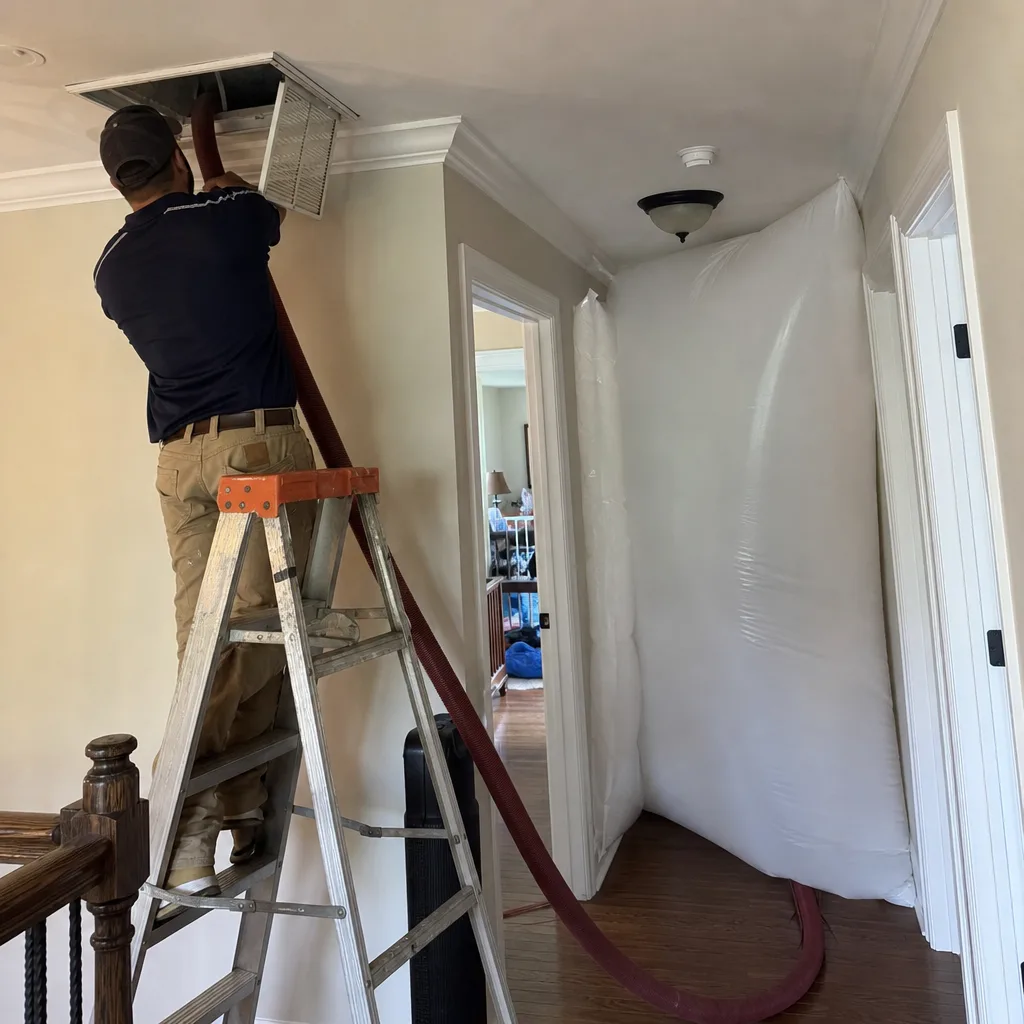
Some duct system problems are mechanical, not hygienic. Three checkpoints require no tools beyond a flashlight and your hands, and catching them early prevents the pressure imbalances that accelerate debris accumulation.
Checkpoint 1: Damper Function
Manual dampers - the flat metal plates inside round duct branches that control airflow to individual zones - should move freely and seat fully in both open and closed positions. They’re typically accessible at the main trunk line in basement or utility areas. A stuck damper forces air to find alternative paths, increasing velocity in some ducts and creating dead zones in others. Dead zones deposit debris; high-velocity zones scour it loose. Both conditions accelerate system contamination.
Check by hand: the damper handle (a small metal tab or rod) should rotate 90 degrees with moderate resistance. If it’s frozen, don’t force it - the blade may be rusted to the shaft, and excessive torque can tear the duct seam. Note the location and call for service.
Checkpoint 2: Flex Duct Integrity
Flexible duct - the ribbed, insulated tubing common in Rockville additions and retrofits from the 1990s onward - degrades from the inside out. The inner liner is a plastic film that becomes brittle with heat and UV exposure where it passes through unconditioned spaces. External damage is obvious; internal liner separation is not, until the insulation layer begins shedding fibers into the airstream.
Inspect accessible flex duct for:
- Sagging between supports - the recommended support interval is 5 feet, but we’ve found 8-10 foot spans in older Rockville homes that allow low points where condensation pools
- Crushed or kinked sections, often from storage items pushed against basement runs
- Tape or mastic failure at connections to metal trunk lines - the joint is a pressure leak point that draws in attic or crawl space air
A soft spot or depression in the outer insulation, with no corresponding external damage, suggests inner liner collapse. This is a replacement item, not a cleaning issue.
Checkpoint 3: Accessible Seal Condition
Metal duct seams and connections should be sealed with mastic (a thick, paste-like compound) or foil tape rated for HVAC use. Duct tape, despite the name, fails within months in temperature-cycling conditions. In Rockville’s climate, we’ve found failed seals are most common at trunk-line branches and at the air handler connection, where thermal expansion is greatest.
Check what you can see without disassembling anything. Gaps at seams, blown-off tape, or mastic that has cracked and separated indicate leakage. A leak on the return side pulls unfiltered air from attics or crawl spaces; a leak on the supply side pressurizes those spaces and wastes conditioned air. Both conditions increase particulate loading and energy cost.
Document what you find with photos and notes. These three checkpoints, performed annually, take 20 minutes and identify problems that no amount of duct cleaning can correct.
Building a Home Maintenance File That Makes Contractor Comparisons Meaningful
The home service industry runs on asymmetry: the contractor sees inside your ducts, and you do not. That information gap is why bait-and-switch pricing persists - a low initial quote escalates once “unexpected conditions” are discovered. A well-maintained home file reverses that asymmetry. It gives you documented evidence that makes any contractor’s before-and-after comparison accountable to something other than their own say-so.
Your file should contain:
- Register inspection photos, dated and room-labeled, from the routine described in the first section
- Filter logs, with weight and observation data from each change
- Mechanical checkpoint notes, with photos of damper positions, flex duct condition, and visible seal status
- All prior service records, including scope of work, equipment used, and - critically - any photo documentation provided by the contractor
- Energy bills, summarized by heating and cooling degree-day, to correlate consumption with system conditions
When you request service, present this file. A competent technician will use it to focus inspection; an evasive one will find reasons to dismiss it. That reaction itself is diagnostic.
The gold standard for contractor documentation is what CleanRun delivers on every job: a written scope agreed before work starts, under Haven Standard Clause 1, and a Documented Photo Record of every duct run before and after service. When you have your own file, you can hold any contractor’s documentation against an independent baseline. The photo they show you of “your” duct interior should match the register photos you’ve been taking. If it doesn’t - if the debris pattern, duct material, or construction era looks inconsistent - you have grounds to question what was actually photographed.
This practice of mutual documentation is rare in the industry. CleanRun established it in 2013 because we had seen too many customers pay for work they could not verify. Our photo records are delivered as standard, not as a premium add-on, because accountability should not be optional.
What Professional Air Duct Cleaning Costs in Rockville
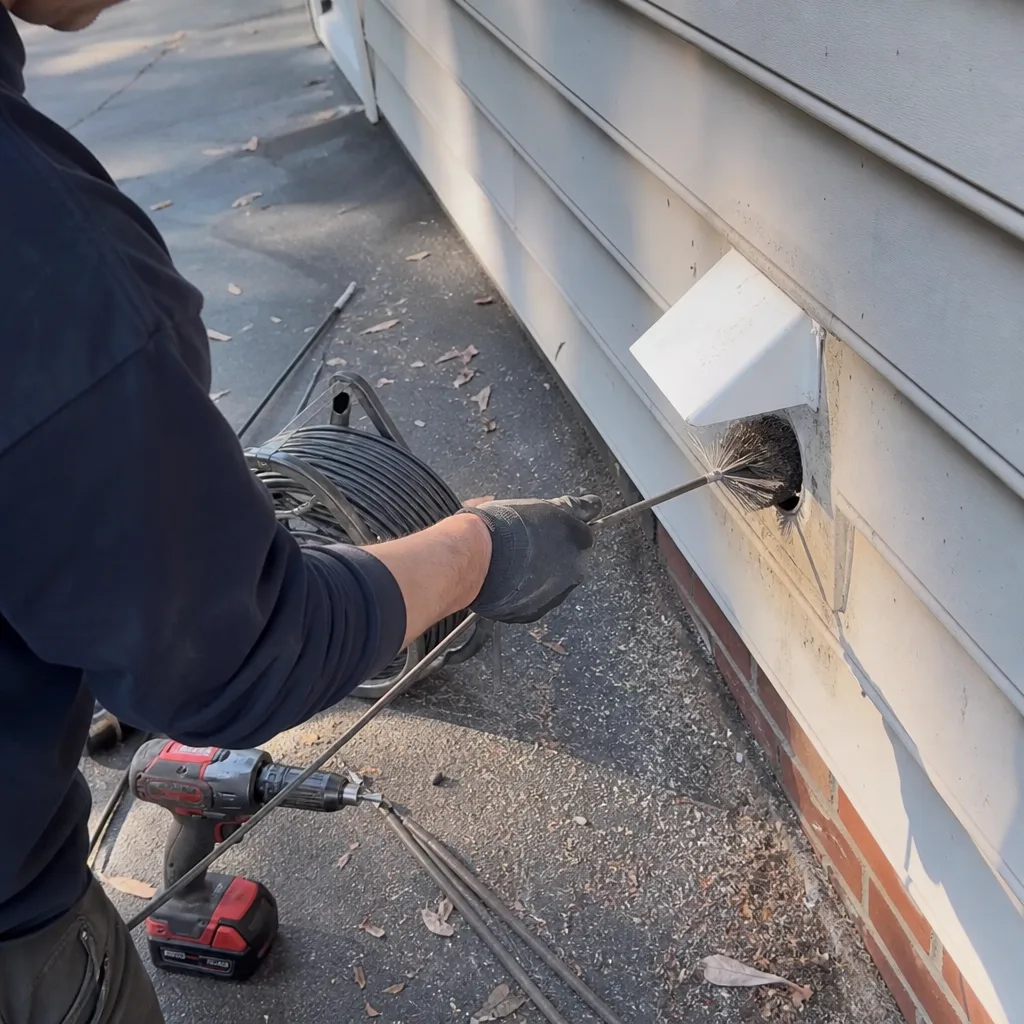
Understanding what professional service should cost helps you evaluate quotes that range from $79 coupons to four-figure proposals. The spread reflects genuine differences in scope, equipment, and accountability - but also a lot of opacity that benefits the seller.
In the Rockville market, whole-system air duct cleaning for a typical single-family home (1,800-2,800 square feet, one HVAC system) generally falls in these ranges:
| Service Component | Typical Range |
|---|---|
| Complete supply and return duct cleaning (negative-pressure extraction) | $450 - $750 |
| Evaporator coil and plenum cleaning | $150 - $300 |
| Dryer vent cleaning (separate service, but often bundled) | $120 - $200 |
| Duct sealing with mastic (per accessible seam) | $15 - $40 |
| Sanitizing treatment (if microbial growth confirmed) | $100 - $250 |
These are whole-system prices, not per-vent teaser rates. The $79 coupon model typically covers a limited number of supply registers with a portable vacuum, then presents additional charges for returns, trunk lines, and what they term “deep cleaning.” By Haven Standard Clause 1, CleanRun delivers one flat price per system, agreed in writing before any panel comes off. That price covers all duct runs, the plenum, and the photo documentation. No per-vent arithmetic, no mid-job revisions.
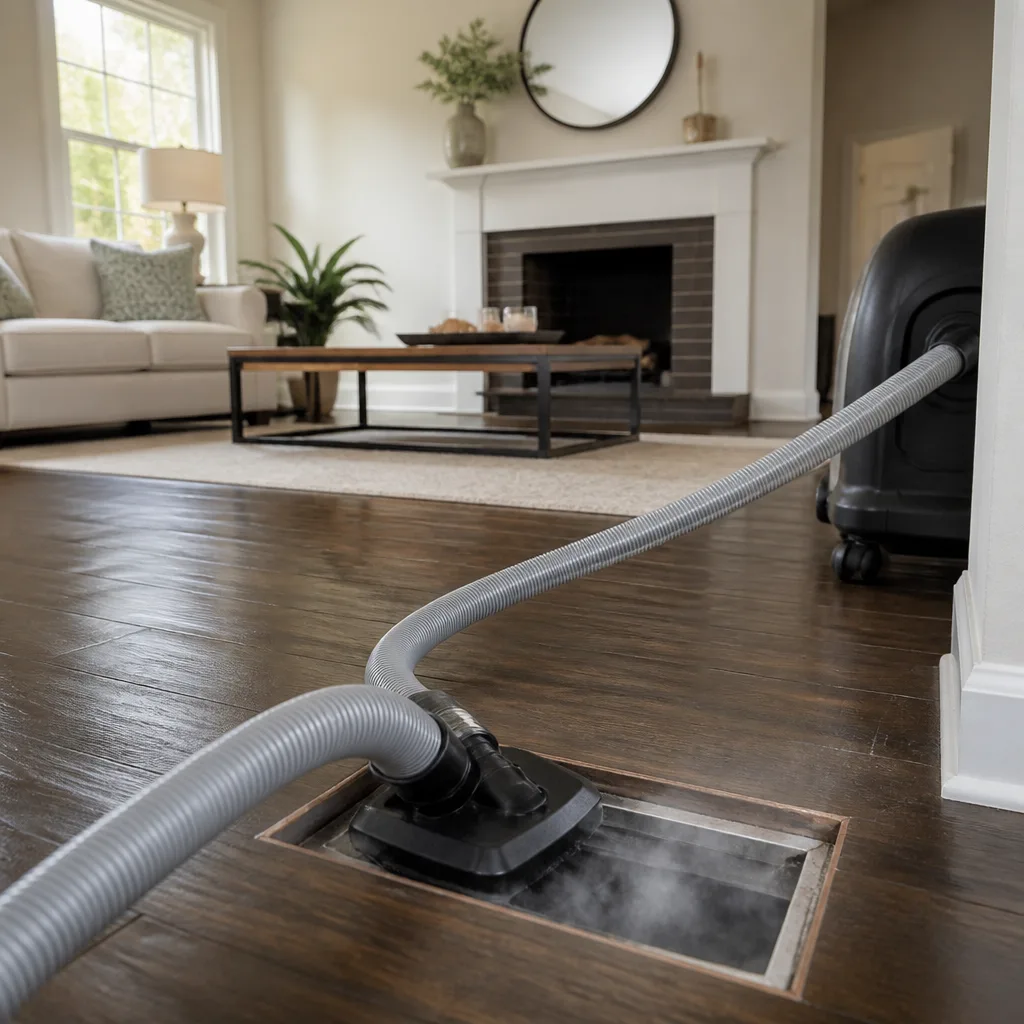
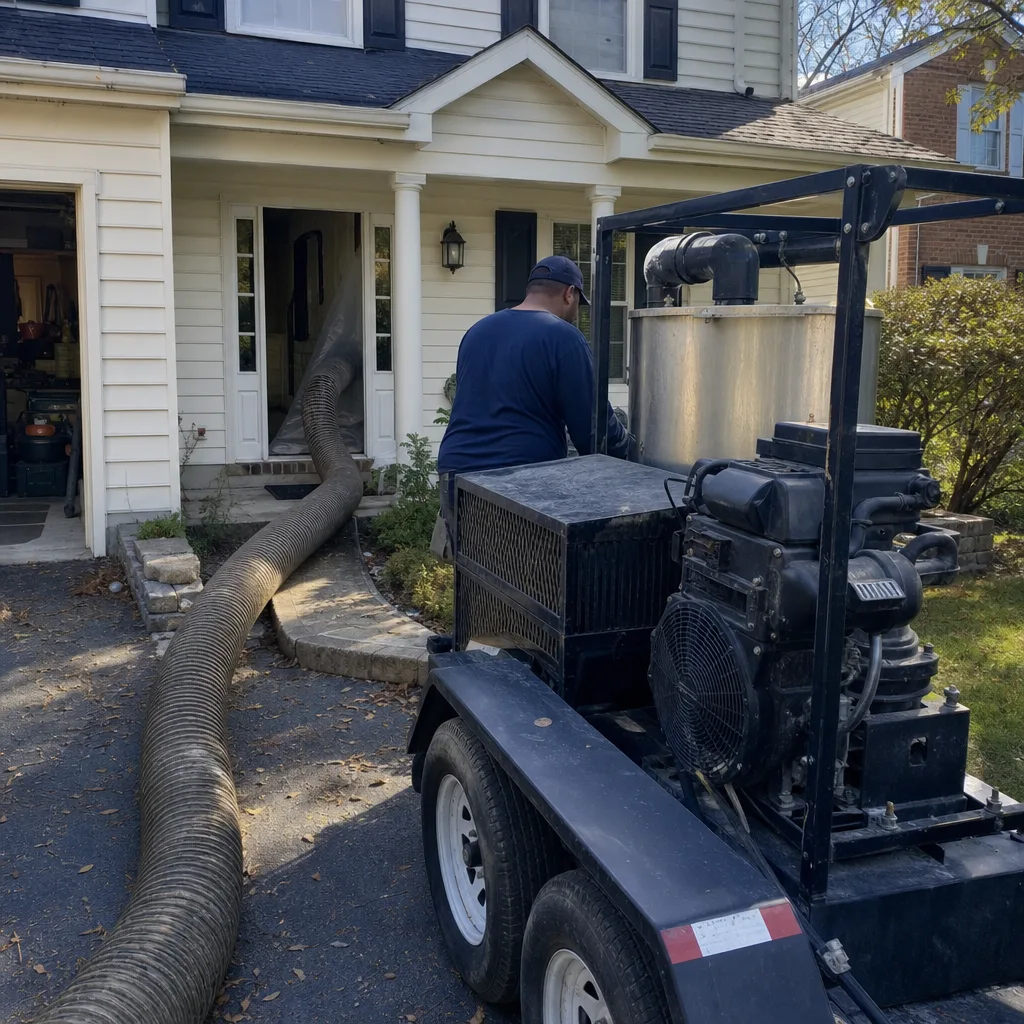
Equipment matters for verification. Professional-grade negative-pressure extraction systems from manufacturers like Nikro and Abatement Technologies move sufficient air volume to dislodge adhered debris and capture it in HEPA-filtered collection. Portable shop vacuums, even powerful ones, cannot generate the airflow velocity or containment negative pressure that full-size truck-mounted or dedicated portable systems achieve. When evaluating a quote, ask what equipment will be used and look up the manufacturer specifications yourself.
The final cost determinant is deliverables. A quote that produces only a clean-sounding verbal report leaves you with no evidence the work occurred. A quote that includes dated, labeled before-and-after photos of every duct run - the CleanRun standard since 2013 - gives you documentation that outlasts the technician’s visit.
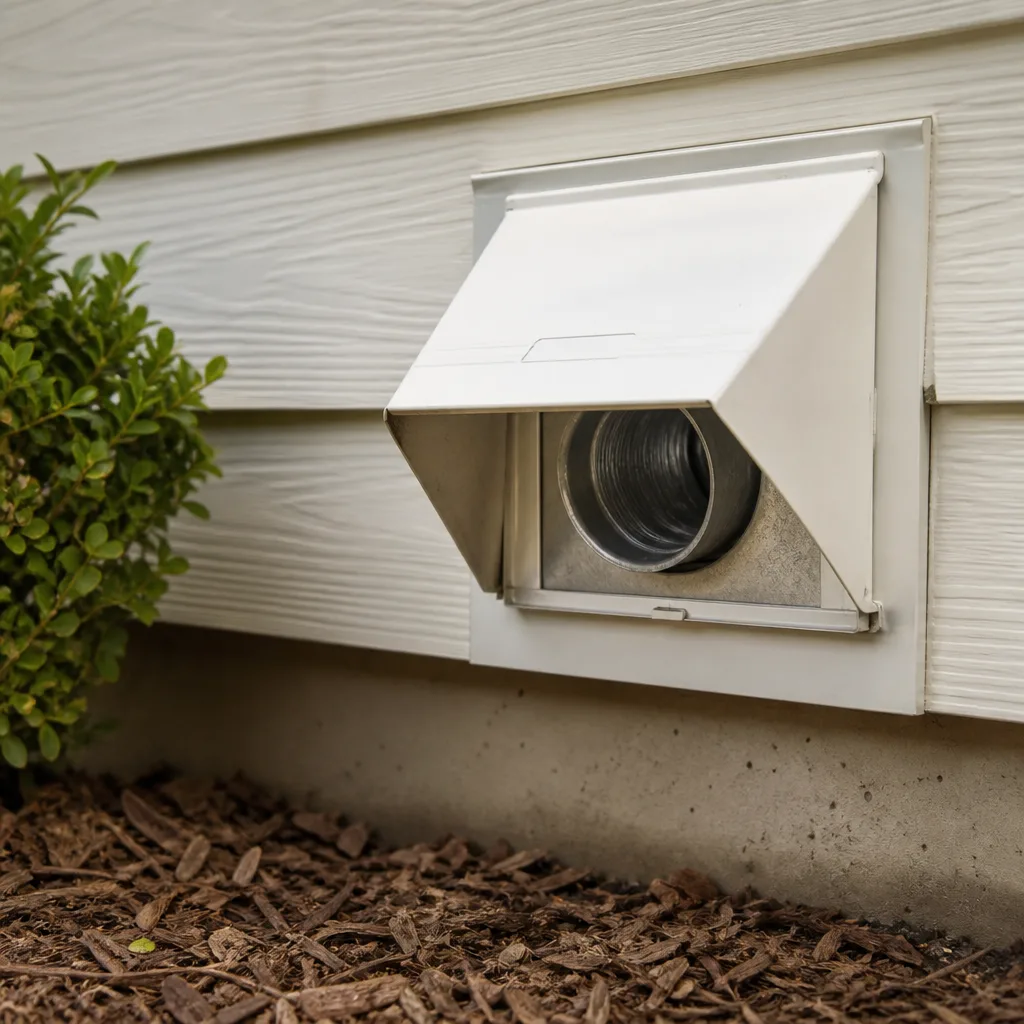
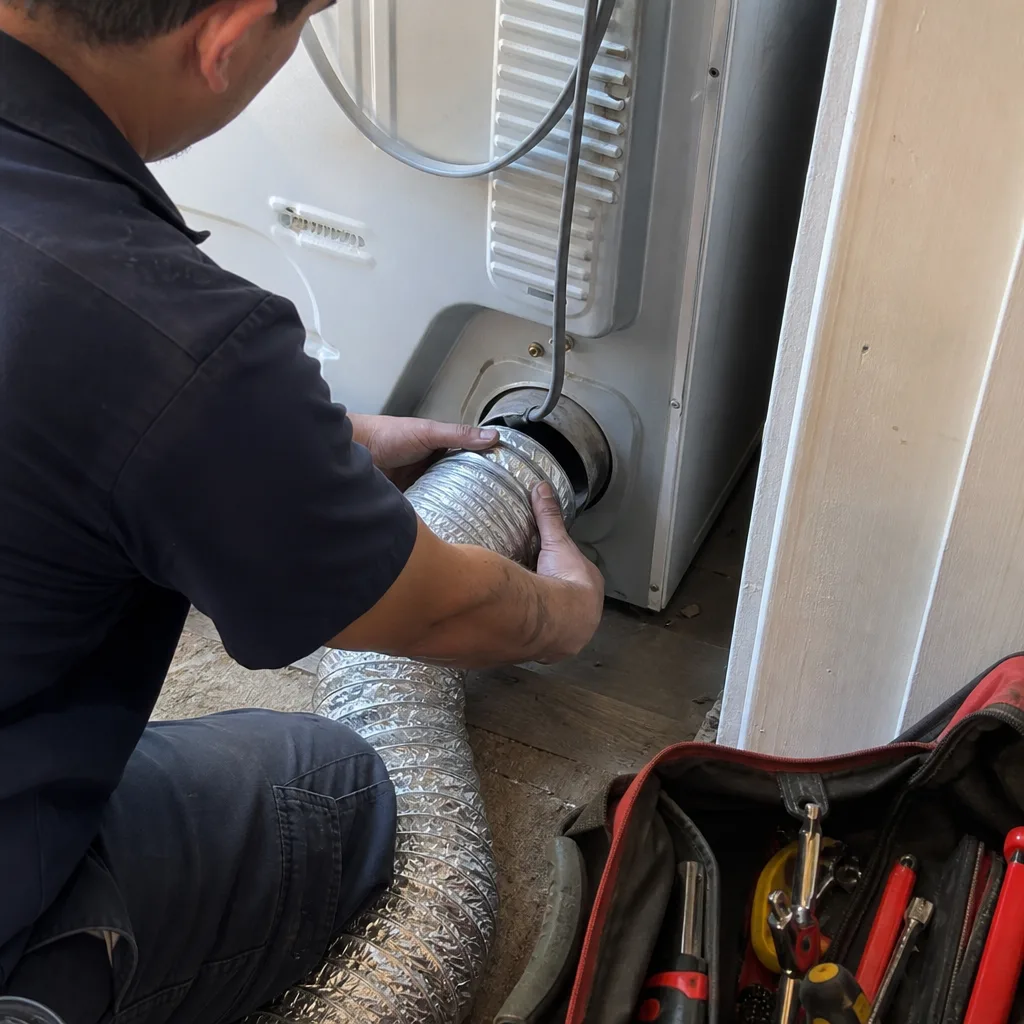
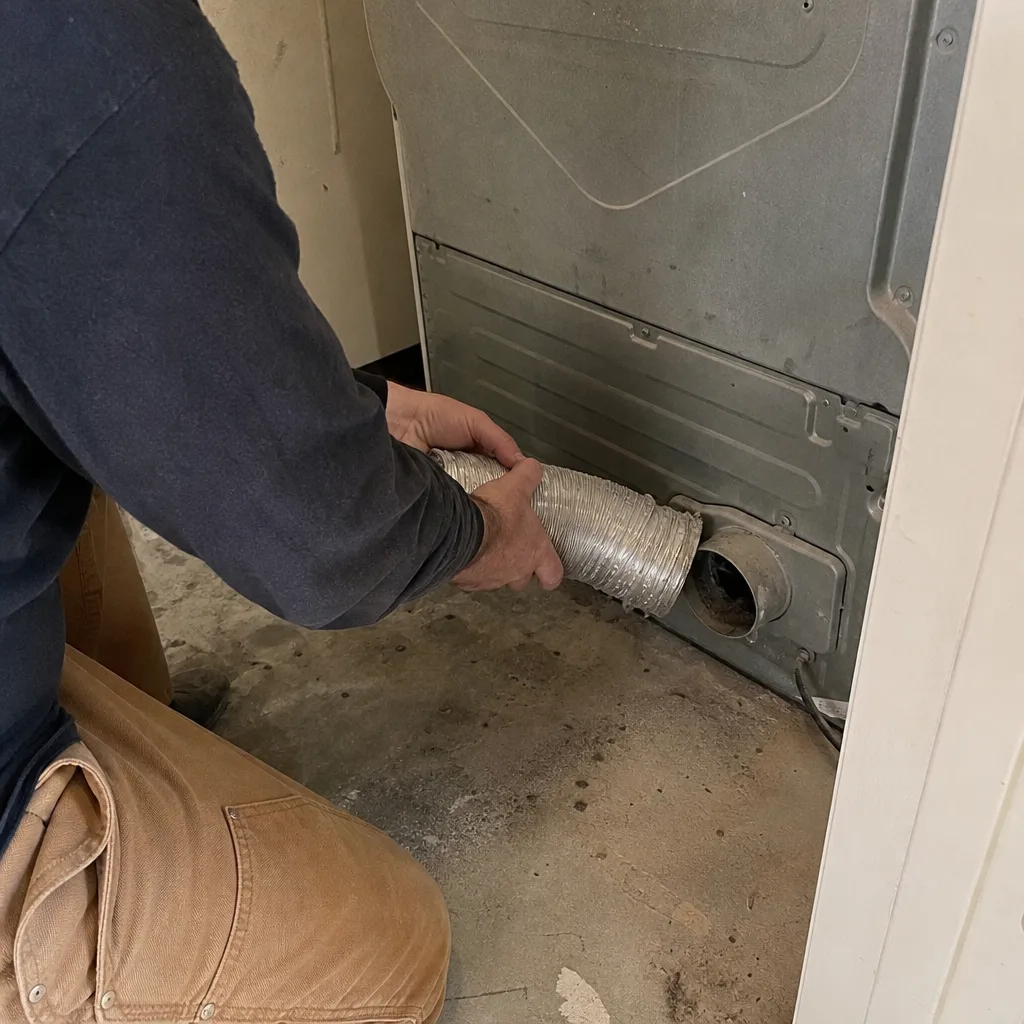
For Dryer Vent Cleaning in Rockville, which is often sensibly bundled with duct cleaning, the same pricing principles apply: flat rate, written upfront, with photo verification of lint removal from the full vent path to exterior termination.
Common Mistakes to Avoid
- Scheduling cleaning by calendar instead of condition. “Every three years” is arbitrary. A home with multiple pets, recent renovation, or envelope air leaks may need service in 18 months; a well-sealed home with minimal particulate sources may go five years between cleanings. Use your register photos and filter logs to decide.
- Ignoring the return side. Homeowners fixate on supply vents because they feel the air. But the return path - the larger ducts pulling air back to the air handler - typically has higher debris loading because it operates at lower pressure, allowing particles to settle. Inspect return grilles with the same attention you give supply registers.
- Using the wrong filter. High-MERV filters (MERV 13 and above) capture smaller particles but increase system pressure drop. If your air handler was not designed for that resistance, the filter loads faster, bypasses more air, and can actually reduce air quality. Check your equipment manual or match the MERV rating of the original equipment filter.
- Sealing registers during off-seasons. Some homeowners close bedroom vents in summer to redirect cooling, or cover basement registers in winter. This increases pressure in sealed duct sections and can force conditioned air through leaks into wall cavities or attics. It also creates stagnant zones where humidity concentrates.
- Accepting “mold” diagnoses without lab confirmation. Dark staining on duct interiors is often dust, rust, or degraded insulation adhesive. True mold identification requires sampling and analysis. In Rockville, Montgomery County’s Department of Environmental Protection can direct homeowners to certified indoor air quality assessors if health concerns exist.
- Neglecting the dryer vent. A clogged dryer vent increases humidity in the laundry area and adjacent ductwork, and creates a fire hazard. The lint that bypasses the screen is finer than most HVAC filter media and distributes readily through shared chase spaces.
When to Call a Professional
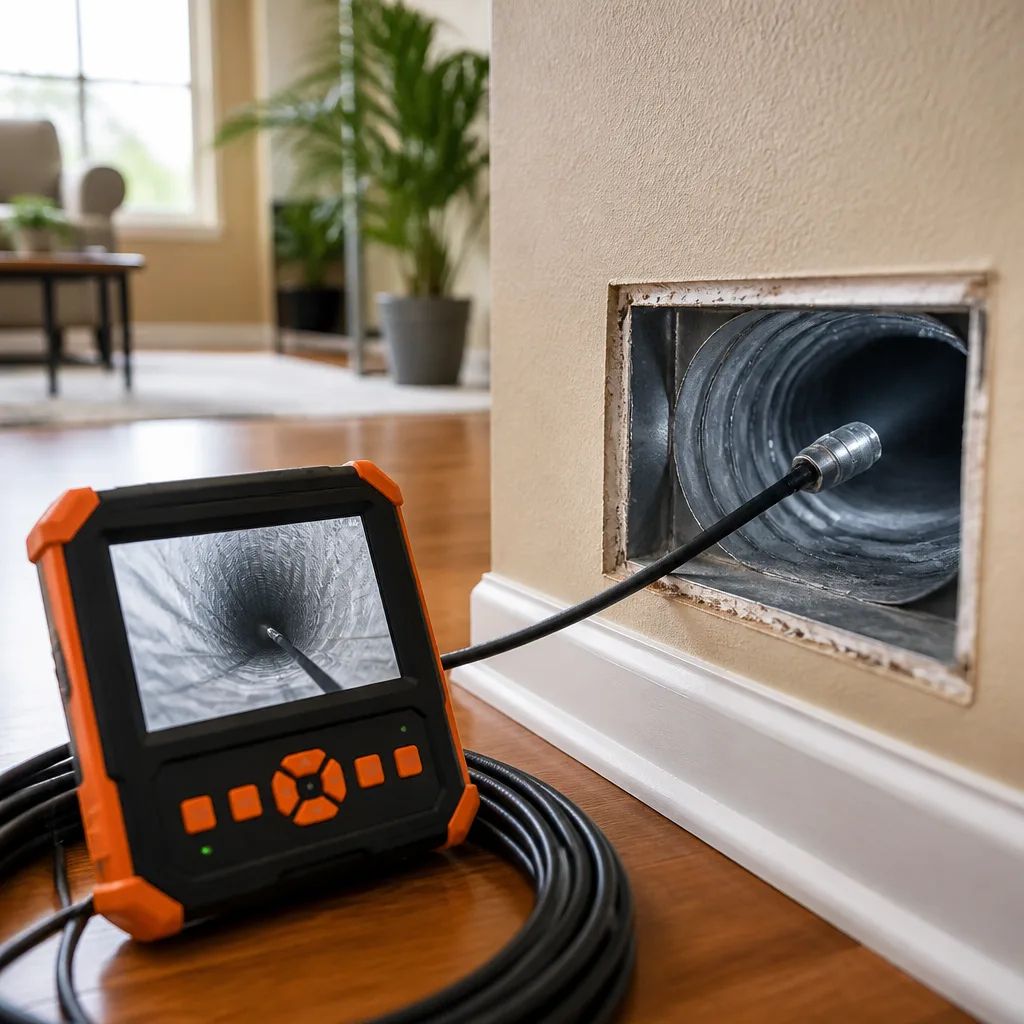
Some conditions exceed homeowner inspection and require trained evaluation with borescope cameras, pressure testing, and containment equipment. Call for professional service when you observe: visible mold on any duct surface; persistent musty odors that survive filter changes; sudden increases in energy consumption without weather explanation; rodent or insect activity in ductwork; or debris discharge from supply vents when the system cycles on.
CleanRun Air Duct Cleaning Rockville offers free estimates in Rockville - call (240) 255-4519. Every estimate includes a written scope and flat price before any work begins, under Haven Standard Clause 1. We also provide a Free Second Opinion on any written estimate from another contractor; bring their quote and we’ll put our number next to it in writing.
Frequently Asked Questions
Complete whole-system cleaning for a typical Rockville home runs $450 to $750, with coil and plenum service adding $150 to $300 if needed. Prices below $300 for a full system typically indicate limited scope or portable equipment that cannot achieve proper negative-pressure extraction. Call (240) 255-4519 for a written estimate specific to your home - estimates are free and include flat pricing before any work starts.
The $79 to $199 quotes are almost always per-vent teaser rates that cover only supply registers with minimal equipment, or they exclude returns, trunk lines, and photo documentation. The final invoice after “discovering” additional needs typically exceeds the flat-rate whole-system price from a transparent contractor. Ask any low bidder for their complete written scope and equipment specifications before comparing.
Require dated, labeled before-and-after photos of every duct run, delivered as part of the standard job record - not as an extra charge. CleanRun has provided this Documented Photo Record on every job since 2013. Compare the contractor’s photos to your own register inspection history; the duct material, construction era, and debris pattern should be consistent with what you’ve observed.
There is no universal interval. Homes in Rockville with pets, recent renovation, or visible debris progression in register photos may need service every 18 to 24 months. Well-maintained homes with tight envelopes and consistent filter changes may go 4 to 5 years. Base the decision on your documented observations, not a calendar.
Surface cleaning of registers and visible duct openings is reasonable homeowner maintenance. Deep cleaning of the full duct network requires negative-pressure extraction equipment, containment protocols, and access tools that are not cost-effective for one-time use. More critically, duct interiors include sharp metal edges, electrical components, and - in older Rockville homes - asbestos-containing duct insulation that requires licensed abatement. Professional service is the appropriate path for full-system work.
Yes. Montgomery County’s humidity swings create condensation cycles that adhere dust to duct walls more tenaciously than in arid climates. The pollen-heavy spring - Rockville’s tree pollen season typically peaks in April - loads filters and duct surfaces heavily. And the area’s mix of older galvanized steel ducts and newer flexible duct means different degradation patterns that affect debris accumulation. Local climate knowledge should inform both your maintenance schedule and your contractor selection.
The Bottom Line
Effective duct maintenance is observation, not just scheduling. The Rockville homeowner who photographs registers, logs filter condition, and tracks mechanical checkpoints builds an evidence base that turns every contractor interaction from a trust exercise into a verifiable transaction. Condition-based maintenance replaces arbitrary intervals. Documented observation replaces vague reassurance. And when professional service is needed, a flat written price with photo accountability - the standard CleanRun has applied to 52,000 homes since 2013 - replaces the uncertainty that has defined this industry for too long.
Written by Tomas Reyes, Owner at CleanRun Air Duct Cleaning Rockville, serving Rockville since 2013.