
Last updated September 23, 2026
Whole-system duct and dryer vent check with before-and-after photos - you see exactly what came out of your vents
That "$99 whole-house special" is a bait ad - the real number appears once they are in your hallway, or the "clean" is a shop-vac at the register. We photograph the inside of your ducts before and after instead.
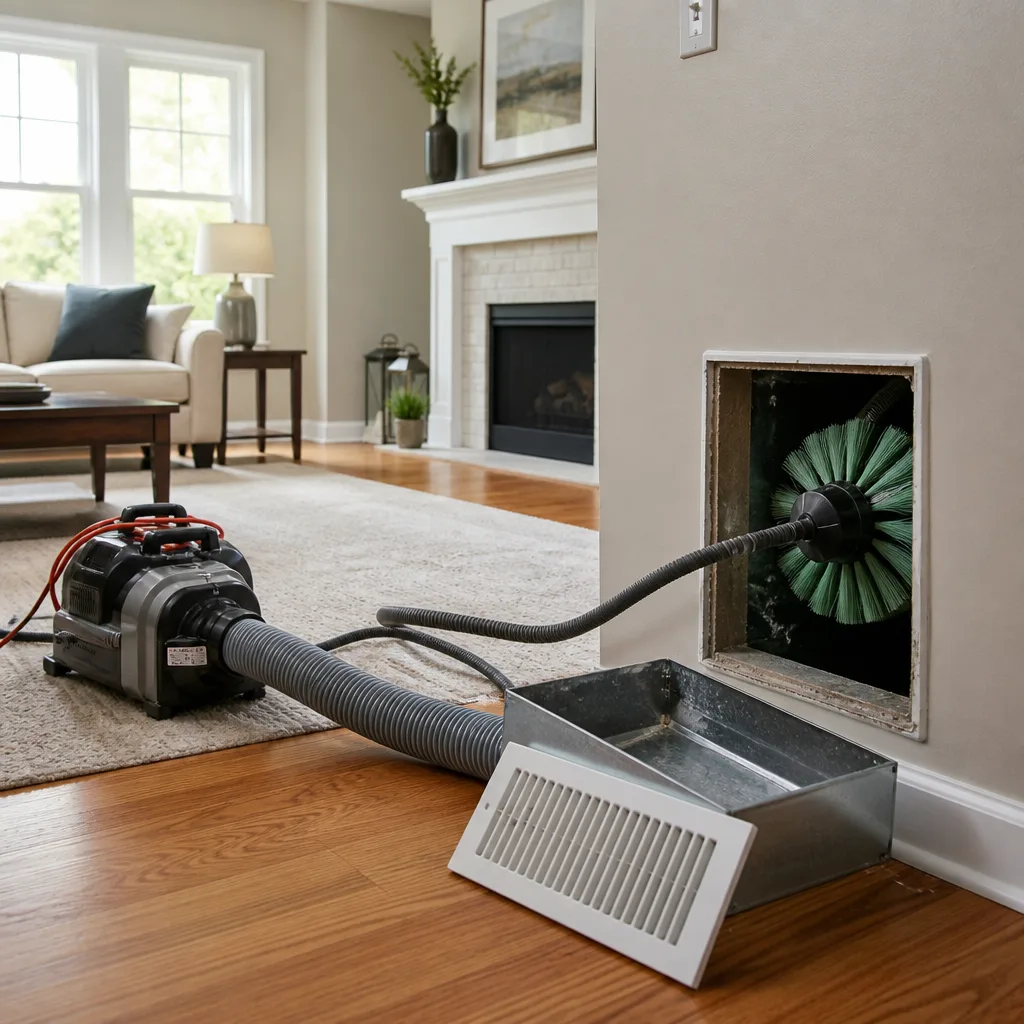
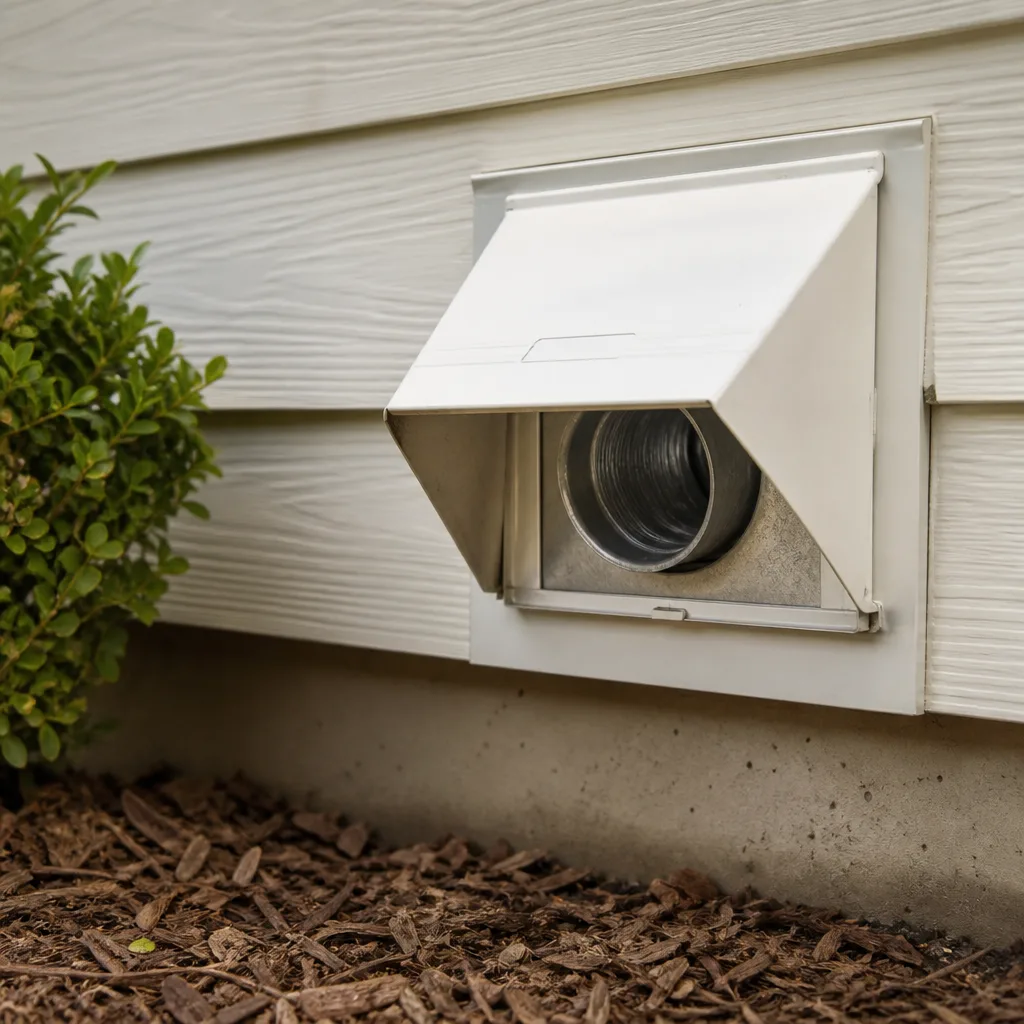
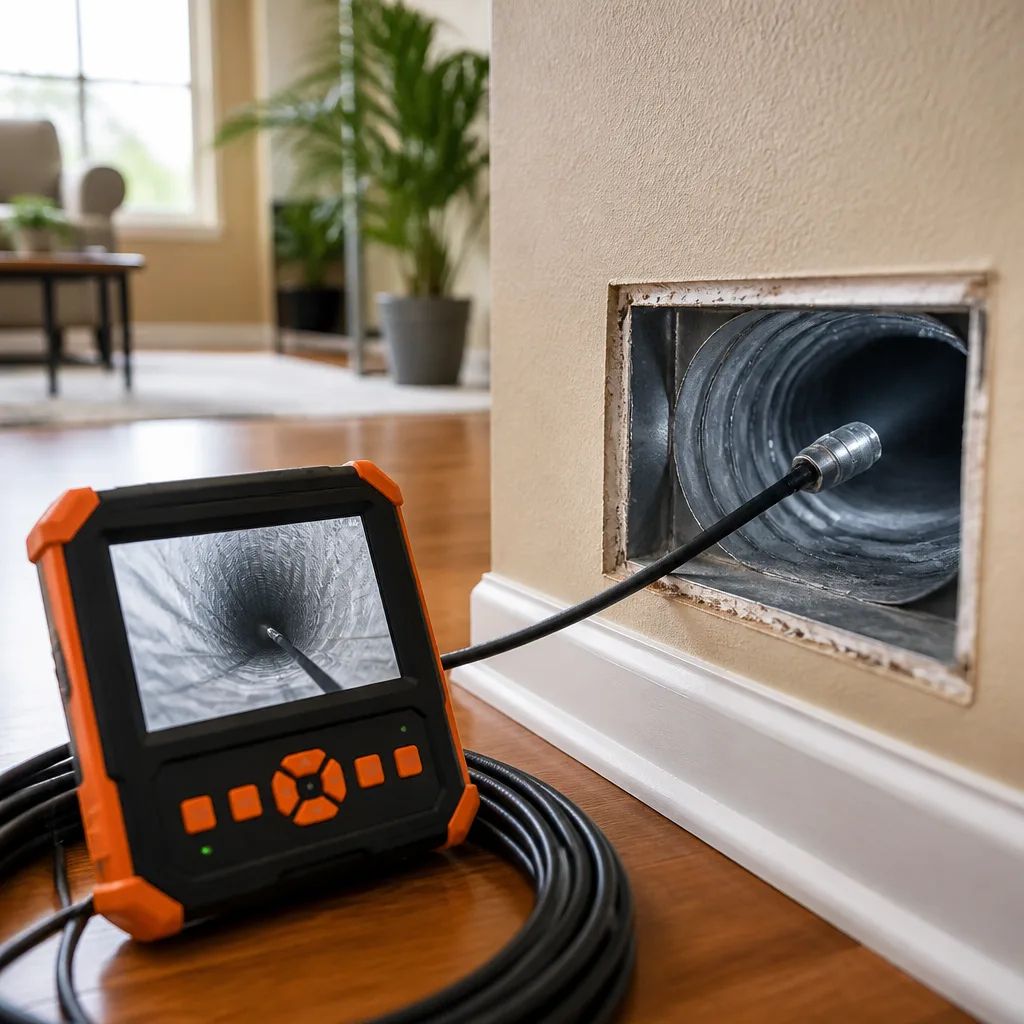
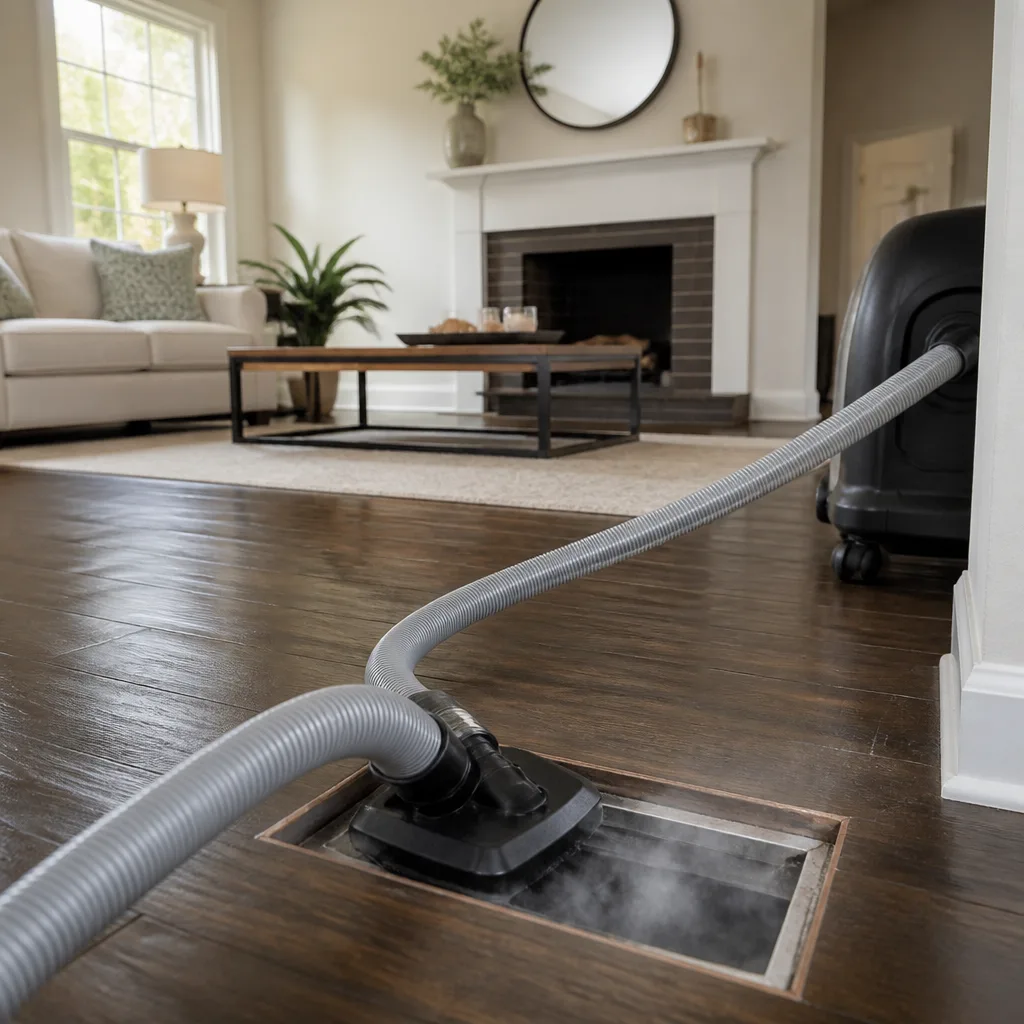
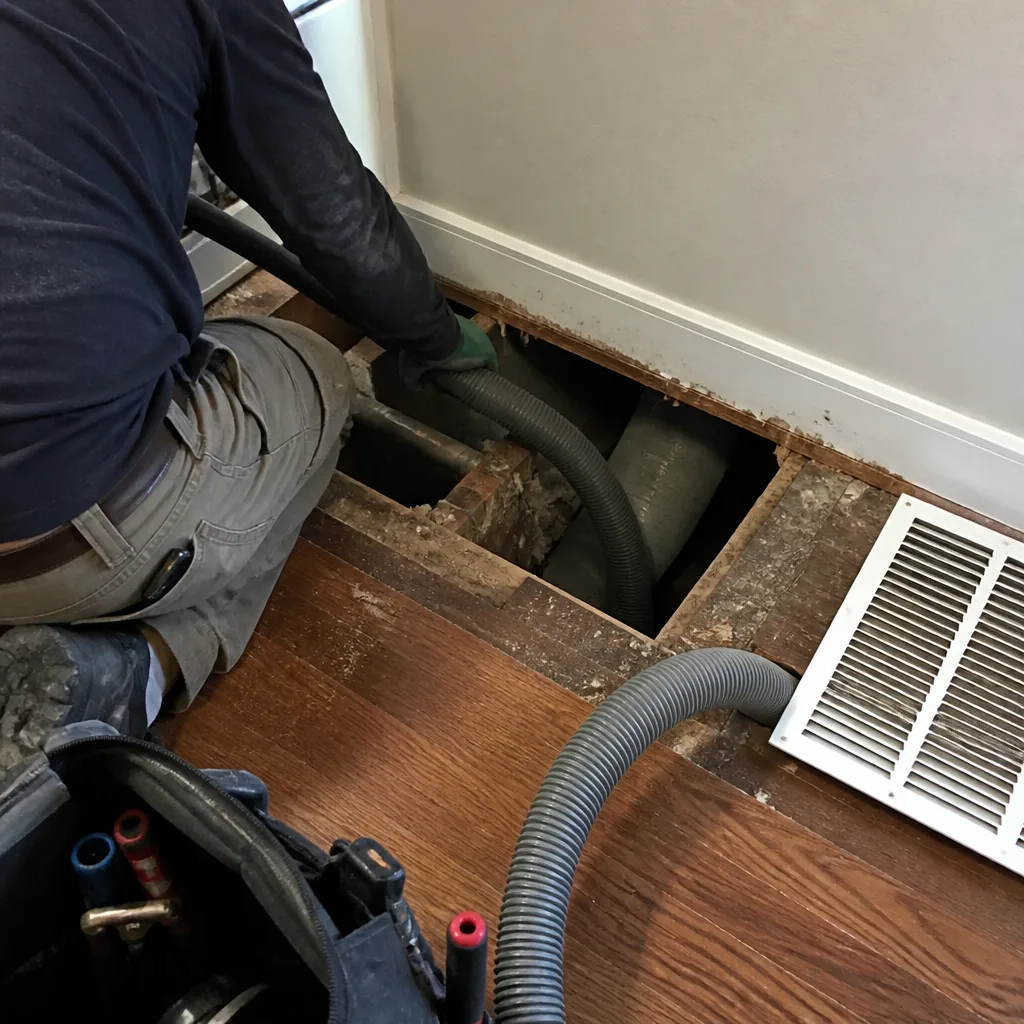 Before
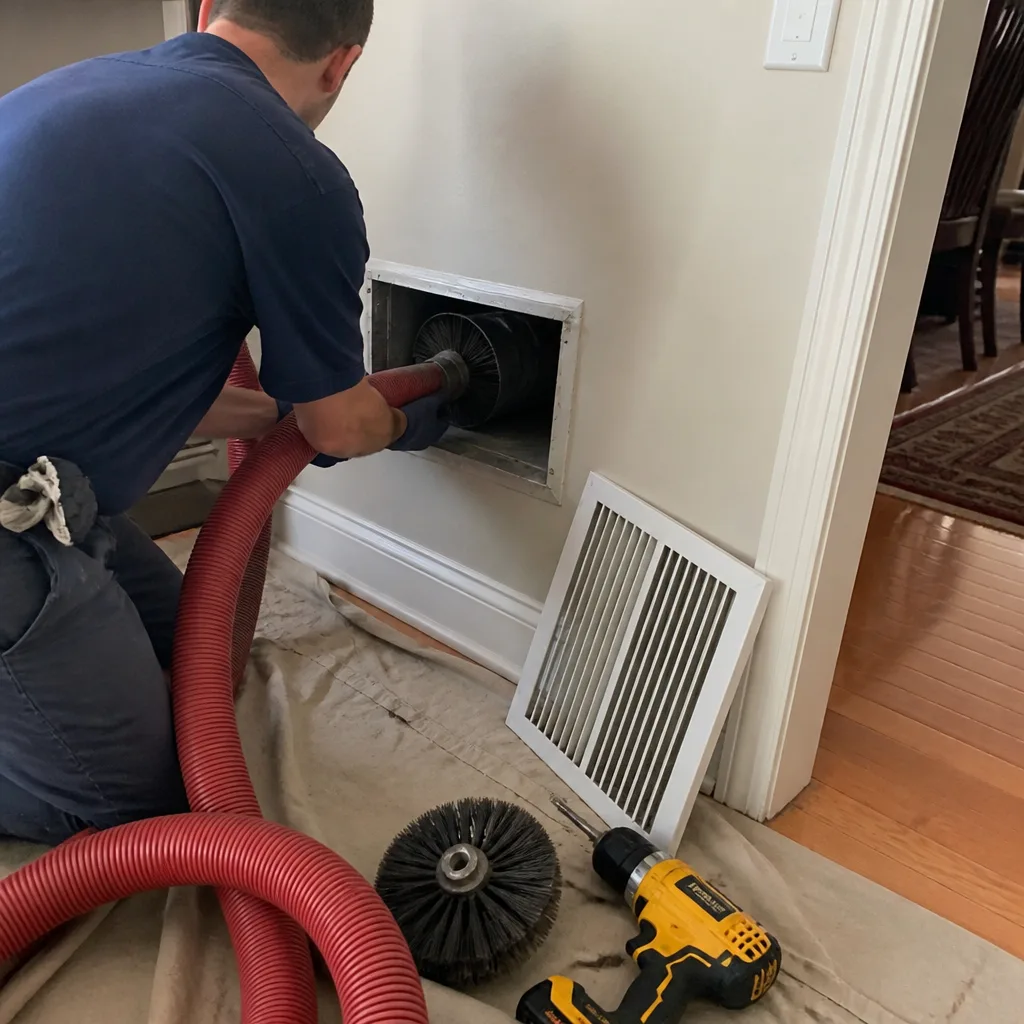 After
After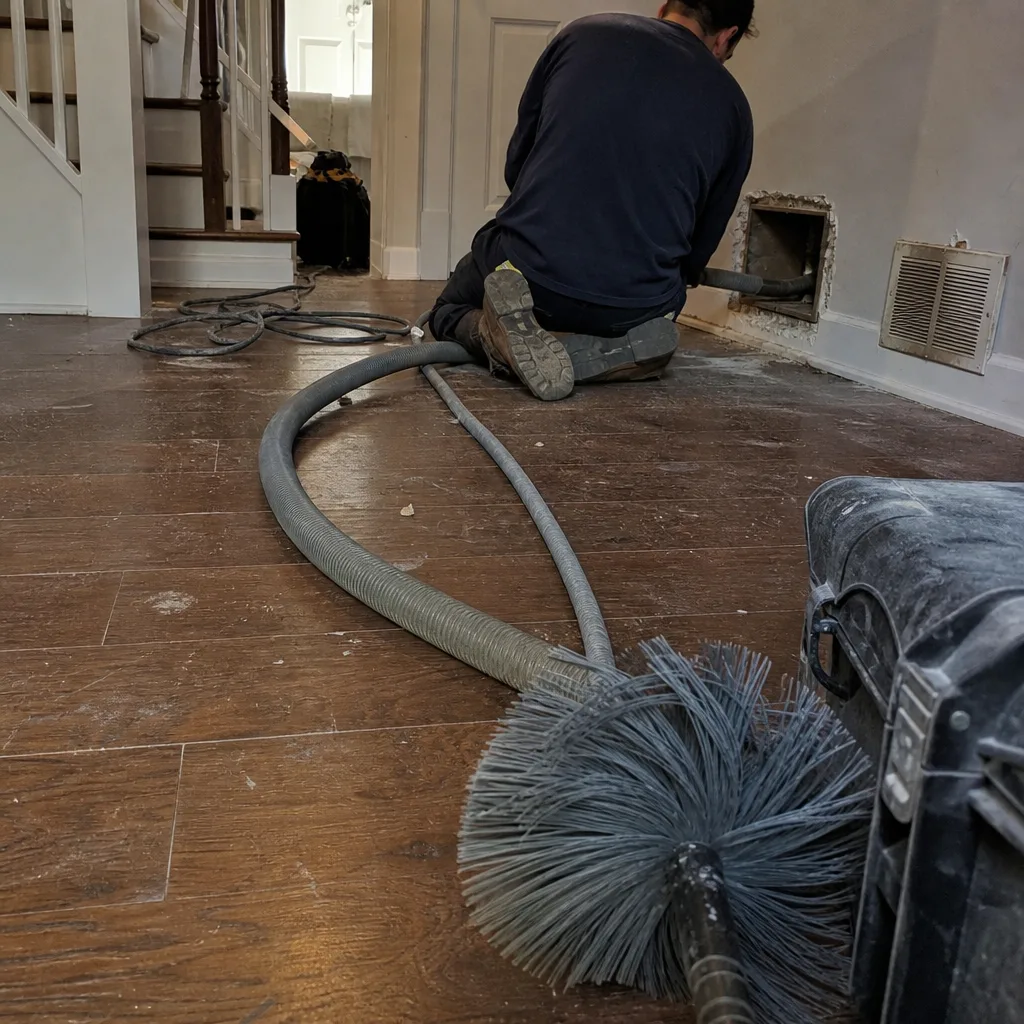 Before
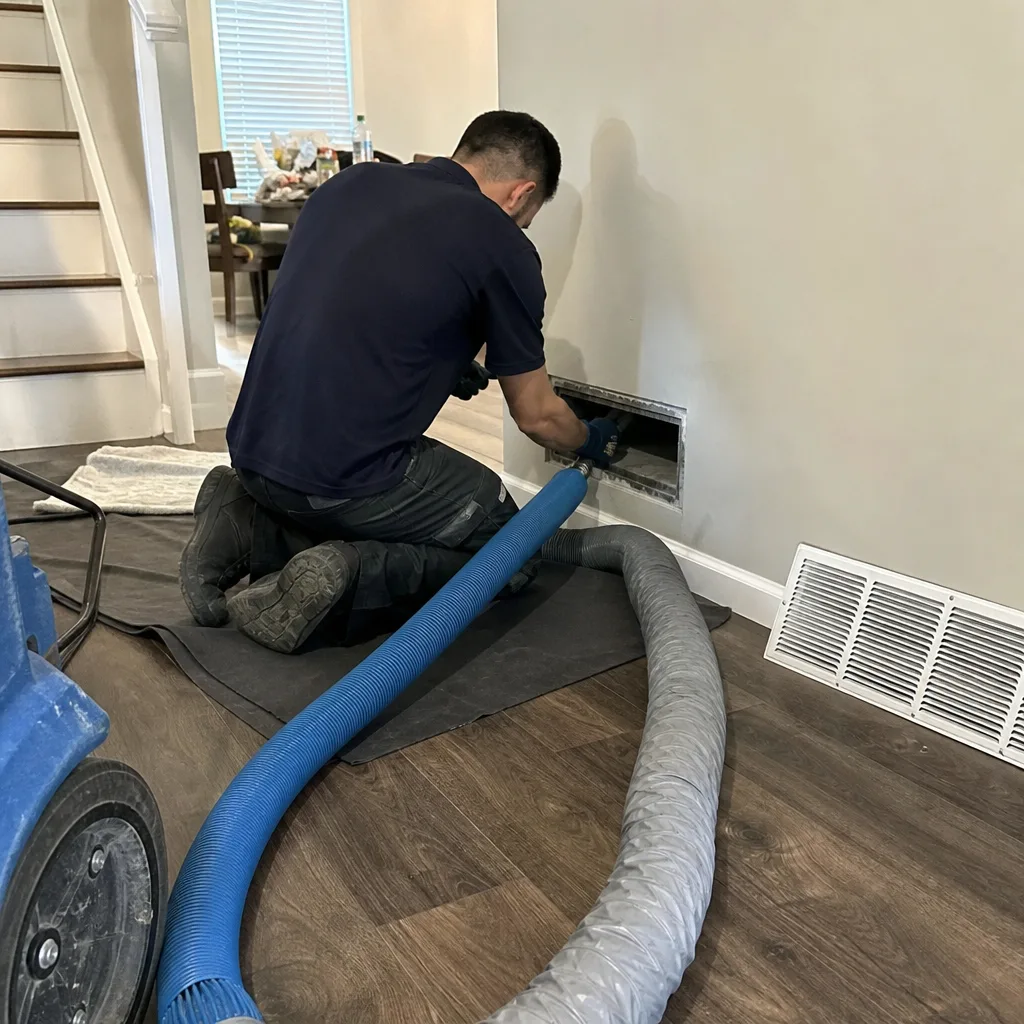 After
After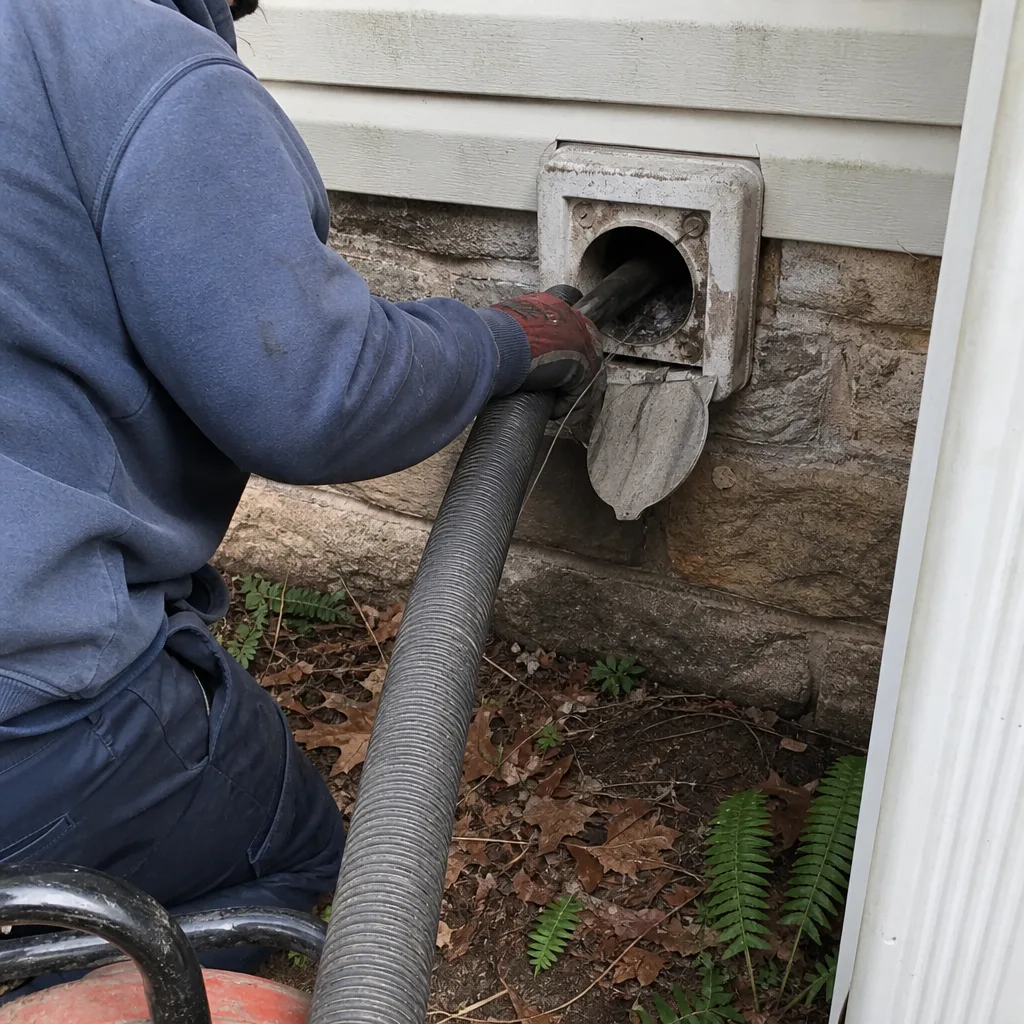 Before
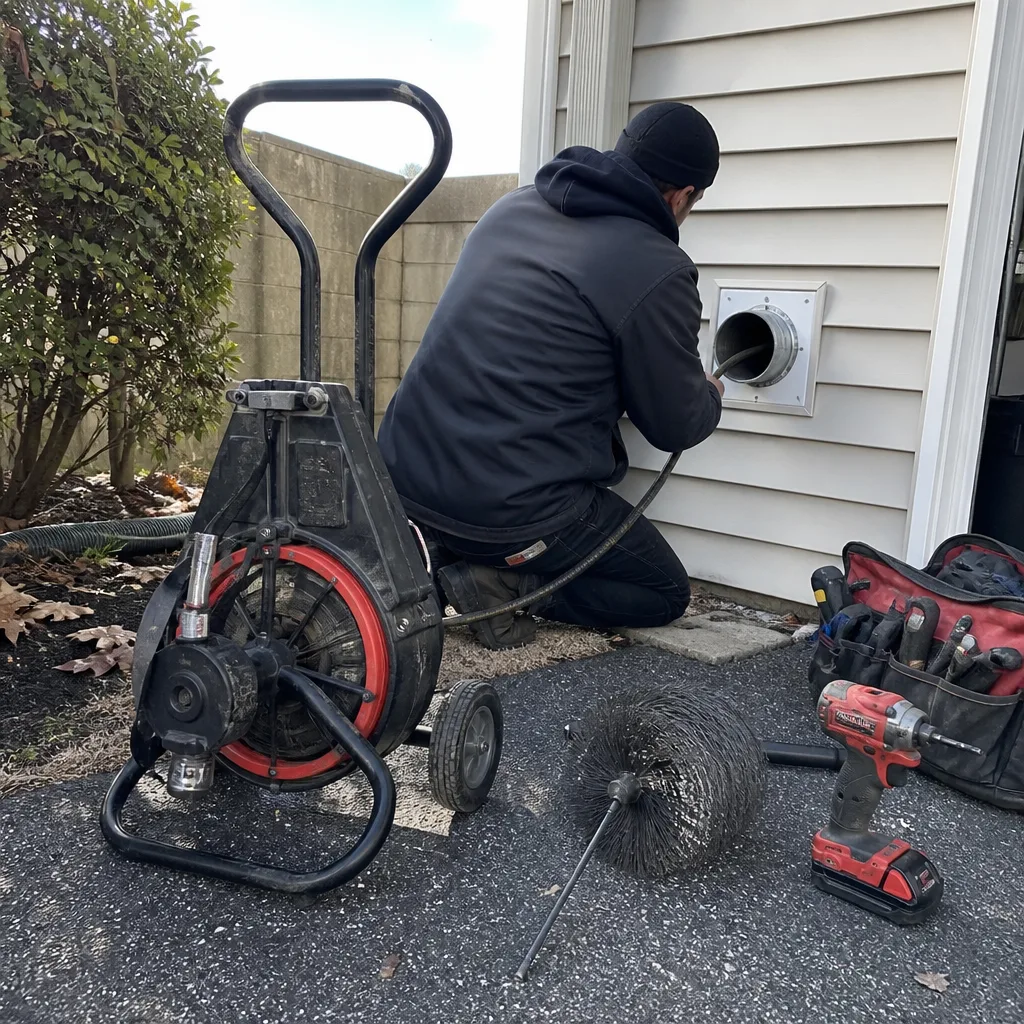 After
AfterAir Duct Cleaning Warning Signs: A Rockville Homeowner’s Reference Guide
Visible dust collecting on your supply register almost never means the inside of your ductwork is dirty. In our experience across Rockville’s 52,000+ service visits since 2013, that dust usually signals a filter bypass gap, an undersized filter, or a missing return air seal. The actual fix costs eleven dollars at Home Depot, not four hundred dollars for a duct cleaning you didn’t need. This guide maps each common symptom to its most probable cause, its least probable but commonly sold cause, and the specific action a homeowner should take before calling anyone for Air Duct Cleaning services. Some problems need a professional. Others need a flashlight and twenty minutes.
Quick Answer
Most warning signs attributed to “dirty ducts” actually stem from filter problems, duct integrity failures, or normal HVAC operation. Genuine duct contamination in Rockville homes typically presents as persistent musty odors that worsen when the system cycles, visible debris at multiple points inside the return air pathway, or chronic allergy symptoms that improve when occupants leave the house. A flashlight inspection of the return air box and a register removal test will eliminate false positives before you spend money, as detailed in The Complete Guide to Air Duct Cleaning in Rockville.
Table of Contents
- Visible Dust at Supply Registers: Filter Bypass vs. Duct Contamination
- Musty Odors from Vents: Mold, Mildew, or Normal Dust?
- Uneven Room Temperatures: Blockage, Leakage, or Design Problem
- Increased Allergy Symptoms: Ducts, Pollen, or Seasonal Factors
- Rising Utility Bills: Efficiency Loss vs. Rate Increases
- Duct Integrity Problems Cleaning Cannot Fix
- The Photo Checklist: Document Before You Call
- Common Mistakes to Avoid
- When to Call a Professional
- Frequently Asked Questions
 Before
 After
AfterVisible Dust at Supply Registers: Filter Bypass vs. Duct Contamination
We start here because this is the most misdiagnosed symptom in Rockville homes, especially in newer construction in neighborhoods like King Farm and Fallsgrove where tight building envelopes create higher static pressure across the filter.
What You’re Actually Seeing
Dust streaking on the ceiling or wall near a supply register is almost always conditioned air leaking around the register boot, carrying household dust that has settled in the gap between the drywall and the metal collar. The duct interior could be pristine. The dust is coming from your living space, not from inside the duct.
Alternatively, the dust is bypassing your filter entirely. This happens when:
- The filter is the wrong size, leaving a gap at the rail
- The filter rack is damaged or missing its end caps
- A high-MERV filter is forced into a slot designed for a 1-inch fiberglass panel, bowing away from the seal
- The return air pathway has an unfiltered opening, common in basement installations in Rockville’s older split-level stock
The Five-Minute Diagnostic
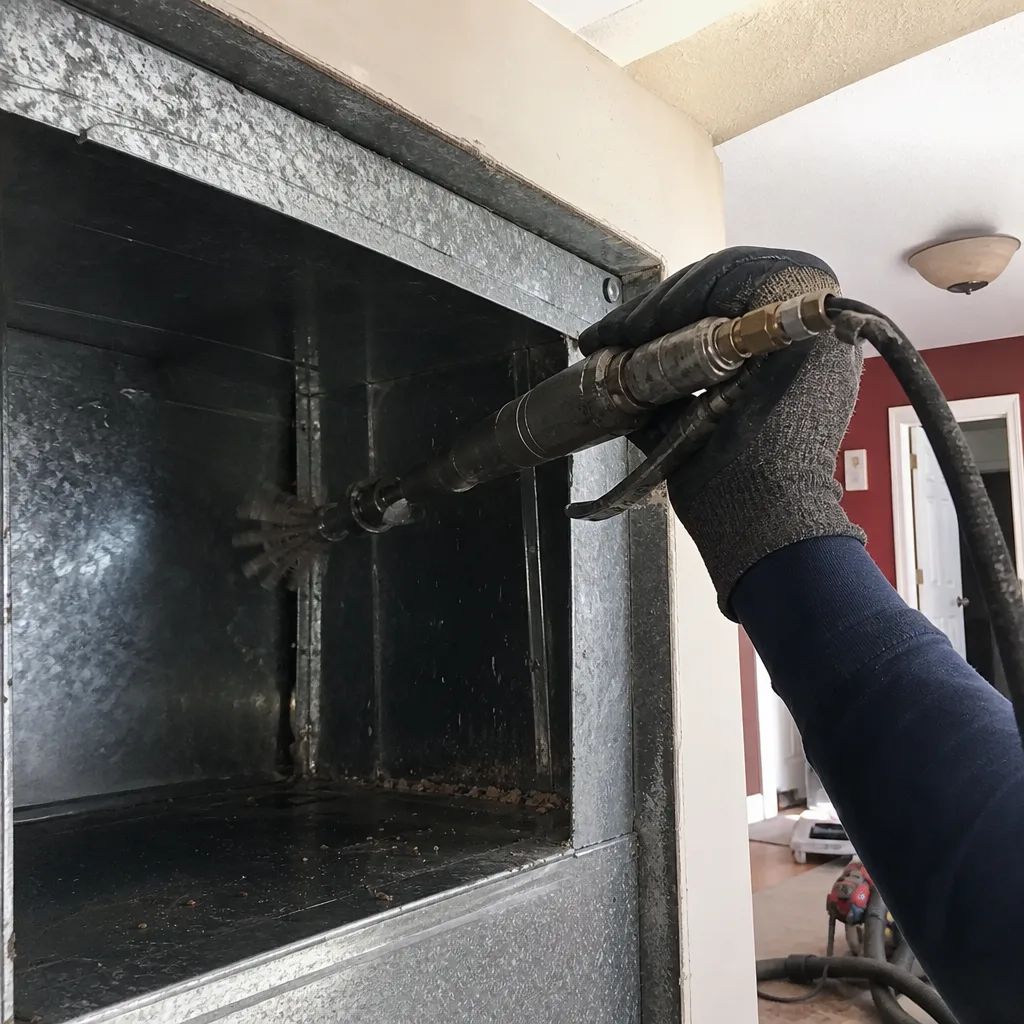
- Remove the register and look into the duct with a flashlight. If the interior metal is clean and the dust is only on the visible lip, you have a register seal problem, not a duct contamination problem.
- Check your filter fit. There should be no visible gap when the filter is fully inserted. Rockville’s summer humidity can warp filter racks over time, so test with the system running, feeling for suction at the edges.
- Look at the return air box, usually in the basement or a closet. This is the sheet-metal chamber where the filter lives. If the interior walls are coated in dust, your filter has been bypassing for months. Clean the box, fix the seal, and monitor for two weeks.
The Misdiagnosis to Reject
A contractor who sees register dust and immediately recommends full duct cleaning without inspecting the filter fit or the return air box is selling a procedure, not diagnosing a problem. In Rockville’s competitive market, the $79 coupon operators depend on this conflation. The actual duct interior may need cleaning, but register dust is not evidence of it.
One exception: if the register dust is greasy or sooty, not dry and fibrous, you may have a combustion appliance backdrafting or a blower motor oil leak. Both need immediate professional attention for safety reasons.
Musty Odors from Vents: Mold, Mildew, or Normal Dust?
Musty smell when the system cycles is the symptom most likely to trigger unnecessary duct cleaning in Rockville, where our Potomac River valley humidity creates genuine mold pressure but also normal condensation patterns that smell similar to the untrained nose.
What Mold in Ductwork Actually Smells Like
Genuine mold growth inside a duct run smells earthy and persistent, like wet cardboard or a damp basement corner. The odor intensifies within thirty seconds of the blower starting and lingers for several minutes after it stops. It does not smell like dust, like a dirty sock, or like the brief mustiness of a system that has been off for a season.
Normal dust accumulation, especially in homes with pets or recent renovation, can smell when first disturbed. This odor is sharper, more particulate, and fades as the system runs. It is not a health hazard and does not indicate contamination requiring cleaning.
The Only Definitive Identification Method
Visual inspection alone cannot confirm mold species. What looks like black mold may be oxidized metal, soot, or non-toxic Cladosporium. What looks like harmless dust may contain Aspergillus or Penicillium. The only definitive identification requires surface sampling, analyzed by a qualified laboratory.
At CleanRun Air Duct Cleaning Rockville, we do not claim to identify mold by sight. If we observe suspect growth during our documented photo inspection, we recommend third-party surface sampling before any remediation decision. Haven Standard Clause 1, our written pricing commitment, applies equally: we will not sell sanitizing or cleaning based on a visual guess.
Where Rockville Humidity Creates Real Risk
Rockville’s location in the Piedmont humidity zone means summer dew points regularly reach the low 70s. Condensation forms on ductwork in unconditioned attics and crawl spaces, particularly in homes built between 1960 and 1990 with minimal insulation. The musty smell in these cases often originates at the duct exterior, not the interior, and indicates a building envelope problem, not a duct contamination problem. Cleaning the duct interior will not address it.
Check the duct exterior in your attic during July or August. Sweating metal, wet insulation, or drip marks on the ceiling below are signs that your ductwork is a condensate collector, not that it needs internal cleaning.
Uneven Room Temperatures: Blockage, Leakage, or Design Problem
A bedroom that runs five degrees warmer than the hallway is one of the most common complaints we hear in Rockville, particularly in the split-level and colonial stock of the 1970s and 1980s that dominates neighborhoods like Twinbrook and Aspen Hill. Homeowners often assume blocked ducts. The actual causes are more varied.
Probable Cause Rankings
| Symptom Pattern | Most Probable Cause | Commonly Sold Cause | Actual Fix |
|---|---|---|---|
| One room consistently hot/cold; others normal | Disconnected or crushed flex duct in attic/crawl | “Blocked ducts need cleaning” | Duct repair and reconnection |
| Second floor hot in summer, first floor cold in winter | Design limitation of single-zone system; insufficient return air | “Ducts are dirty and restricting flow” | Zoning, return air addition, or equipment upgrade |
| Gradual worsening over years | Duct seal degradation; leakage to unconditioned space | Full duct cleaning and sealing package | Targeted duct sealing (Aeroseal or mastic) |
| Sudden change after renovation or pest activity | Physical blockage: debris, nesting material, collapsed section | Standard cleaning | Camera inspection and physical removal |
The Register Airflow Test
Before calling any contractor, perform this simple check. Hold a tissue against the problem room’s supply register with the system running. If the tissue barely lifts or falls away, you have an airflow problem. If it holds firmly but the room is still uncomfortable, you have a thermal problem, insulation, solar gain, or inadequate return air.
Cleaning a duct run with adequate airflow will not change room temperature. We have documented this repeatedly in Rockville homes where competitors sold cleaning for temperature complaints, and the customer called us six months later with the same problem. The Air Duct Cleaning in Rockville page explains what cleaning actually addresses.
When Duct Cleaning Actually Helps Temperature
The rare case: a return air duct is significantly obstructed by debris, typically in homes with years of filter neglect or post-construction cleanup failure. The system cannot move enough air. Cleaning restores design airflow. But this is uncommon. In twelve years of Rockville service, we have documented true return blockage in fewer than four percent of temperature-complaint calls.
Increased Allergy Symptoms: Ducts, Pollen, or Seasonal Factors
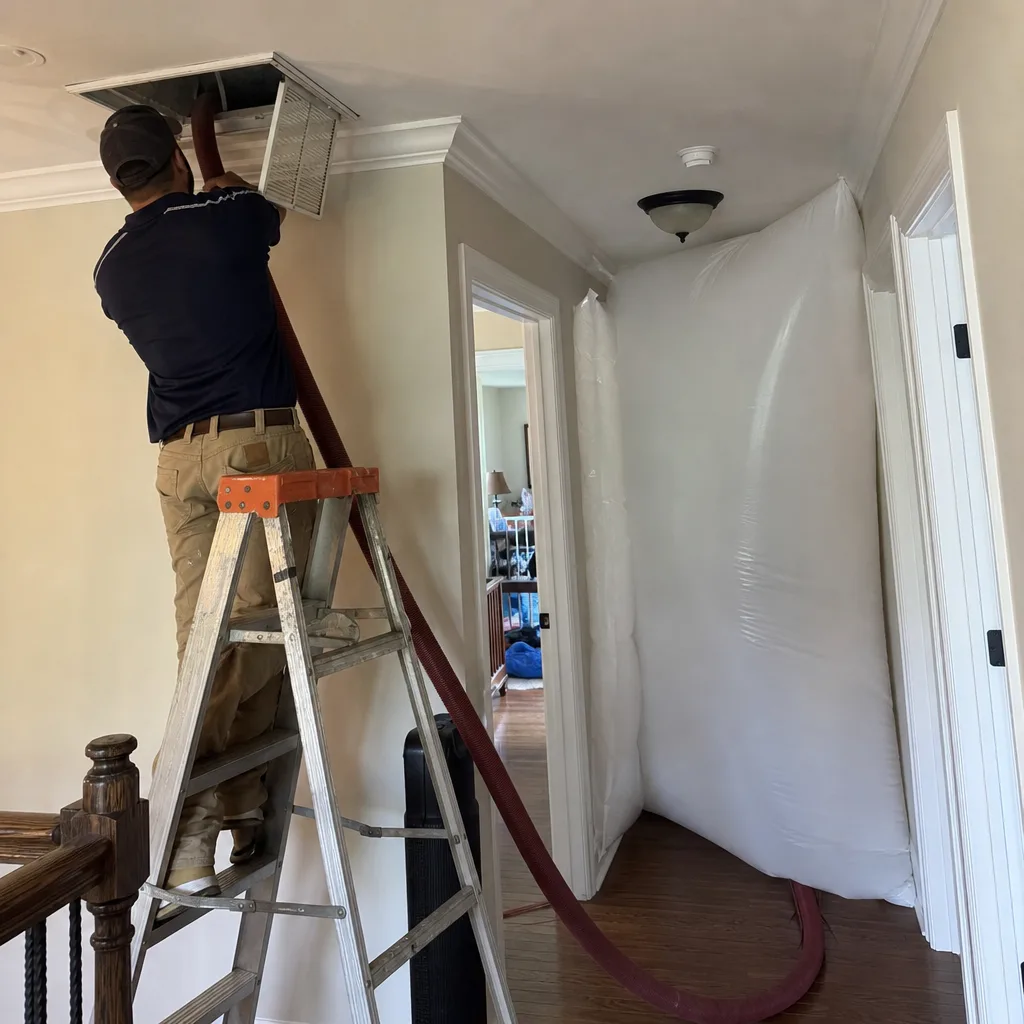
Rockville’s tree pollen season, typically late March through early May, produces some of the highest counts in Maryland. Oak, birch, and maple pollen are visible on cars and windowsills. Indoor allergy symptoms during this period rarely indicate duct contamination.
The Duct Contribution Test
Symptoms caused by duct-borne allergens have a specific pattern: they persist or worsen when the HVAC system is running, improve within an hour of leaving the house, and do not correlate with outdoor pollen counts. If your symptoms are worst on high-pollen days with windows open, your ducts are not the source.
More commonly, we find that Rockville homeowners with chronic indoor allergies have:
- Standard fiberglass filters that capture less than 20% of pollen-sized particles
- Return air leaks pulling attic or crawl space air, including rodent droppings and fiberglass insulation fragments
- Humidity levels above 55%, supporting dust mite populations in bedding and upholstery, not ducts
- Pets whose dander circulates on normal household air currents, independent of duct cleanliness
When Duct Sanitizing Is Appropriate
After professional cleaning, if surface sampling confirms mold or if a home includes immunocompromised occupants, EPA-registered sanitizers applied with proper dwell time can reduce microbial loading. We use Guardsman and Abatement Technologies products, applied according to manufacturer specifications, with documentation of concentration and contact time.
We do not sell sanitizing as an add-on to every cleaning. It is a specific response to a specific finding, quoted in writing under Haven Standard Clause 1, with the safety data sheet available on request.
Rising Utility Bills: Efficiency Loss vs. Rate Explanations
PECO and BGE rate increases, not duct contamination, explain most utility bill spikes in Rockville. Before attributing higher costs to ducts, check your rate schedule and compare year-over-year usage in kilowatt-hours or therms, not dollars.
Actual Duct-Related Efficiency Losses
Ductwork can increase energy costs, but through leakage and thermal loss, not interior contamination. A duct system leaking 20% of its air to an unconditioned attic can add 30% to heating and cooling costs. This is a sealing problem, not a cleaning problem.
Interior debris can reduce efficiency only when it significantly obstructs airflow, forcing the blower to work harder. This requires substantial accumulation, visible during inspection, and typically accompanied by noise complaints or extended run times. Surface dust on duct walls does not measurably impact efficiency.
The Rockville-Specific Factor
Many Rockville homes built during the 1960s and 1970s have duct board trunk lines in unconditioned attics. This fiberglass-board construction degrades over time, with facing delamination that releases fibers and increases leakage. The visible warning sign is a powdery residue on the duct exterior or a sagging section. Cleaning the interior does not address this structural failure. HVAC Cleaning in Rockville includes inspection of these components as part of our standard scope.
Duct Integrity Problems Cleaning Cannot Fix
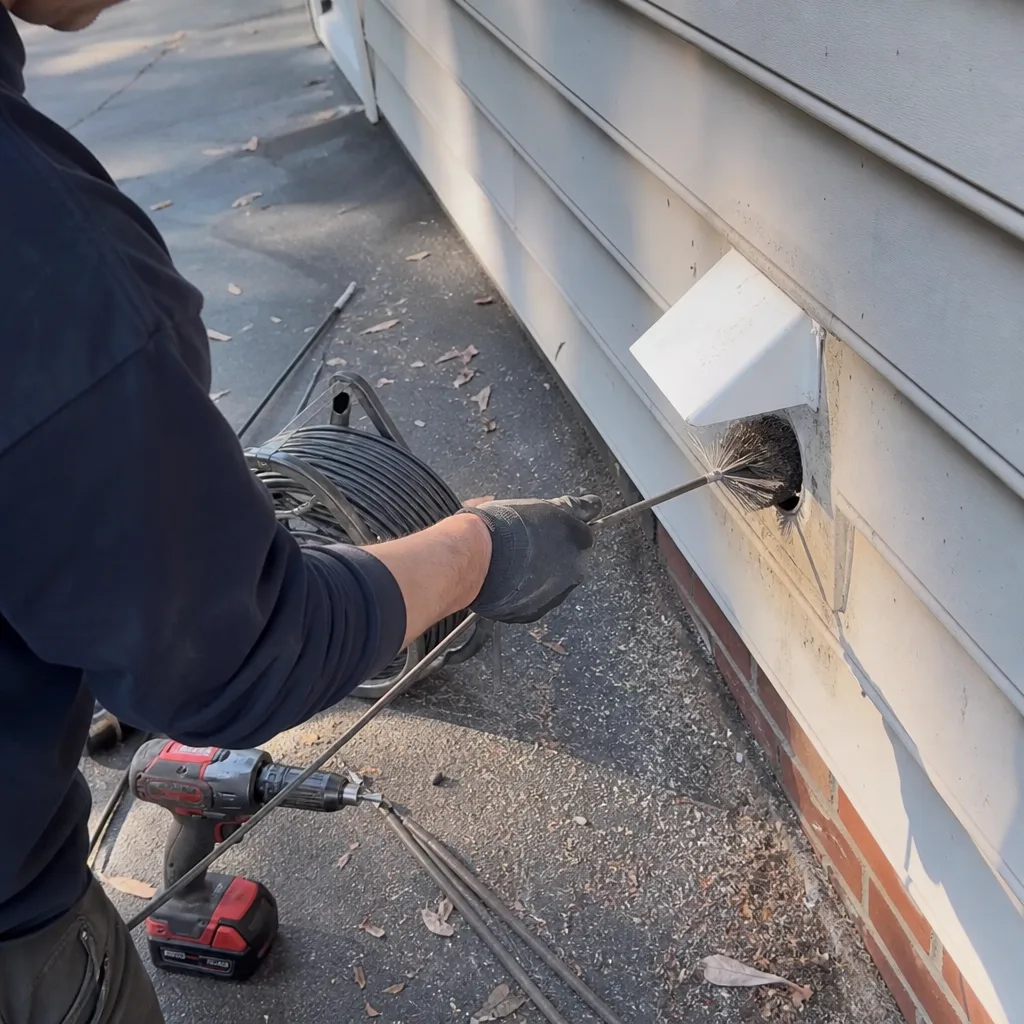
This section addresses the most expensive misdiagnosis we encounter: selling duct cleaning for problems that require repair or replacement.
Disconnected Runs
Flexible ductwork in attics and crawl spaces disconnects at collars over time, particularly where support straps have failed. The symptom is zero airflow to a register, often misdiagnosed as blockage. Cleaning a disconnected run is impossible, the duct is open to unconditioned space, and the only fix is reconnection with proper mechanical fastening and sealant.
Collapsed Flex Duct
Crushed or collapsed flex duct, common where stored items in attics compress it, creates a complete blockage. The register airflow test shows no movement. Cleaning is irrelevant. Replacement with properly supported ductwork is required.
Failed Duct Board
Duct board, prevalent in Rockville homes of the 1970s and 1980s, loses its structural integrity when the foil facing delaminates or the board becomes water-damaged. The interior surface becomes friable. Cleaning accelerates degradation. Replacement with sheet metal or modern duct board is the appropriate response.
Failed Seals at Plenum Connections
The plenum is the large sheet-metal box connected to your air handler. Seal failure at this junction leaks conditioned air at the highest pressure point in the system. Symptoms include weak airflow throughout the house, dust in the mechanical room, and temperature stratification. Cleaning does not address seal failure. Mastic sealing or plenum replacement does.
How to Spot These Problems
- Listen for whistling or rushing air in the attic or basement near the air handler, indicating high-velocity leakage.
- Inspect visible ductwork for sagging, crushing, or disconnected sections. Rockville’s freeze-thaw cycles accelerate strap failure in unconditioned spaces.
- Check the plenum with a flashlight for gaps at seams, dark streaks indicating air leakage (thermographic tracking of dust), or corrosion from condensation.
- Feel for temperature differences: a cold duct in a hot attic in summer, or a warm duct in a cold attic in winter, indicates insulation failure, not contamination.
These integrity problems are routinely misdiagnosed as contamination by technicians who are not equipped or trained to repair them. At CleanRun, our documented photo inspection identifies these conditions before any cleaning recommendation. If we find integrity failure, we quote repair, not cleaning, under our written pricing standard.
The Photo Checklist: Document Before You Call
The most effective way to control a contractor conversation is to arrive with your own documentation. Sales presentations rely on information asymmetry, the contractor shows you what they found, and you have no basis to question it. These photos change that dynamic.
What to Photograph
- Filter and filter rack: Remove the filter. Photo the size marking, the condition of the media, and the fit in the rack. Show any gaps or warping.
- Return air box interior: With the filter removed, photograph the sheet-metal walls. Heavy dust coating indicates long-term bypass. Clean metal suggests proper filtration.
- Supply register and immediate duct interior: Remove a register and photograph six inches into the duct. Clean metal or light dust is normal. Heavy debris, standing water, or suspect growth is not.
- Problem room register with tissue test: Photo the tissue held against the register, showing whether it is drawn firmly, weakly, or not at all.
- Attic or crawl space ductwork: If accessible, photograph the general condition. Look for sagging, crushing, disconnected sections, and wet insulation.
- Plenum connections: At the air handler, photograph the seams between the plenum and the duct trunk lines. Gaps or dark streaks indicate leakage.
- Utility bills: Screenshot or photograph twelve months of usage data, not dollar amounts, to establish whether consumption has actually increased.
How to Use These Photos
When you contact any contractor, including CleanRun Air Duct Cleaning Rockville home, send these photos before scheduling. A competent provider will ask for them or confirm that their inspection will verify what you’ve documented. A provider who dismisses your documentation or insists on an in-person “evaluation” before discussing scope or price is positioning for a sales presentation, not a technical assessment.
Our process: when Rockville homeowners send photos, we review them against our diagnostic criteria and provide a written preliminary scope and price range before scheduling. This is Haven Standard Clause 1. No exceptions.
Common Mistakes to Avoid
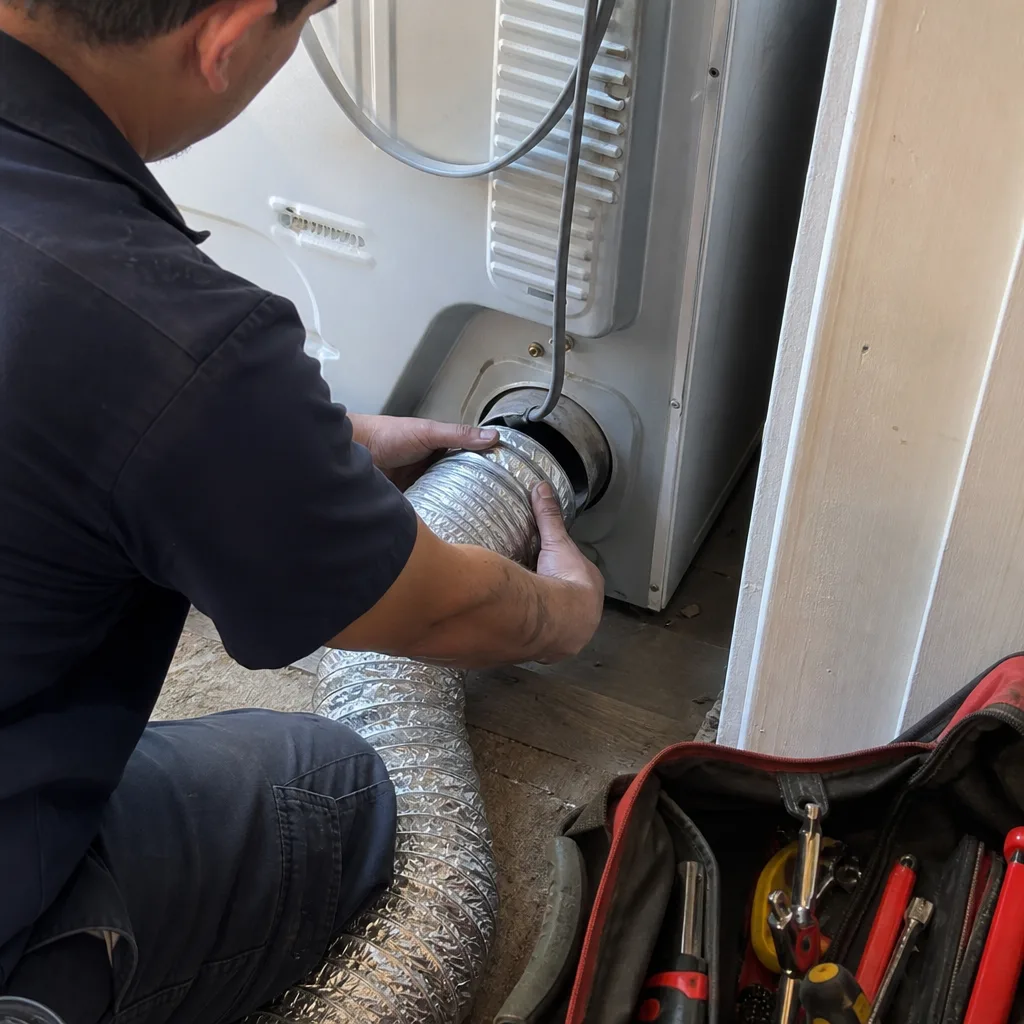
- Assuming register dust means dirty ducts. In Rockville’s tight new construction, filter bypass is the culprit in roughly 70% of cases we’ve documented. Fix the filter fit first, wait two weeks, and reassess.
- Accepting visual mold identification. No contractor can definitively identify mold species by sight. Surface sampling by a qualified lab is the only valid basis for remediation decisions. Anyone who claims otherwise is selling fear.
- Cleaning before repairing integrity failures. Disconnected, crushed, or failed ductwork cannot be cleaned effectively, and cleaning delays the actual fix. Always inspect for integrity problems first.
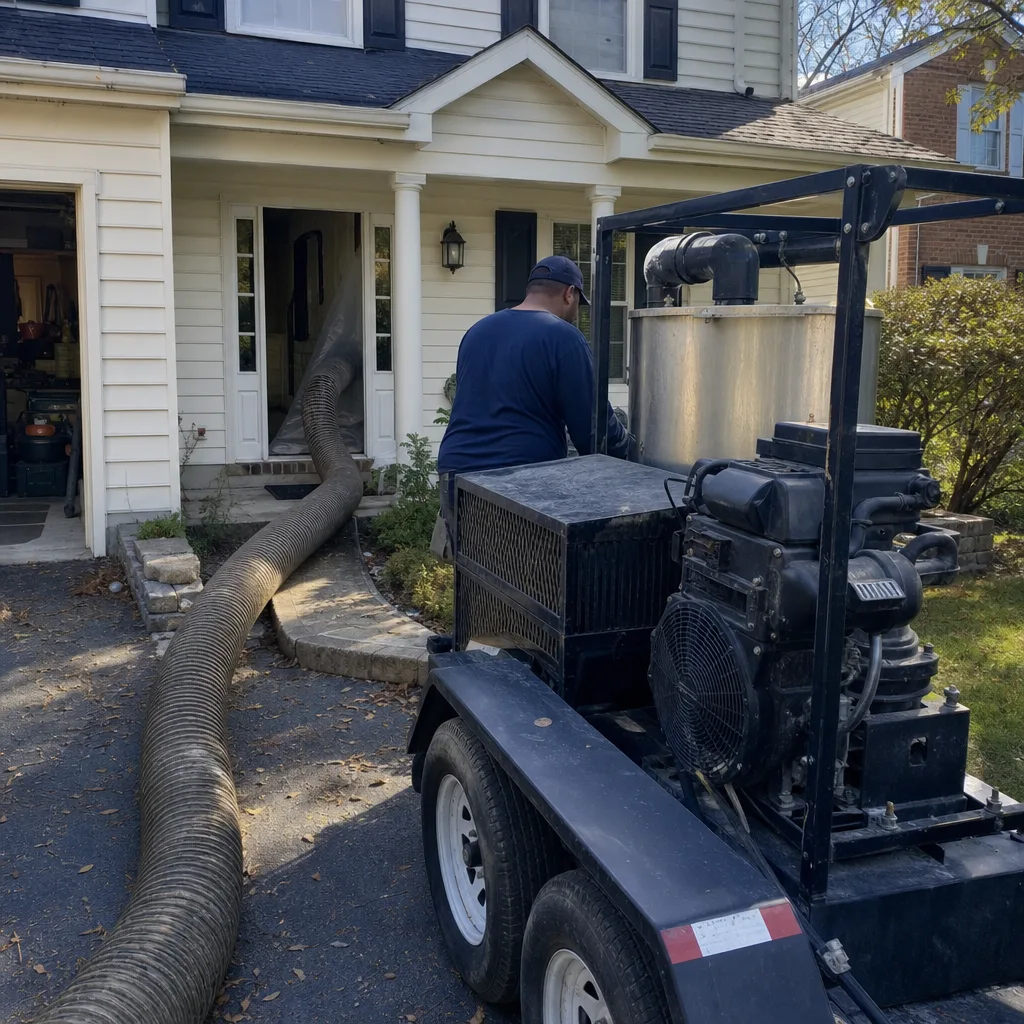
- Comparing quotes with different scopes. The $79 coupon typically covers only supply registers and a brief vacuum cycle. A proper negative-pressure extraction with Rotobrush or Nikro equipment, covering all duct runs, plenums, and returns, requires several hours. Compare line-item scopes, not headline prices.
- Ignoring the return air pathway. The return side is typically dirtier than the supply side, as it pulls unfiltered household air. A quote that only addresses supply ducts is incomplete by definition.
- Scheduling cleaning after renovation without post-construction protection. If your Rockville home has had recent drywall work, flooring installation, or painting, the ducts may contain construction debris. But if the HVAC was not protected during work, cleaning immediately after may be premature. Run the system on filter-only for two weeks, change the filter, then assess.
- Expecting temperature or allergy miracles. Duct cleaning improves air distribution system hygiene. It does not cure design limitations, replace filtration, or eliminate outdoor pollen. Providers who promise these outcomes are promising what they cannot deliver.
When to Call a Professional
Call a qualified duct professional when you have documented evidence of: persistent musty odors that survive filter replacement and humidity control; visible debris or suspect growth inside ductwork confirmed by your own flashlight inspection; zero airflow to one or more registers; or utility usage increases that cannot be explained by rate changes or weather. In Rockville’s climate, these conditions warrant technical assessment, not DIY intervention.
CleanRun Air Duct Cleaning Rockville offers free estimates in Rockville. Our process begins with your photos and a written preliminary scope, followed by an on-site documented inspection with before-and-after photography of every duct run. Call (240) 255-4519. Every quote is delivered in writing before work begins, backed by the 365-Day Done Right Promise, and performed by background-checked, uniformed technicians operating under the H.A.V.E.N. Standard. Explore more guides & resources on our blog.
Frequently Asked Questions
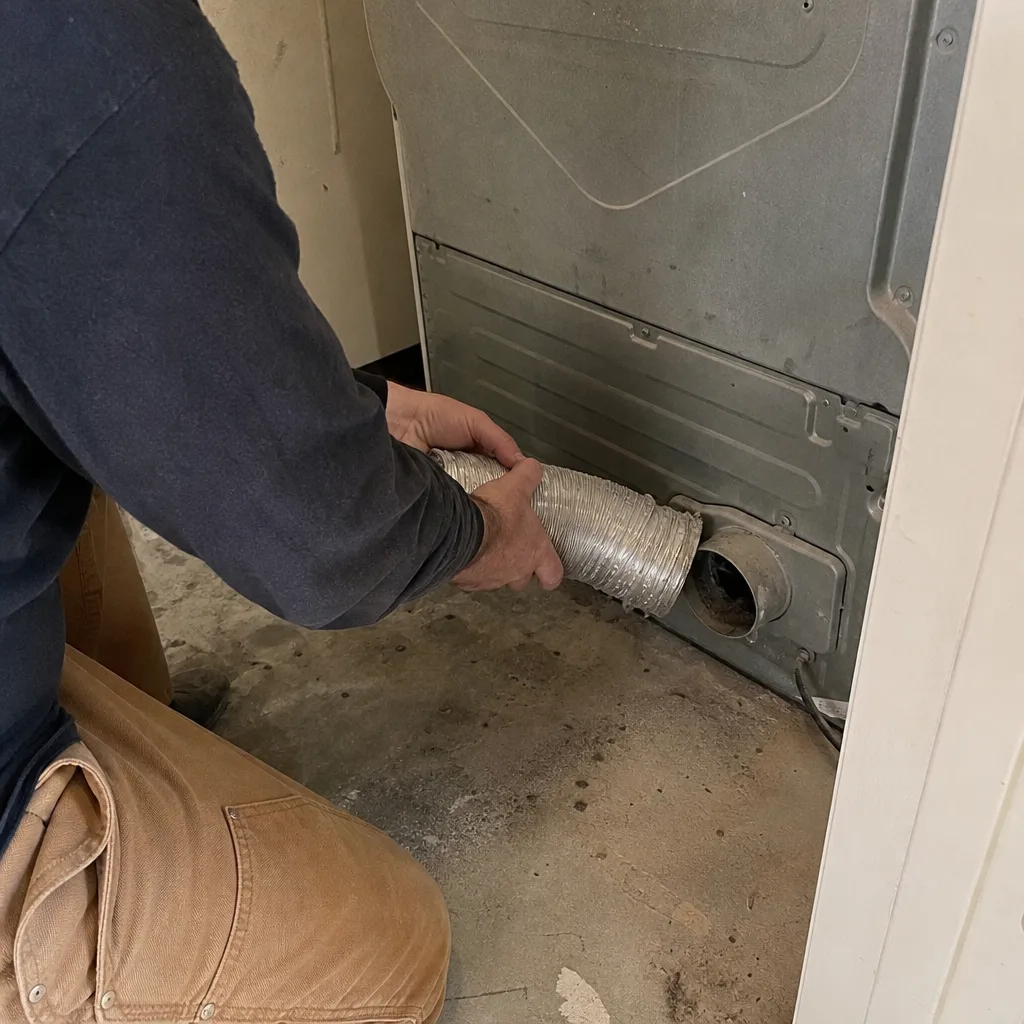
Whole-system cleaning for a typical Rockville single-family home ranges from $450 to $850, depending on system size, accessibility, and contamination level. This covers all supply and return duct runs, both plenums, and the registers, with documented before-and-after photos of every run. Quotes below $300 typically exclude returns, plenums, or proper negative-pressure extraction. CleanRun provides a written price before any work starts under Haven Standard Clause 1. Call (240) 255-4519 for an exact quote, estimates are free.
Low quotes usually reflect limited scope, not efficiency. The $79 to $199 offers common in Rockville market mailers typically cover only visible supply registers with a portable vacuum, excluding returns, plenums, and the mechanical agitation that dislodges adhered debris. The full job then emerges as “additional recommended services” once the technician is in your home. Compare line-item scopes: number of duct runs included, equipment specified (Rotobrush, Nikro, or equivalent), and whether returns and plenums are covered. A written total price before work starts eliminates this ambiguity.
Demand a documented photo record of every duct run, before and after. CleanRun has delivered this on every job since 2013. The photos should show the interior surface of each run, not just the register opening. If a provider cannot or will not produce these, you have no verification that the duct interior was accessed. Our customers receive their photo record as a standard deliverable, not an optional add-on.
For most Rockville homes with proper filtration and no specific risk factors, every five to seven years is adequate. Homes with multiple pets, recent renovation, immunocompromised occupants, or chronic filter neglect may need more frequent service. The best indicator is your own documented inspection: if the return air box and visible duct interior show significant debris accumulation, it’s time. If they’re clean, it isn’t.
Surface cleaning of registers and the return air box is safe and worthwhile. Deep cleaning of the duct interior requires negative-pressure containment equipment, mechanical agitation tools, and access to the full system, including plenums. Attempting this without proper equipment risks damaging ductwork, releasing contamination into living spaces, and personal injury from sharp metal edges or electrical components near the air handler. We document DIY damage several times yearly in Rockville homes.
Rockville’s humidity increases mold risk in unconditioned spaces where ductwork passes, but this is a building envelope issue, not an interior contamination issue. Our freeze-thaw cycles also stress duct supports and seals in attics. The climate does not inherently make duct interiors dirtier, but it does make integrity problems more likely. Annual inspection of visible ductwork, particularly in homes over thirty years old, is prudent preventive maintenance.
The Bottom Line
Accurate diagnosis of duct-related symptoms requires distinguishing what you can observe from what a contractor tells you. Visible dust at registers, musty odors, uneven temperatures, allergy symptoms, and rising bills each map to specific probable causes, and only some of those causes warrant professional duct cleaning. The rest need filter fixes, duct repairs, humidity control, or simply patience through pollen season. Document with photos before calling anyone. Demand written scope and price before work starts. Verify results with photographic evidence. These practices, which CleanRun has applied to 52,000 Rockville-area homes since 2013, protect you from the industry’s most common failure: selling a solution to a problem that doesn’t exist.
Written by Tomas Reyes, Owner at CleanRun Air Duct Cleaning Rockville, serving Rockville since 2013.