
Last updated September 23, 2026
Whole-system duct and dryer vent check with before-and-after photos - you see exactly what came out of your vents
That "$99 whole-house special" is a bait ad - the real number appears once they are in your hallway, or the "clean" is a shop-vac at the register. We photograph the inside of your ducts before and after instead.
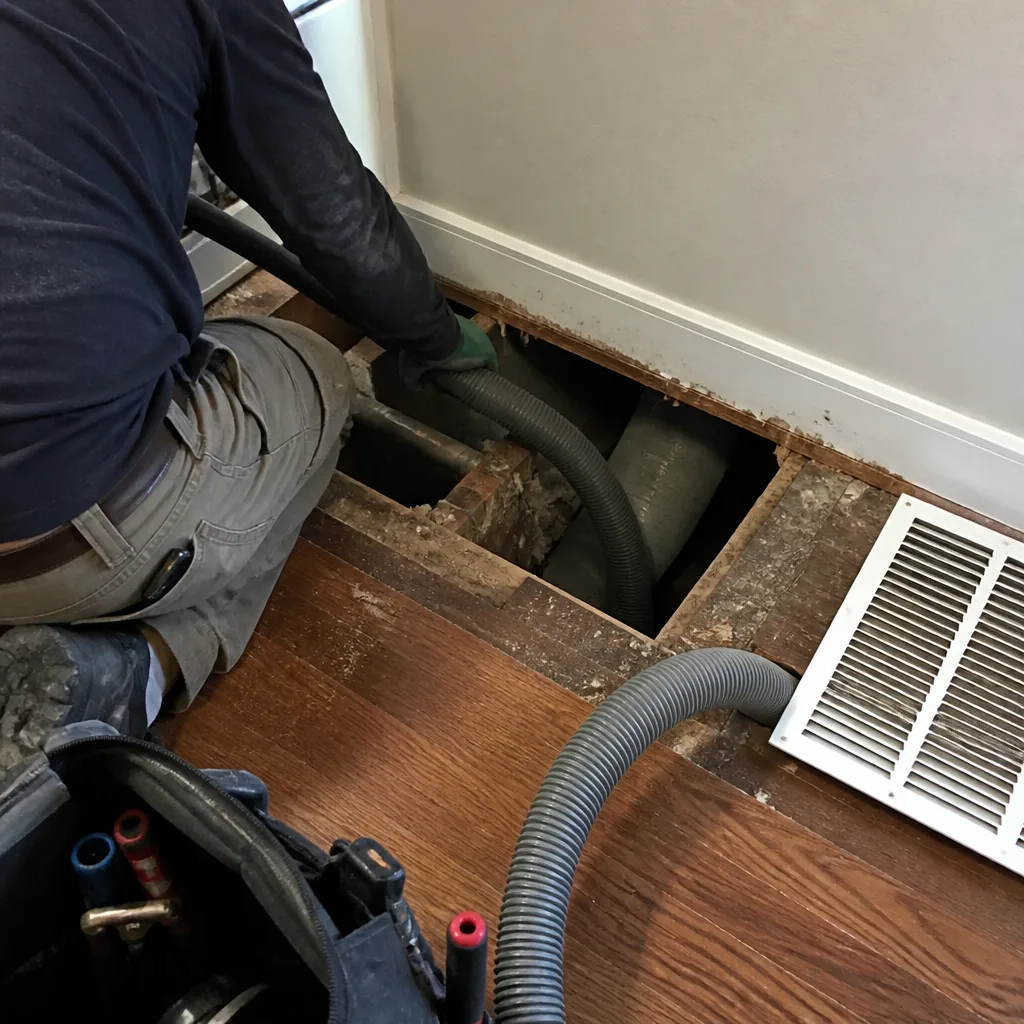 Before
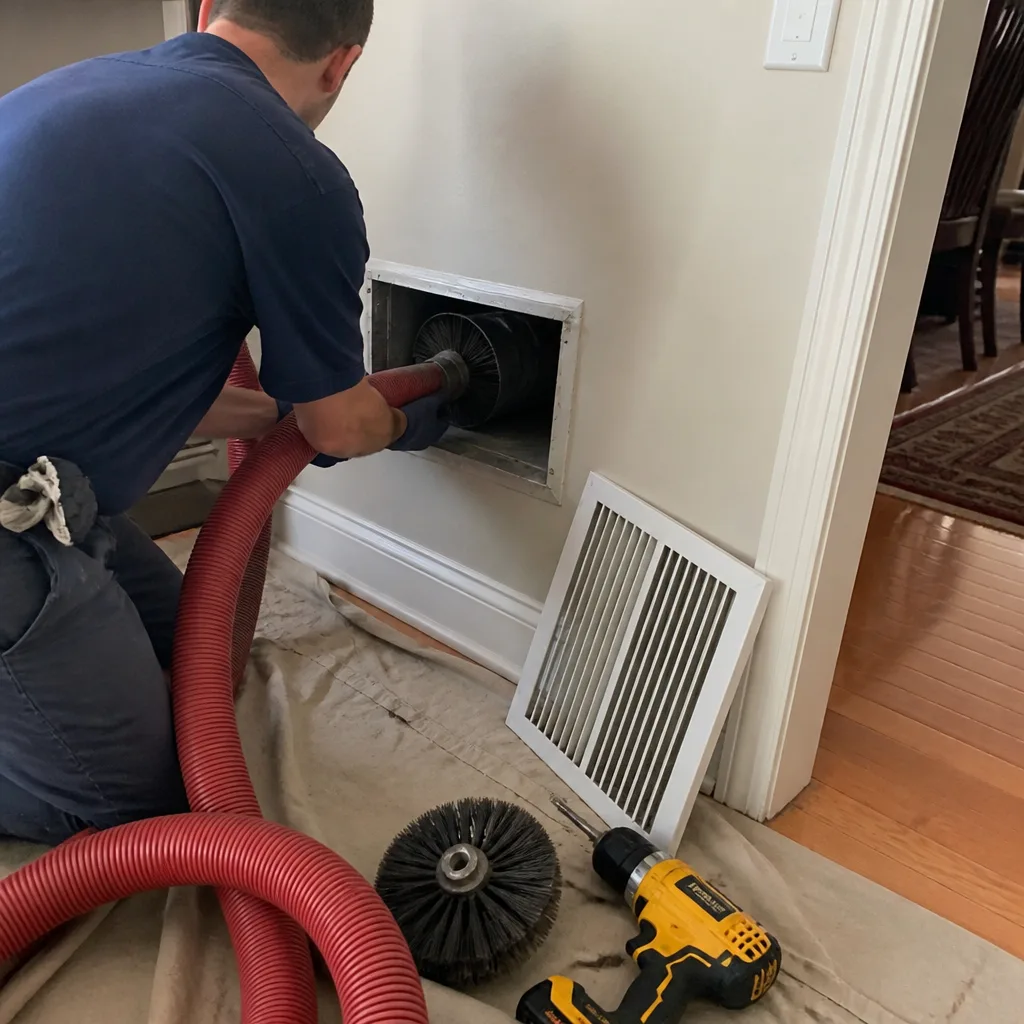 After
After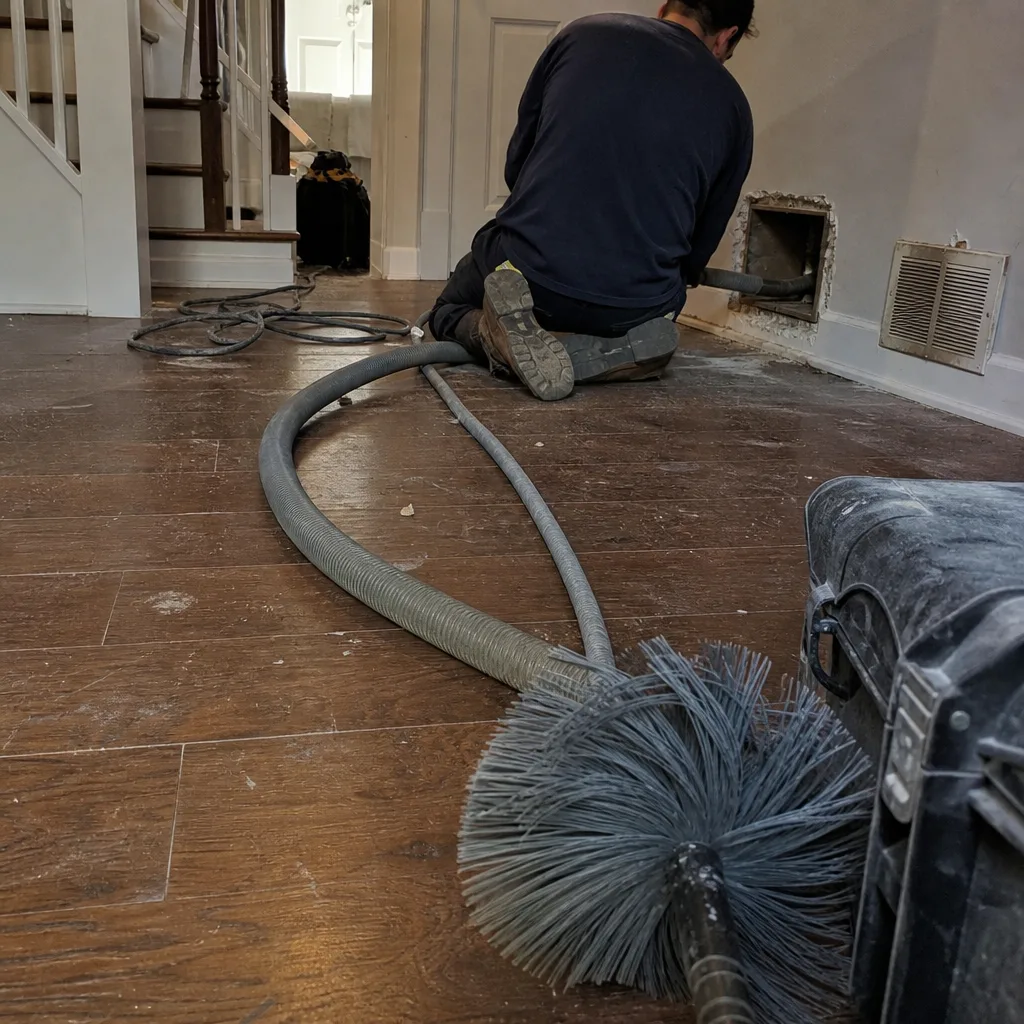 Before
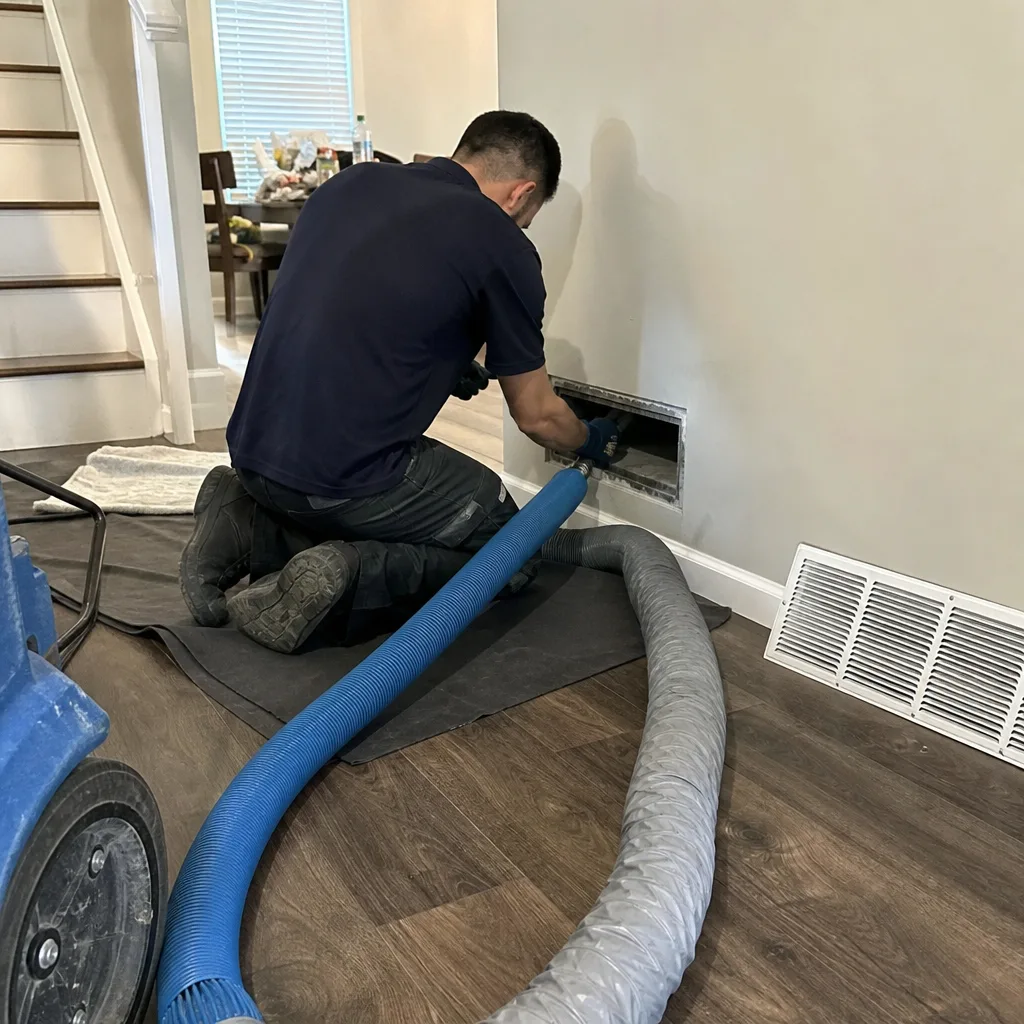 After
After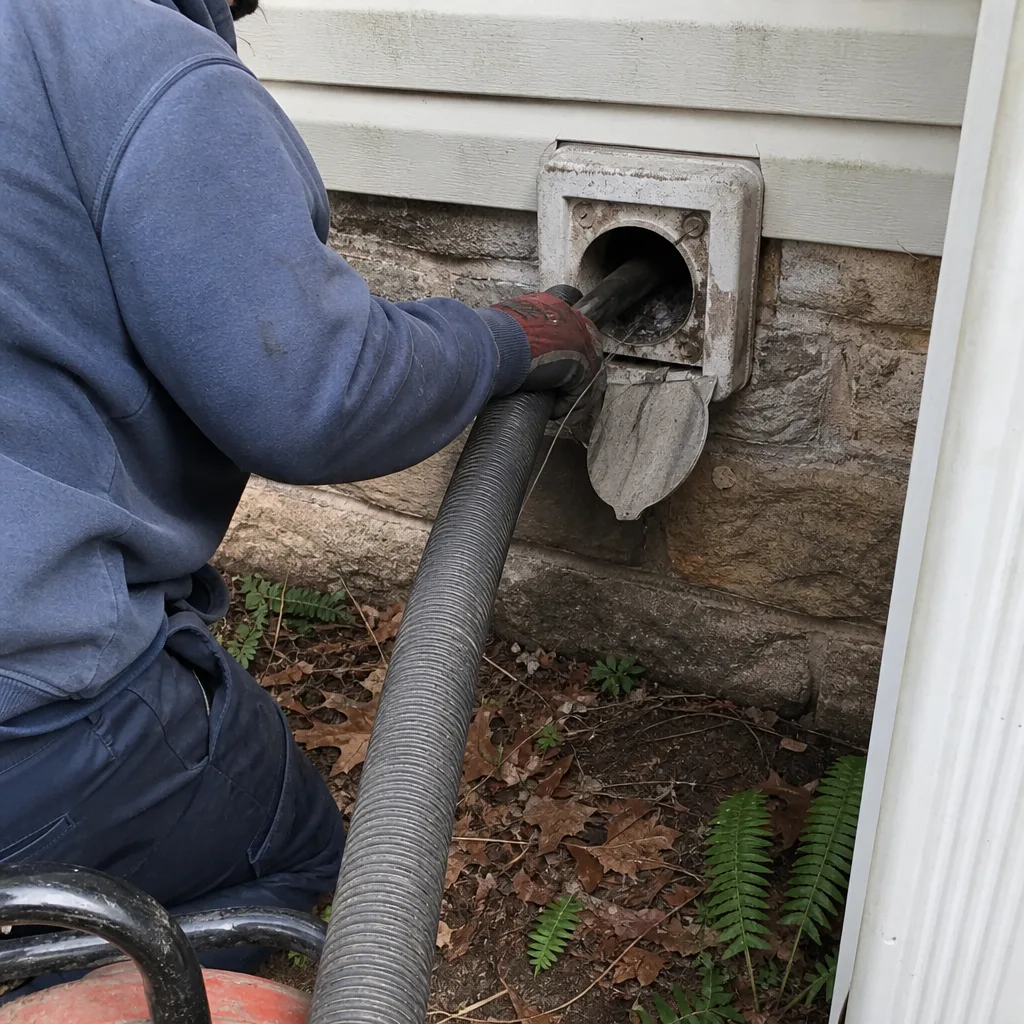 Before
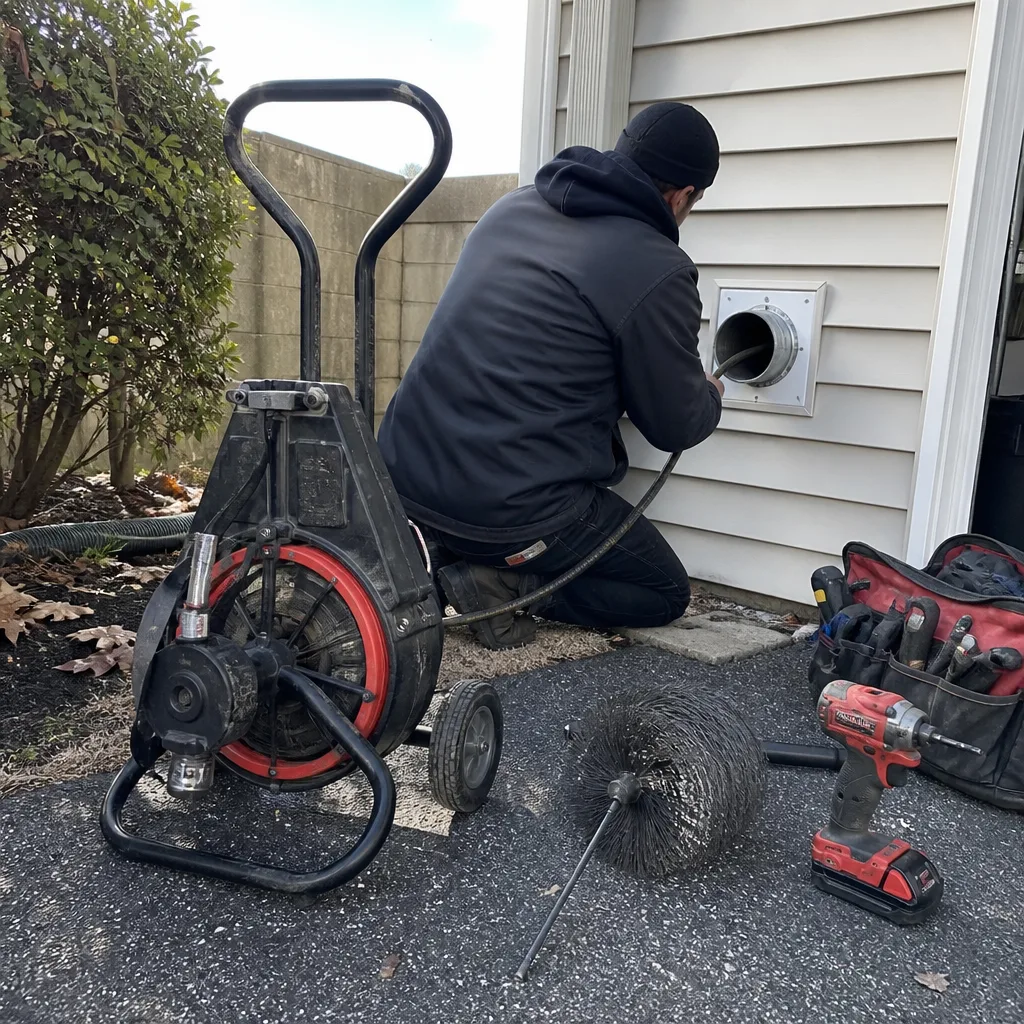 After
AfterThe Complete Guide to Air Duct Cleaning in Rockville
The EPA does not recommend routine air duct cleaning. That single sentence, buried on the agency’s indoor air quality page, contradicts the marketing of dozens of Rockville-area contractors who sell annual or biennial “maintenance” cleanings as standard homeowner hygiene. The gap between what federal guidance actually says and what local invoices claim is where homeowners in neighborhoods like Twinbrook, Hungerford, and Fallsmead routinely overpay for work that cannot be documented to have changed anything. This guide replaces vague industry talking points with specific measurements, cost figures, and photograph-reading skills so you can evaluate any contractor’s claim, including ours, on evidence rather than assurance. For more context on DIY vs Professional Air Duct Cleaning: The Rockville Homeowner’s Decision Guide, see our companion resource.
Quick Answer
Professional air duct cleaning in Rockville typically costs $400-$900 for a complete residential system, covers all supply and return duct runs with negative-pressure extraction, and should conclude with dated before-and-after photographs of every run. The service is worth considering when you can document visible mold, verified pest intrusion, or post-renovation debris, not as a routine preventive measure. Learn about our Air Duct Cleaning services and how we document these specific conditions.
Table of Contents
- What NADCA’s ACR Standard Actually Requires
- When Duct Cleaning Is Documented to Help
- How to Read a Before/After Photograph Critically
- Rockville-Specific Factors: Climate, Housing Stock, and System Layouts
- What a Written Scope of Work Should Include
- What Air Duct Cleaning Costs in Rockville
- How to Choose a Contractor in Rockville
- Common Mistakes to Avoid
- When to Call a Professional
- Frequently Asked Questions
 Before
 After
AfterWhat NADCA’s ACR Standard Actually Requires
The National Air Duct Cleaners Association publishes ACR, the Assessment, Cleaning, and Restoration of HVAC Systems standard. Most Rockville homeowners will never read it. Most contractors selling “NADCA-certified” work hope you don’t. Here’s what the standard actually mandates, translated from trade language into a plain checklist you can use during any contractor visit.
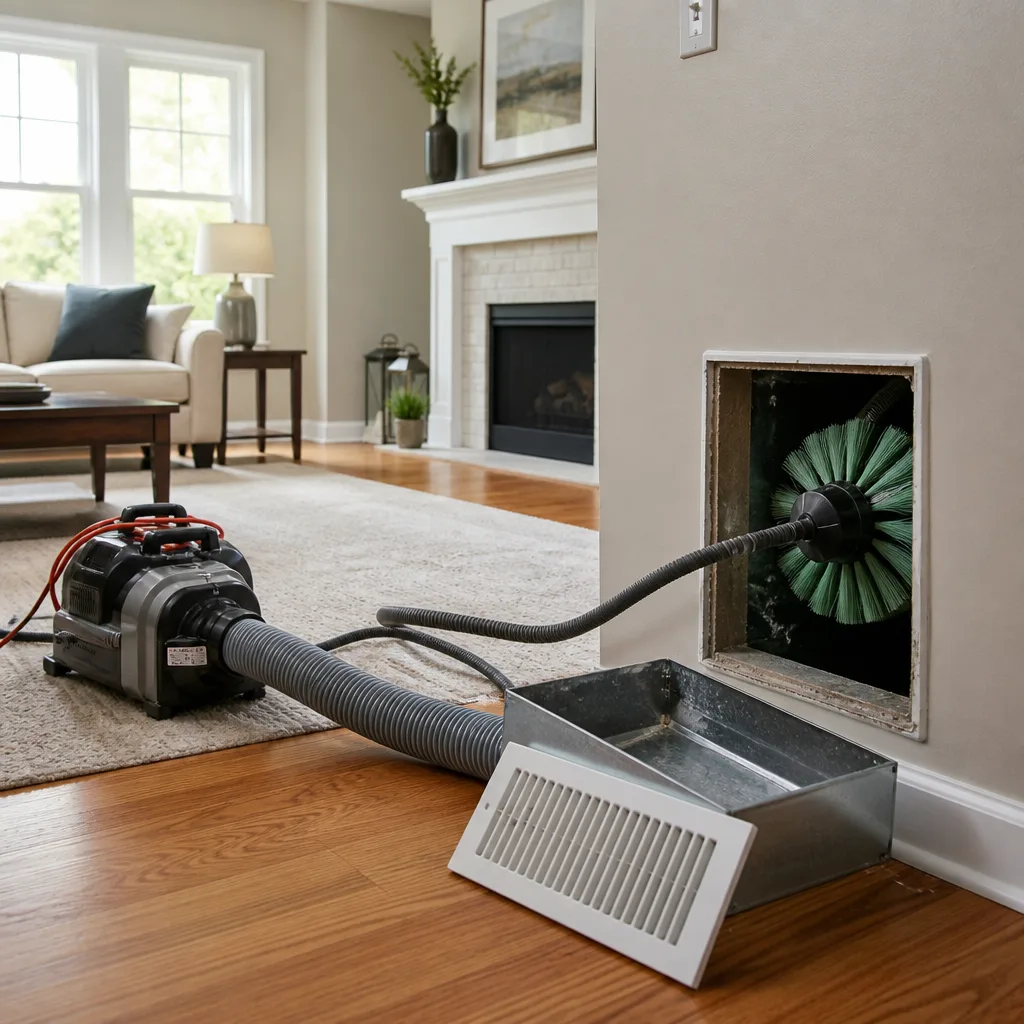
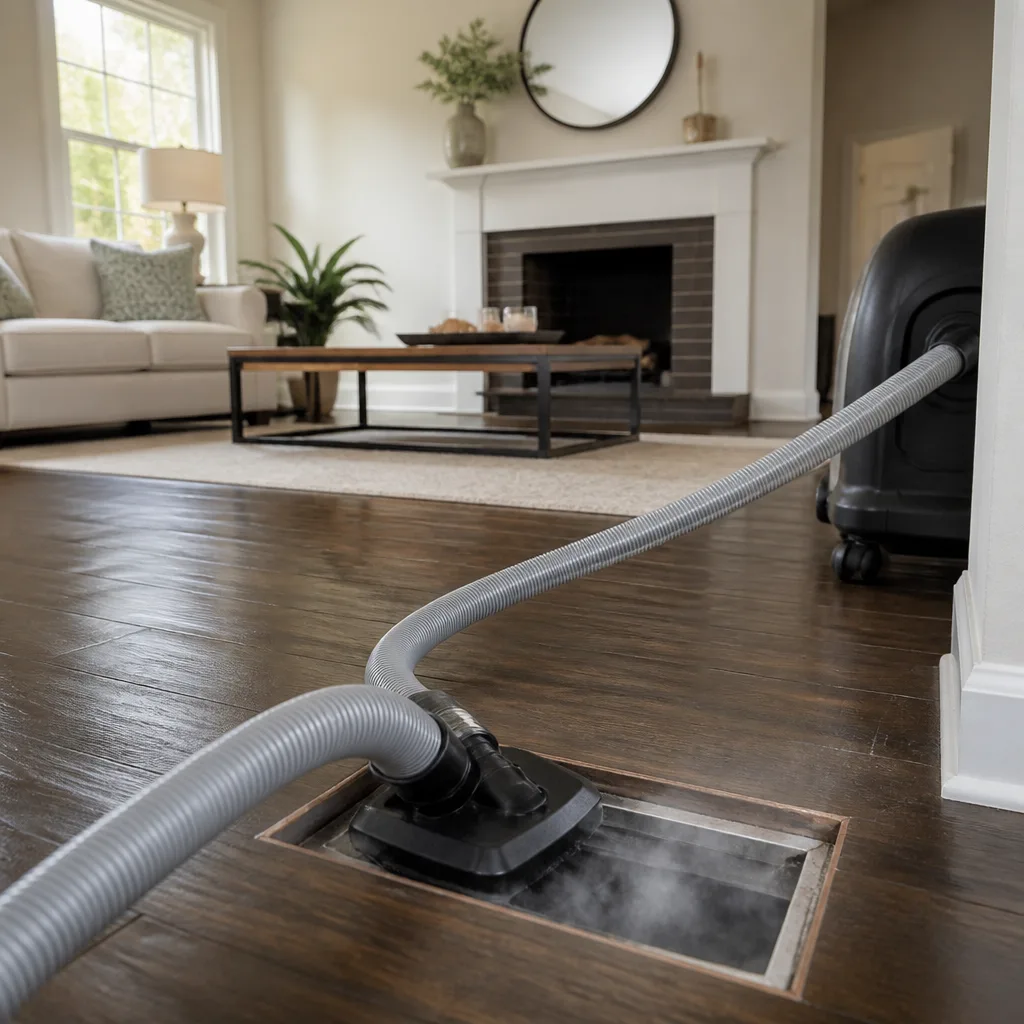
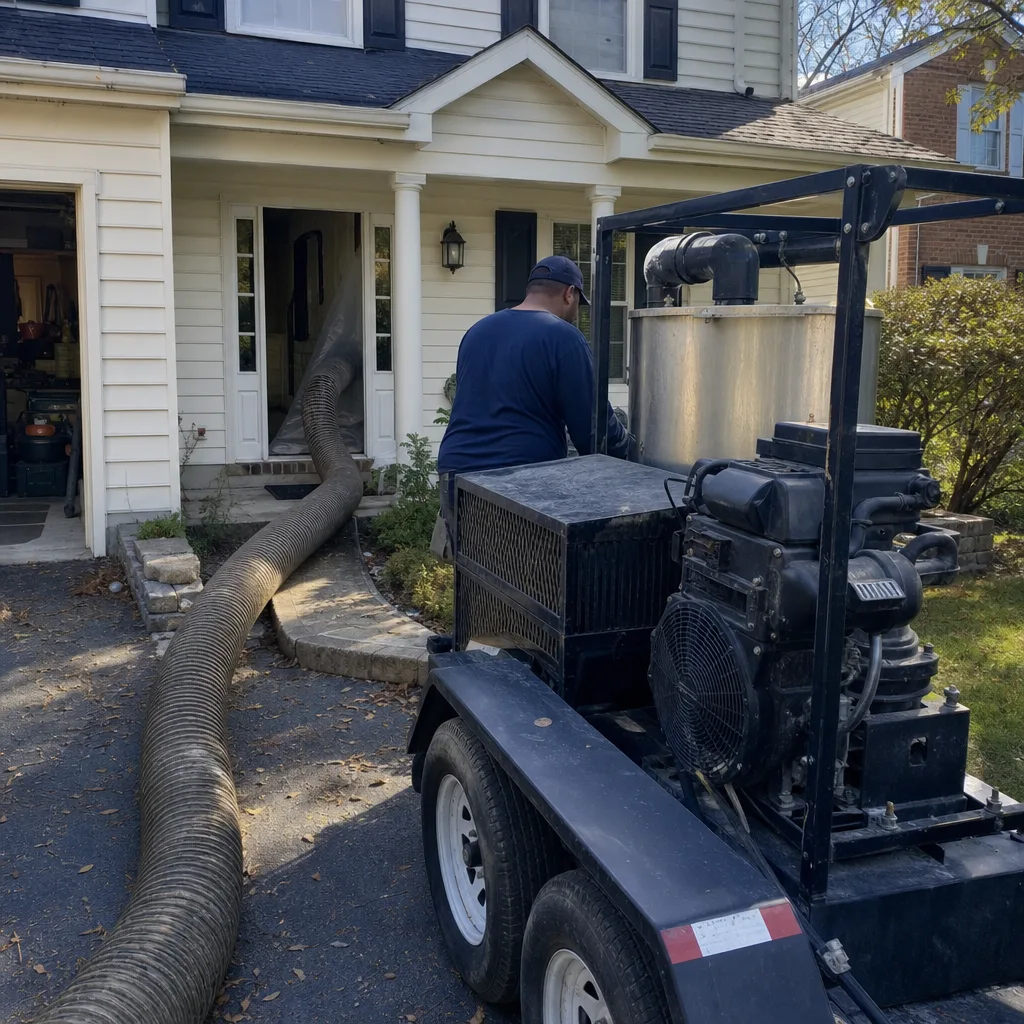
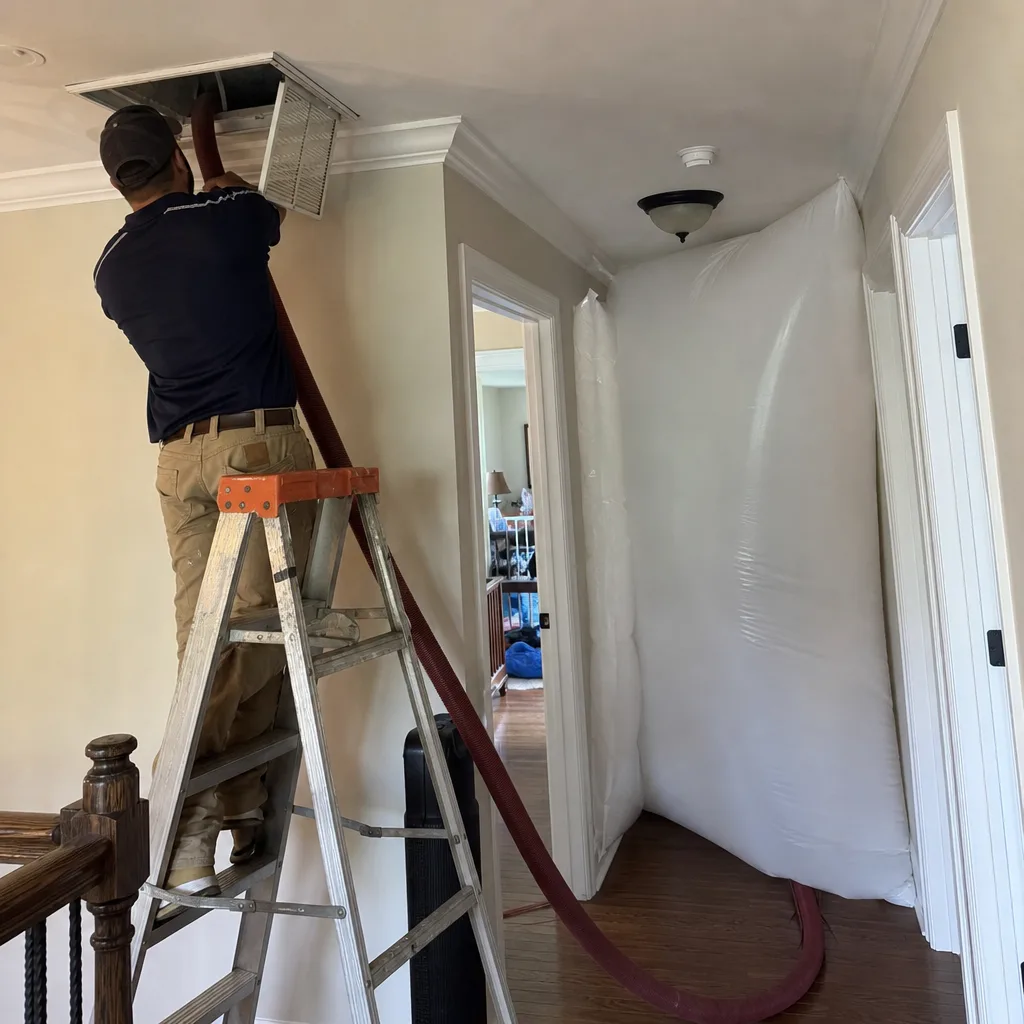
Source containment. The standard requires that the cleaning method prevent contaminants from entering occupied space during the work. This means sealed access ports, not open vents with a shop vacuum running nearby. Negative-pressure extraction, the method we use with equipment from Abatement Technologies, pulls debris toward the collection unit rather than allowing it to escape into your living areas.
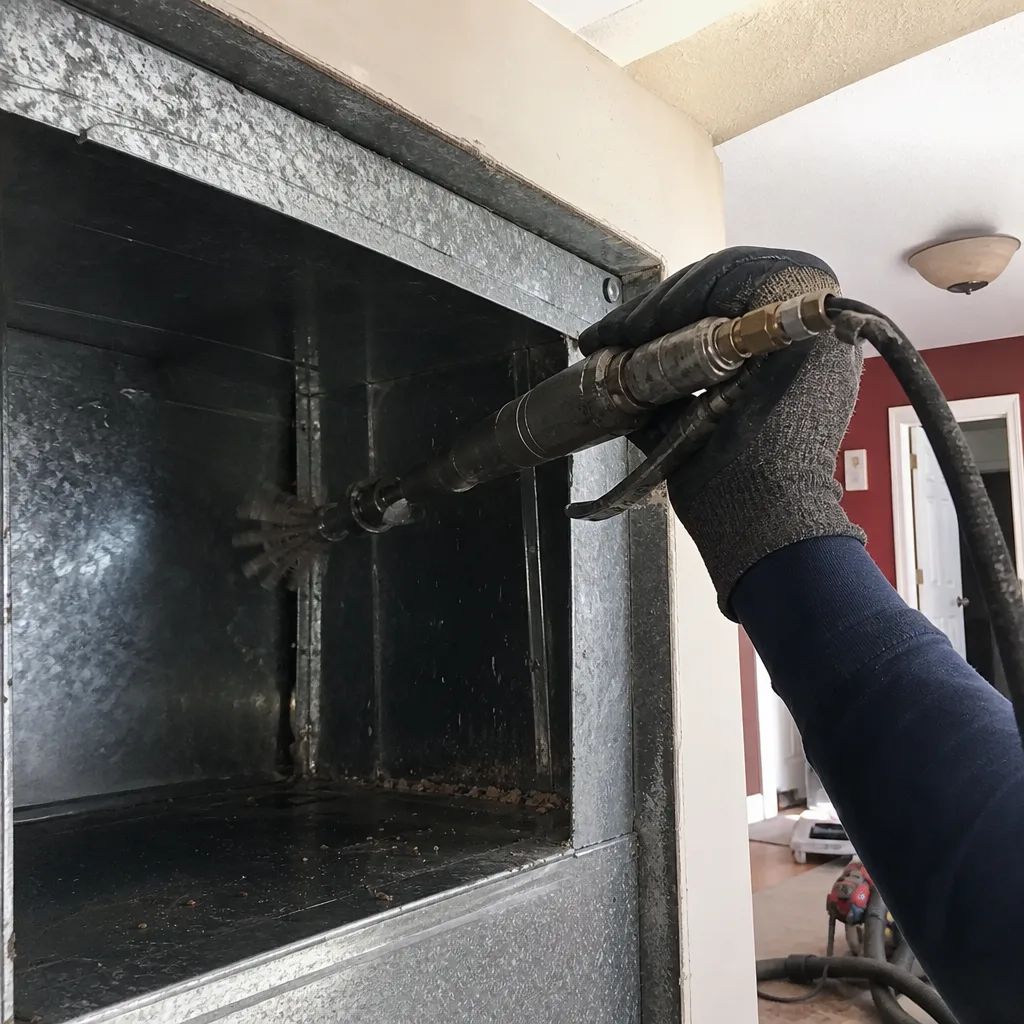
Mechanical agitation. ACR requires that debris be dislodged before extraction. Compressed air whips, rotary brushes, or pneumatic tools must contact the duct interior. A vacuum hose inserted into a static duct does not meet the standard. When we deploy Rotobrush equipment on a residential system in Rockville, the brush head makes physical contact with the duct walls at every point the camera can reach.
Complete system cleaning. The standard defines the HVAC system as including supply ducts, return ducts, registers, grilles, diffusers, heat exchangers, cooling coils, condensate drain pans, fan motor and housing, and the air handling unit. A contractor who cleans only “the vents” is not performing ACR-compliant work.
Post-cleaning verification. NADCA requires that the cleaning effectiveness be verified. The standard permits visual inspection, debris sampling, or photographic documentation. We use the third method, photographing every duct run before and after, because it produces a record the customer keeps rather than a verbal assurance that dissipates when the truck leaves.
Here’s what ACR compliance looks like in practice on a typical Rockville single-family home:
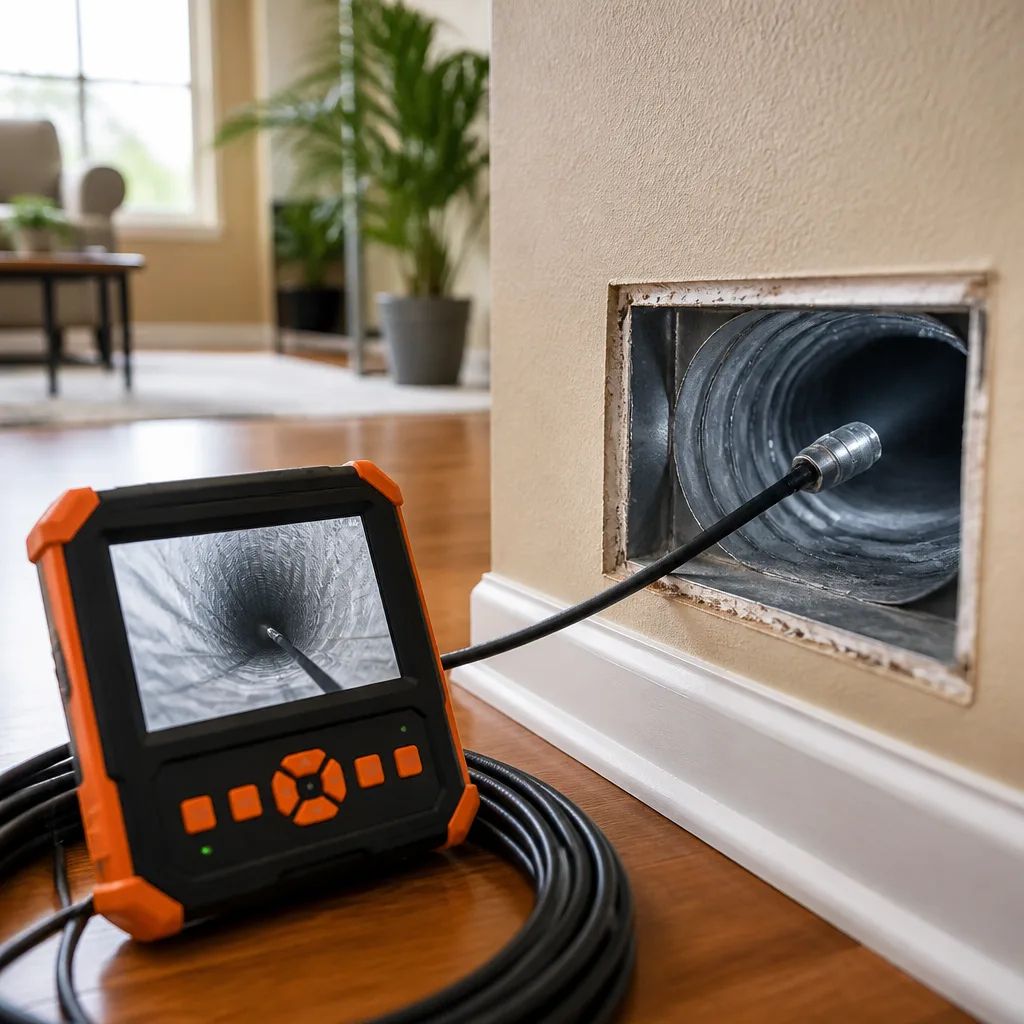
- Pre-job inspection with camera insertion at multiple access points, photographs dated and saved
- Sealed containment of the air handling unit and all return plenums
- Mechanical agitation of each supply and return duct run, typically 8-15 runs in a Montgomery County split-level
- Negative-pressure extraction during agitation, maintaining specified airflow velocity at the collection source
- Component-level cleaning of coils, blower assembly, and drain pan
- Post-cleaning camera run with dated photographs of every previously documented location
- Written scope completion checklist signed by the technician and provided to the customer
Any contractor who cannot explain which of these steps they perform, and show you the corresponding documentation from a recent job, is not selling ACR-standard work regardless of their membership status.
When Duct Cleaning Is Documented to Help
The EPA’s position, that routine cleaning is unnecessary, leaves room for specific documented conditions where cleaning has measurable benefit. Understanding the distinction protects you from paying for speculative work.
Visible mold growth inside hard-surface ducts. The EPA states that if you have insulated fiberboard ductwork and mold is present, the affected material may need removal and replacement, not cleaning. For metal ducts, professional cleaning with appropriate antimicrobial treatment, followed by moisture source correction, is the documented protocol. In Rockville, we see this most often in homes near Rock Creek Park and along the Potomac tributaries where summer humidity exceeds 75% for extended periods and basement dehumidification is inadequate.
Verified pest intrusion. Rodent or insect infestation in ductwork requires cleaning after extermination. The debris includes nesting material, droppings, and carcasses that circulate allergenic particles. Documentation from a licensed pest control operator should precede the cleaning call.
Post-renovation debris. Construction dust, particularly from drywall sanding and flooring installation, accumulates in ductwork during active renovation. The particles are fine enough to pass through standard filters and resettle throughout the system. Cleaning within weeks of project completion, before debris compacts, is more effective than delayed intervention.
Excessive debris causing airflow restriction. This requires measurement, not assumption. A contractor should show you static pressure readings or visual evidence of register blockage before recommending cleaning for airflow improvement. We’ve measured systems in older Rockville homes, particularly the 1950s-1970s stock near Twinbrook, where decades of accumulation reduced effective airflow by 15-20% at distant registers.
Conditions where cleaning benefit is not documented include: general dustiness in the home, routine allergy symptoms without duct-specific evidence, odor complaints without source identification, and “it’s been X years” scheduling logic. These are the scenarios where the EPA’s skepticism applies, and where the $79 coupon industry thrives.
How to Read a Before/After Photograph Critically
Every Rockville contractor now claims to provide before-and-after photos. Few customers know how to evaluate whether those photos prove anything. The camera can mislead as effectively as it can document.
Angle consistency. A before photo shot from the duct entrance showing a debris field, followed by an after photo shot from three feet deeper where the duct was already cleaner, proves nothing. Demand paired photographs from identical insertion depths, marked by footage counters or physical reference points.
Lighting matching. Bright after photos can make any surface look cleaner. The before and after images should use identical light sources and exposure settings. Our photo records include a calibration shot of a gray card at the duct entrance so customers can verify consistent exposure.
Location coverage. A single before-and-after pair from “the main duct” does not represent the entire system. A thorough documentation set includes every supply and return run, identified by room location. For a typical Rockville home with 10-12 registers, expect 20-24 individual photographs minimum.
Timestamp verification. Photos should carry embedded metadata or be presented on a dated report. Screenshots from a monitor during the job, without timestamps, could be from any home.
What the photo cannot show. Camera images do not verify negative-pressure containment, mechanical agitation depth, or post-cleaning airflow improvement. They are necessary but not sufficient documentation. The complete record combines photographs with the written scope, equipment checklists, and any measurement data.
When we deliver a Documented Photo Record on a Rockville job, it includes: GPS-tagged location data, technician identification, footage-counter readings, calibration reference, and a signed attestation that no images were altered. This is Haven Standard Clause 4: Documented Outcomes. Anything less is a marketing claim, not evidence.
Rockville-Specific Factors: Climate, Housing Stock, and System Layouts
Air duct cleaning in Rockville differs from the same service in Phoenix or Minneapolis because the local environment and building stock create distinct conditions. Understanding these factors helps you interpret what a contractor finds and whether their recommendations make sense.
Humidity and mold risk. Montgomery County averages 65-75% relative humidity from June through September. Ductwork in unconditioned basements or crawl spaces, common in the split-level and rambler stock built 1955-1985, experiences surface condensation when cool supply air meets humid ambient conditions. We’ve photographed active mold growth on duct interiors in homes near Lake Needwood and along the Rock Creek watershed where basement moisture management was neglected. Cleaning without correcting the moisture source is temporary; the standard protocol requires both.
Housing age and duct material. The pre-1970 homes in neighborhoods like Lincoln Park and West End often have galvanized steel ductwork with taped seams, not modern sealed systems. These ducts accumulate debris at seam irregularities and can harbor corrosion products that resemble soil debris to an untrained eye. Post-1990 construction in areas like Fallsgrove typically uses flex duct with factory-sealed connections, which requires different cleaning equipment and access strategies. A contractor using the same approach on both is not adjusting for material reality.
Forced-air system layouts. Montgomery County’s common split-level design places the air handler in a central basement location with long horizontal duct runs to upper and lower levels. These extended runs have lower airflow velocity at distant registers, which increases particle settling. We’ve measured supply runs in Twinbrook split-levels where the first elbow, 15 feet from the handler, carried three times the debris load of the terminal register. A cleaning protocol that treats all runs identically misses this mechanical reality.
Local air quality influences. Rockville’s location on I-270 and the Metro corridor means higher fine particulate exposure than exurban Montgomery County. Homes within 500 feet of major traffic arteries show measurably higher soot loading in return ductwork. This isn’t a reason for routine cleaning, but it explains why two homes of identical age and construction may present different interior conditions.
Permit and code context. Montgomery County requires permits for ductwork modification but not for cleaning. However, if cleaning reveals deteriorated flex duct or failed sealing that requires repair, that work may trigger inspection requirements. We flag these conditions in our written scope with a note on permit necessity, so homeowners aren’t surprised by downstream compliance obligations.
What a Written Scope of Work Should Include
Haven Standard Clause 1 requires a written price before any work starts. The scope of work that accompanies that price should be specific enough that another technician could execute the job without asking questions. Here’s what belongs on the page, and what indicates a contractor who hasn’t thought through the work.
System identification. Square footage served, number of supply and return registers, air handler location and model if known, and duct material type (galvanized steel, flex, fiberboard, or mixed).
Access plan. Where the technician will create or use access ports to reach all duct runs. This matters in Rockville’s older homes where original construction may not have included adequate access.
Equipment specification. The actual tools to be used: negative-pressure collection unit model, agitation method, and any contact materials (brushes, whips, compressed air). Generic terms like “professional equipment” are insufficient. We specify equipment from Guardsman, Nikro, or Rotobrush depending on the system configuration.
Component coverage. Explicit list of what is included: supply ducts, return ducts, registers, grilles, air handler cabinet, blower assembly, evaporator coil, condensate pan, and drain line. Exclusions should be equally explicit.
Documentation deliverables. What photographs the customer receives, in what format, with what identifying information. Our standard scope specifies: dated before-and-after images of every duct run, technician identification, equipment calibration reference, and digital delivery within 24 hours.
Price and payment terms. Single flat price for the complete scope, not per-vent or per-hour pricing. Payment schedule. Any conditions that would modify the price, with pre-approval required.
Warranty terms. Duration, coverage scope, and claim procedure. Our 365-Day Done Right Promise is referenced by name and clause number on every scope.
Here’s a sample excerpt from an actual Rockville scope:
Property: 12400 block of Twinbrook Parkway, Rockville, MD. System: 1,800 sq ft conditioned space, 10 supply registers, 2 return grilles, basement-located air handler, galvanized steel supply ducts with flex return drops. Scope: Negative-pressure extraction with Abatement Technologies HEPA-collection unit, Rotobrush mechanical agitation of all supply runs, compressed-air whip cleaning of return drops, component cleaning of blower assembly and condensate pan. Documentation: 20 dated photographs with footage counter readings. Price: $675, flat, inclusive. Warranty: 365-Day Done Right Promise, Haven Standard Clause 7.
If a contractor’s scope fits on a half-page, or omits any of these elements, you are buying an undefined service at an undefined price. For step-by-step guidance on vetting providers, read How to Hire a Air Duct Cleaning Contractor in Rockville: A Step-by-Step Guide.
What Air Duct Cleaning Costs in Rockville
Price transparency is the core of Haven Standard Clause 1. Here are the actual ranges we quote for Rockville homes, based on system size and configuration, with the specific factors that move a job within or above these brackets.
| System Size | Typical Configuration | Price Range | Factors That Increase Cost |
|---|---|---|---|
| Small (under 1,500 sq ft) | 6-8 supply registers, 1-2 returns, basement handler | $400-$550 | Flex duct requiring gentler agitation; limited basement access; pest debris requiring PPE protocols |
| Medium (1,500-2,500 sq ft) | 9-14 supply registers, 2-3 returns, mixed duct materials | $550-$750 | Multiple handler locations; extensive flex duct; post-renovation debris load; mold protocol requirements |
| Large (2,500-4,000 sq ft) | 15-22 supply registers, 3-4 returns, zoned system | $750-$900 | Third zone or addition with separate handler; extensive fiberboard duct; multiple access challenges |
| Very large or complex (4,000+ sq ft) | Custom or historic home, multiple systems, non-standard layout | $900-$1,400+ | Historic preservation constraints; specialized equipment for delicate materials; extensive pre-cleaning repairs |
These ranges reflect complete system cleaning with full documentation. Prices below $300 for any whole-system cleaning in Rockville should be treated with extreme skepticism. Explore more guides & resources on pricing, standards, and how to evaluate contractor claims. They typically indicate: limited register cleaning only, no air handler work, no photography, or bait-and-switch pricing where the quoted price applies to a fraction of the actual system.
We do not offer per-vent pricing. The practice fragments the scope and creates incentive for the technician to find “additional” vents on arrival. Our flat price per system, agreed in writing before work starts, removes that conflict.
Payment is due on completion, after you review the photo record and signed scope checklist. We do not require deposits for standard residential work. Financing is available for jobs exceeding $1,000.
How to Choose a Contractor in Rockville
The Rockville market includes national franchise operations, independent single-truck operators, and a few firms like ours that operate at intermediate scale with documented procedures. Here’s how to distinguish actual practice from claimed practice.
Verify the license. Maryland HVACR licenses are searchable through the Department of Labor. The license number should appear on the contractor’s website, not buried in a footer. Our license is published at the top of every page, including this one, because Haven Standard Clause 3: Verified Crews requires that customers know who is entering their home.
Request a sample photo record. Any contractor claiming documentation should be able to show you a complete record from a recent job with customer-identifying information redacted. Review it for angle consistency, lighting, location coverage, and timestamps. If they decline, they do not actually produce these records.
Ask about equipment by name. “Commercial-grade” and “professional” are meaningless. The specific brands in use, Rotobrush, Nikro, Guardsman, Abatement Technologies, can be researched independently for capability and appropriateness. A contractor who cannot name their equipment cannot explain why they chose it.
Check complaint history. The Maryland Attorney General’s office, Montgomery County Office of Consumer Protection, and NADCA’s member discipline records are public. Patterns of complaint matter more than single incidents.
Evaluate the estimate process. A contractor who will not commit to a written price before visiting, or who provides a price range that “might change,” is not offering Haven Standard Clause 1 compliance. Our estimates are flat and final, with the only modifications being homeowner-requested scope changes documented in writing.
Confirm technician identification. Background checks, uniformed appearance, and pre-arrival notification with name and photo are Haven Standard Clause 3 requirements, not courtesies. You should know who is arriving before they knock.
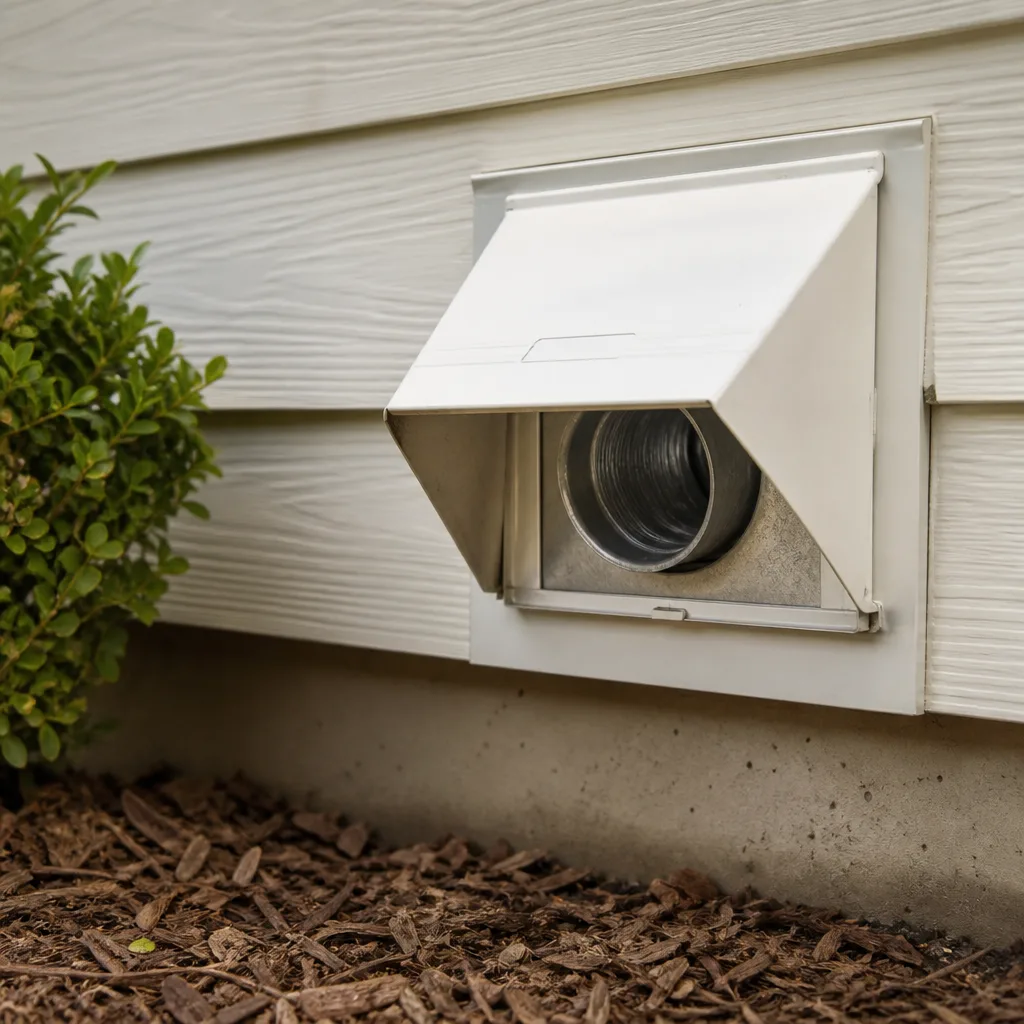
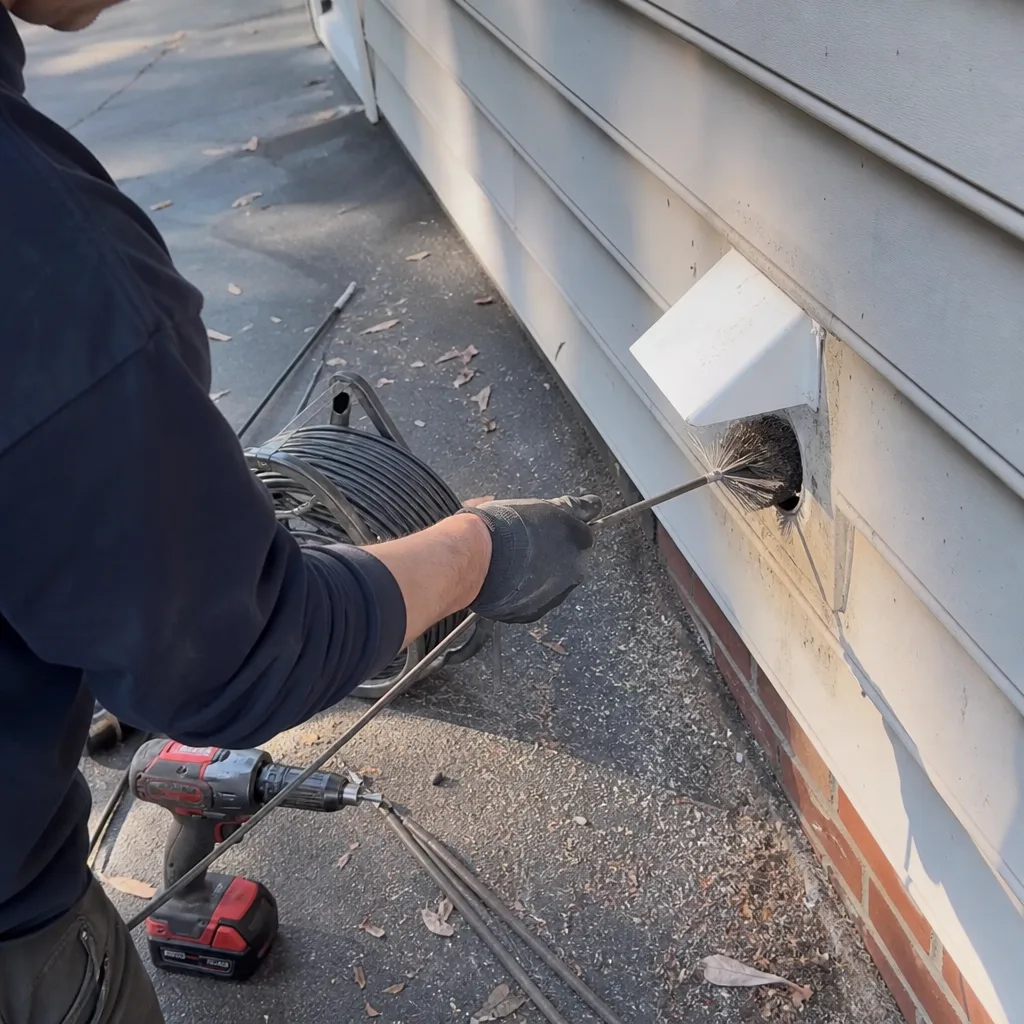
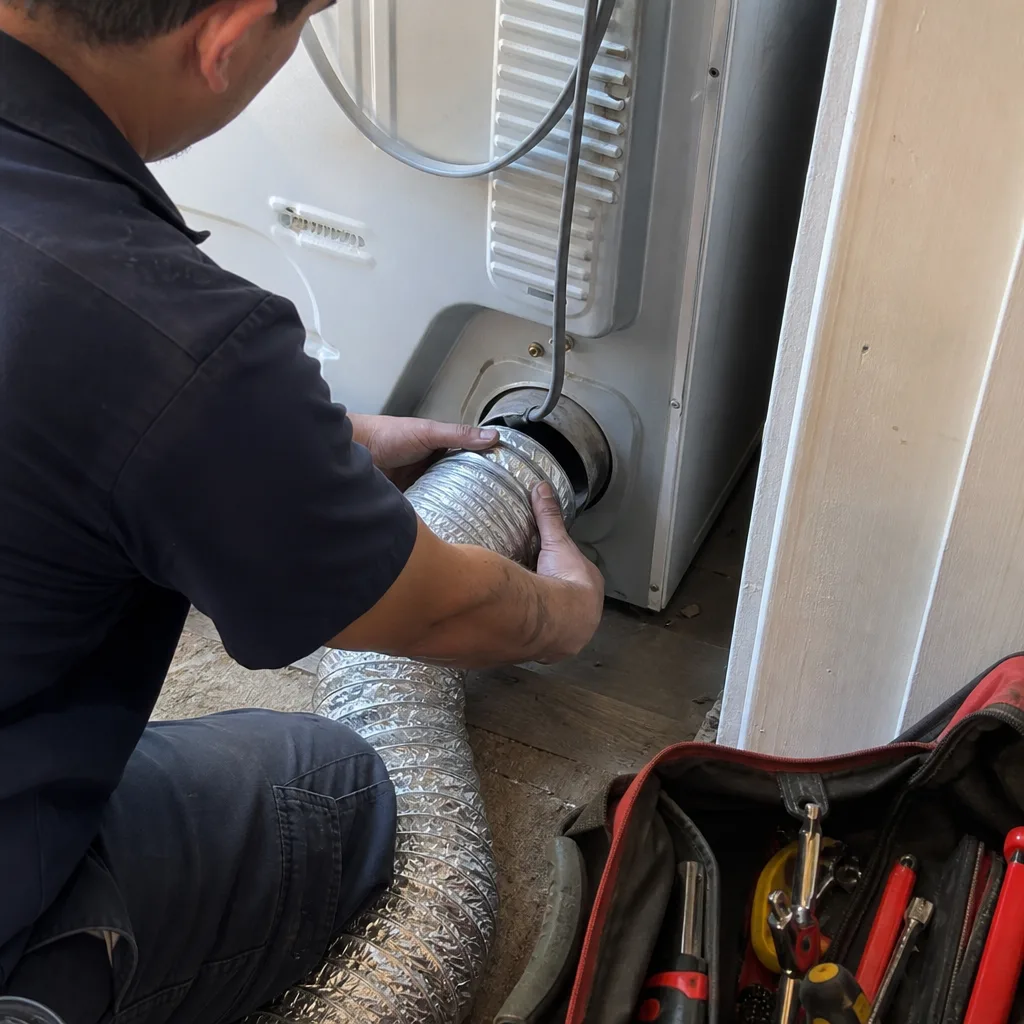
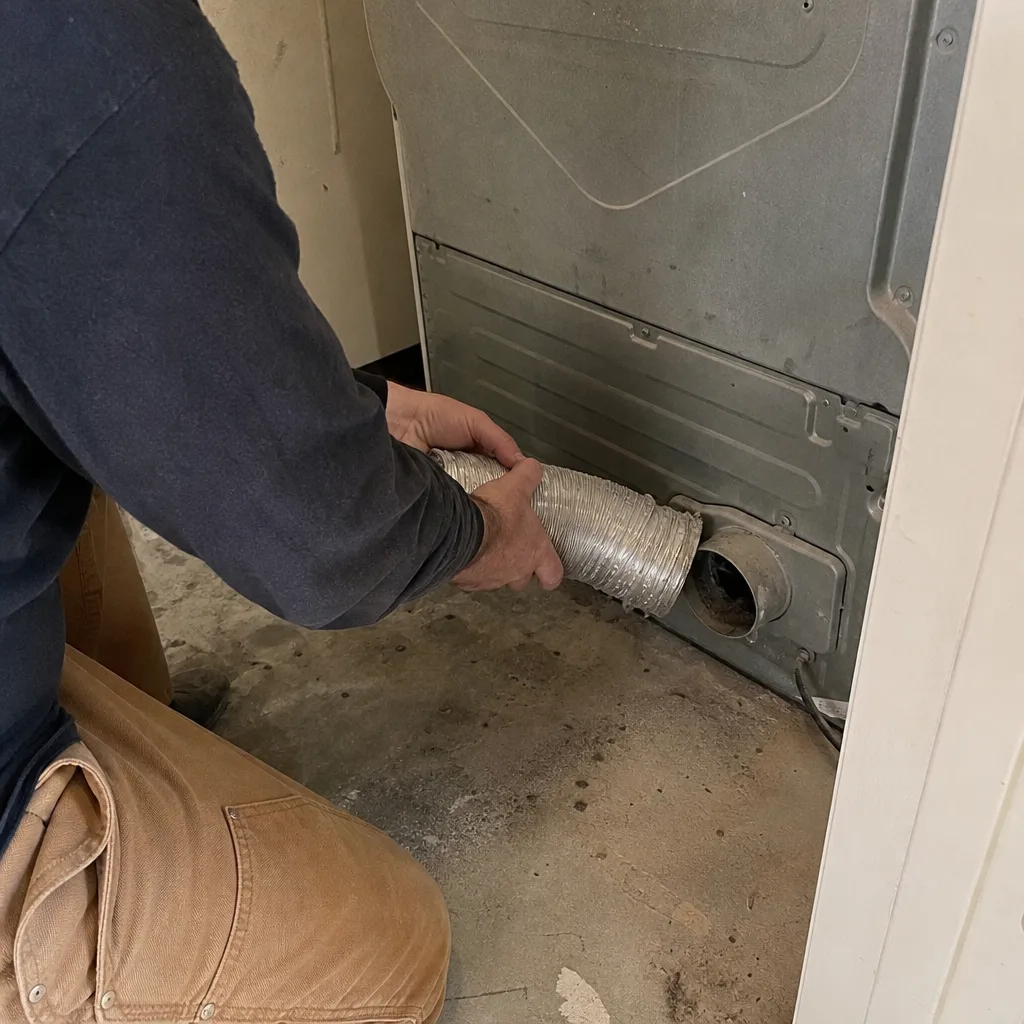
For dryer vent cleaning in Rockville, many of the same evaluation criteria apply, though the scope is narrower and the fire-safety stakes are different. For HVAC cleaning in Rockville, the component-level work on coils and blowers requires additional technical verification.
Common Mistakes to Avoid
- Scheduling by calendar, not condition. The “every three to five years” recommendation has no EPA support. Clean when you have documented cause, not when a coupon expires.
- Accepting per-vent pricing. This structure incentivizes technicians to discover “additional” vents on arrival. Insist on flat system pricing in writing.
- Ignoring moisture sources. Cleaning mold-affected ducts without fixing the humidity or leak that caused it is temporary. We’ve returned to Rockville homes where previous cleaners addressed symptom, not cause.
- Trusting photos without context. Dramatic before-and-after images from a single duct location may represent 5% of the system. Demand complete coverage documentation.
- Hiring based on lowest price alone. The $79-$149 offers in Rockville mailers typically cover register vacuuming only, omitting the air handler and duct runs where most debris accumulates. The final invoice often exceeds our flat price.
- Neglecting post-cleaning verification. If a contractor cannot show you what was removed, in volume or photographic evidence, you have no proof the work occurred. Our photo record includes this by standard.
- Confusing duct cleaning with duct sealing. Leaky ducts waste energy; cleaning does not seal them. If your air duct cleaning in Rockville reveals deteriorated seams, separate repair work may be needed.
When to Call a Professional
Call when you can document one of the verified conditions: visible mold inside ductwork, confirmed pest intrusion with debris, substantial post-renovation dust, or measured airflow restriction with visual register blockage. Call when you need a second opinion on another contractor’s recommendation, which we provide free with any written estimate. Call when you’re buying a home and want pre-purchase documentation of system condition, particularly for Rockville’s older stock where decades of accumulation may not be visible from registers.
CleanRun Air Duct Cleaning Rockville offers free estimates in Rockville. Every estimate includes a written flat price, equipment specification, and documentation plan before any work begins. Call (240) 255-4519.
Frequently Asked Questions
Complete residential air duct cleaning in Rockville costs $400-$900 for most homes, with larger or more complex systems ranging to $1,400. The price depends on system size, duct material, and access difficulty, not on a per-vent formula. Call (240) 255-4519 for a written flat price specific to your home, estimates are free.
Low quotes typically cover register surface cleaning only, omitting the duct runs, air handler, and documentation that constitute complete work. The $79-$149 offers common in Rockville mailers routinely produce final invoices of $500-$800 once the technician is on site and “discovers” additional necessary work. A flat written price before arrival prevents this escalation. Call (240) 255-4519 for a no-surprise quote.
Require dated before-and-after photographs of every duct run with consistent angles and lighting, a written scope completion checklist signed by the technician, and evidence of debris collection volume or disposal. Our Documented Photo Record, included on every job since 2013, provides this verification as a standard deliverable, not an upgrade.
The EPA does not recommend routine cleaning. Clean when you have documented conditions: visible mold, verified pest debris, post-renovation accumulation, or measured airflow restriction. For Rockville homes near high-traffic corridors or in high-humidity microclimates, more frequent inspection may be warranted, but inspection does not mandate cleaning.
Air duct cleaning addresses the distribution network: supply and return ducts, registers, and grilles. HVAC cleaning in Rockville includes the air handler components: blower assembly, evaporator coil, condensate pan, and heat exchanger. The services overlap but are not identical; a complete job addresses both. We scope each separately so customers understand what they’re paying for.
Cleaning alone rarely produces measurable energy savings. If debris accumulation has restricted airflow to the point of system strain, cleaning may restore designed performance. More commonly, energy waste in Rockville homes comes from duct leakage, which requires sealing, not cleaning. We measure static pressure and airflow before recommending cleaning for energy-related concerns.
We find active mold growth in approximately 15-20% of Rockville homes we inspect, concentrated in properties with basement moisture problems, inadequate dehumidification, or flex duct in unconditioned crawl spaces. High summer humidity accelerates growth once spores have a moisture source. Cleaning without moisture correction is temporary; we flag both conditions in our written scope.
The Bottom Line
Air duct cleaning in Rockville is worth paying for when you have documented cause, not when a calendar or coupon tells you to. The standard of evidence is simple: can the contractor show you what they found, explain what they’ll do in writing, and prove what they did with photographs you keep? Anything less is a promise, not a service. At CleanRun, we’ve built every procedure since 2013 around documentation that outlasts the technician’s departure. The 365-Day Done Right Promise, the written flat price, the photo record of every run, these are not marketing language. They are the terms under which we work, referenced by name and clause on every job.
Call (240) 255-4519 for a free estimate with a written flat price, or bring us a competitor’s written quote for a free second opinion under Haven Standard Clause 2.
Written by Tomas Reyes, Owner at CleanRun Air Duct Cleaning Rockville, serving Rockville since 2013.