
Last updated September 23, 2026
Whole-system duct and dryer vent check with before-and-after photos - you see exactly what came out of your vents
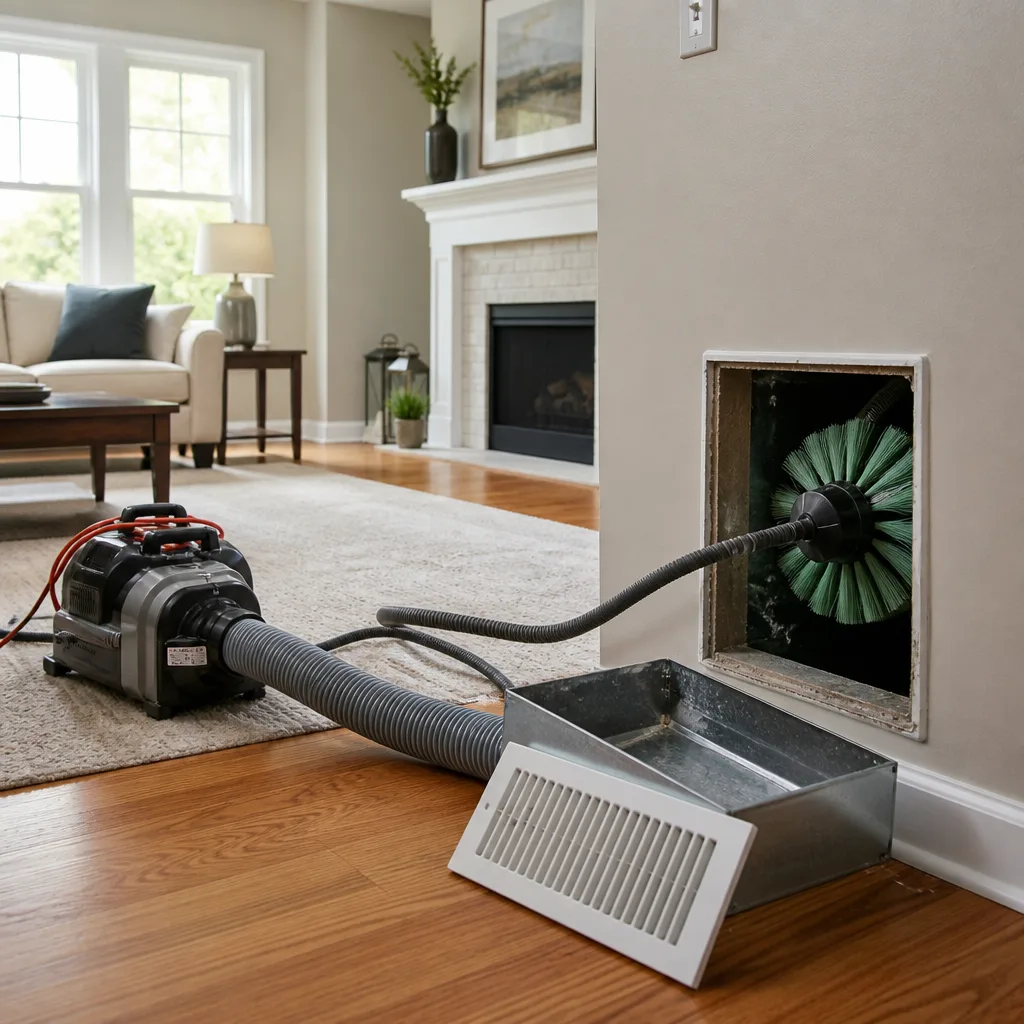
That "$99 whole-house special" is a bait ad - the real number appears once they are in your hallway, or the "clean" is a shop-vac at the register. We photograph the inside of your ducts before and after instead.
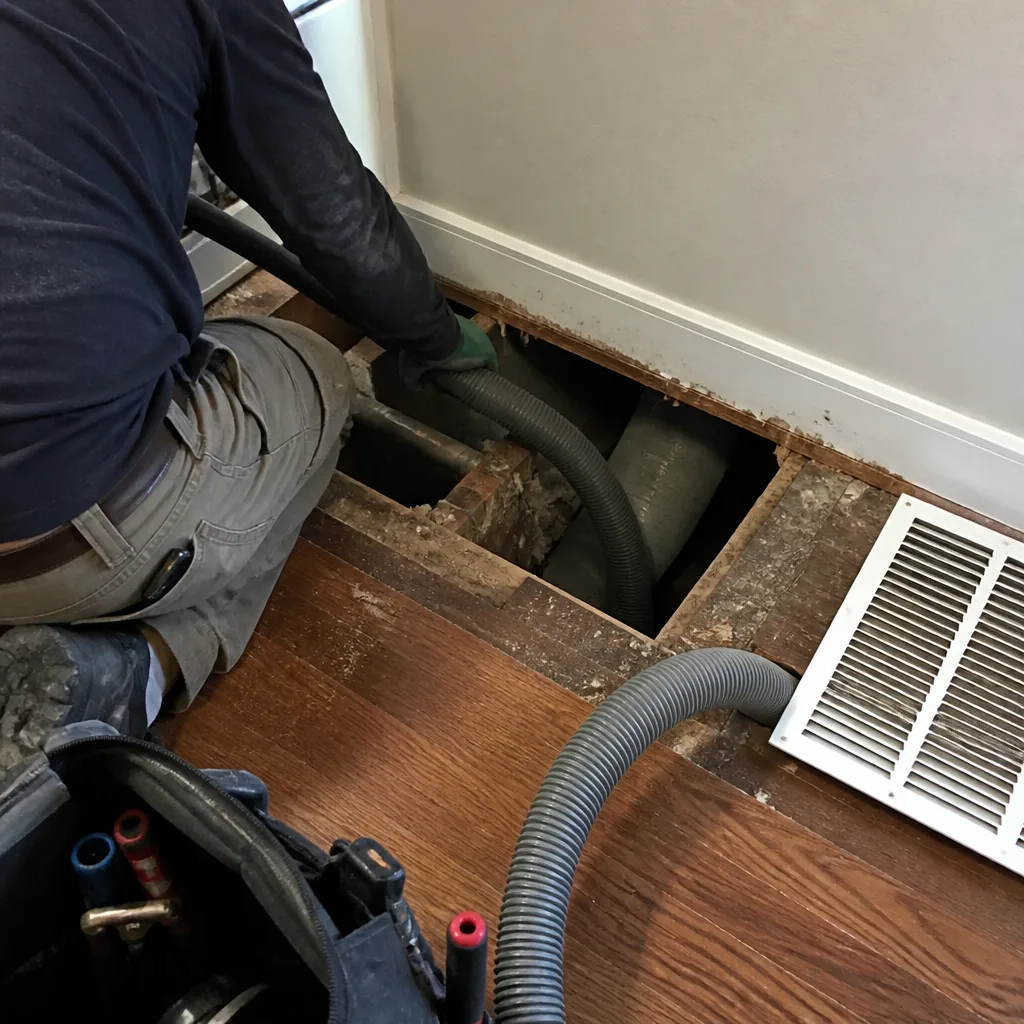 Before
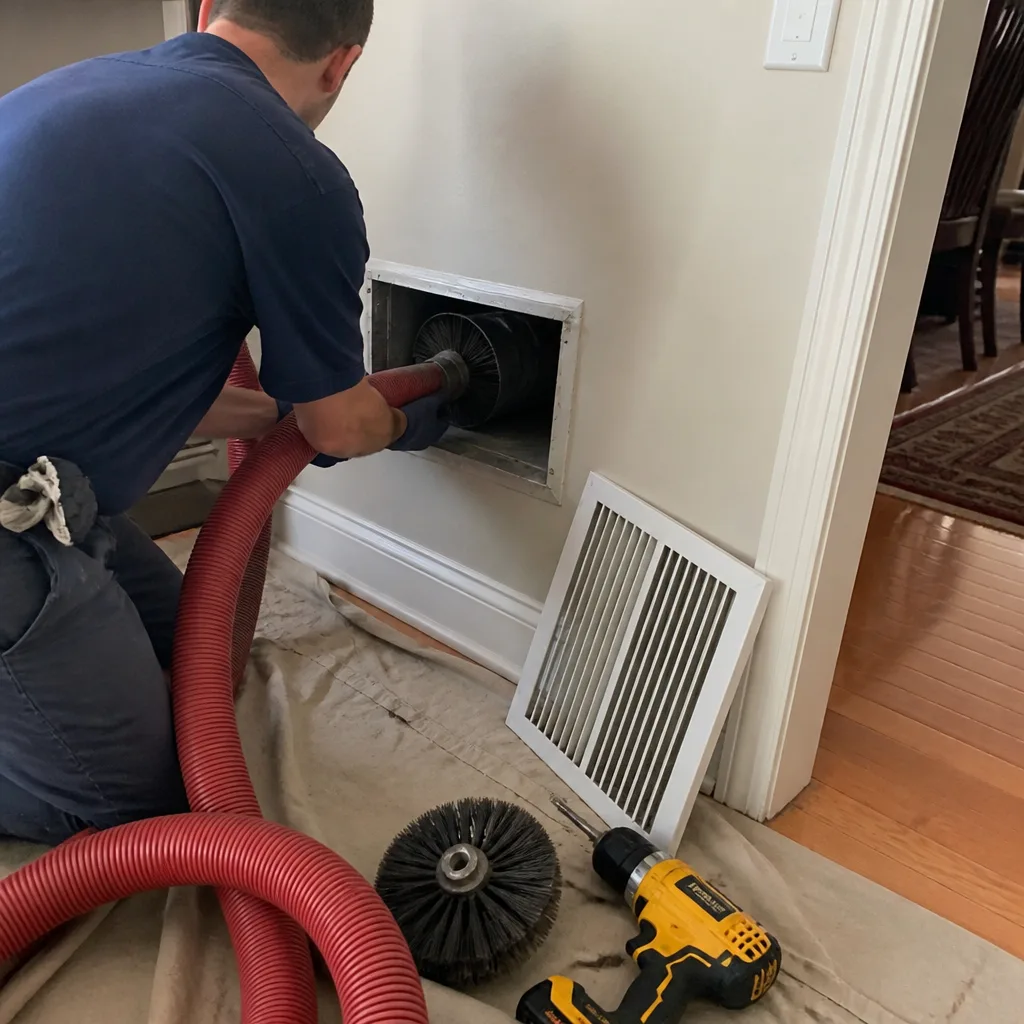 After
After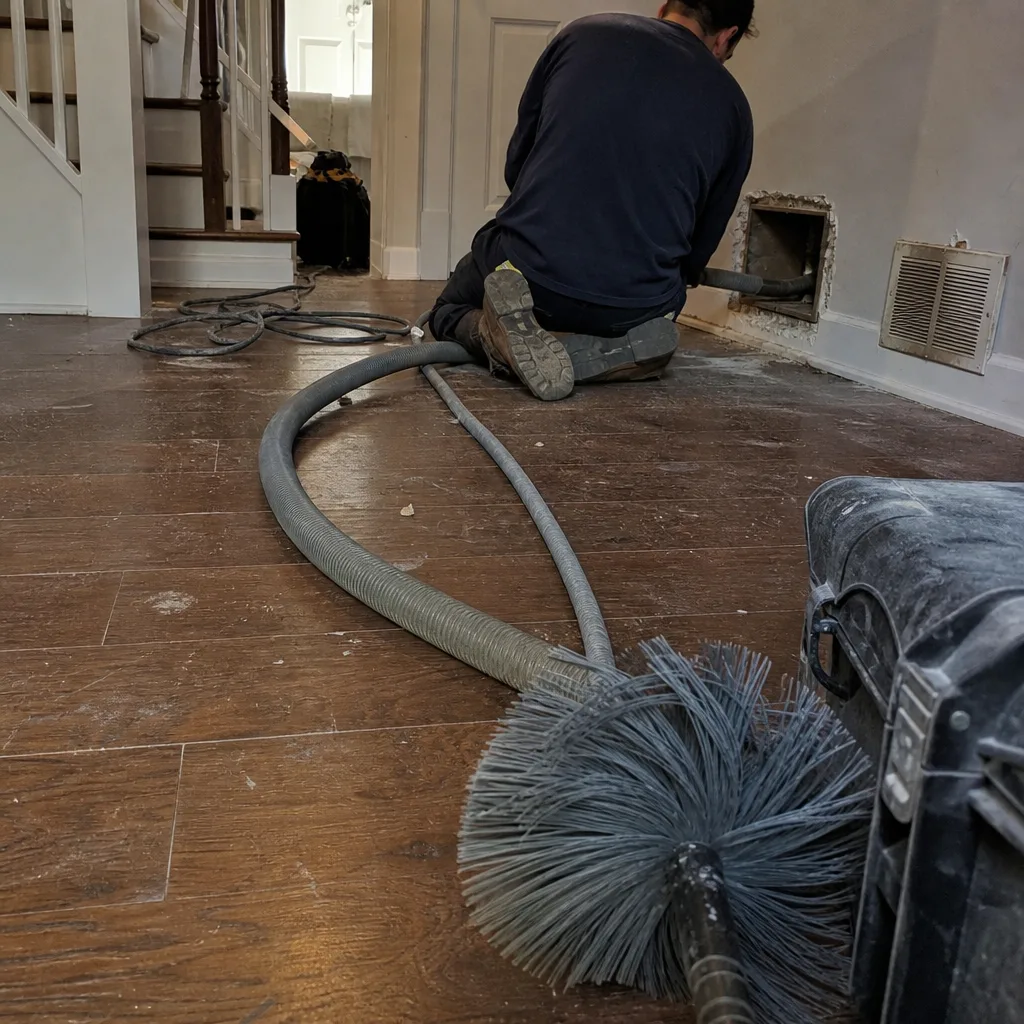 Before
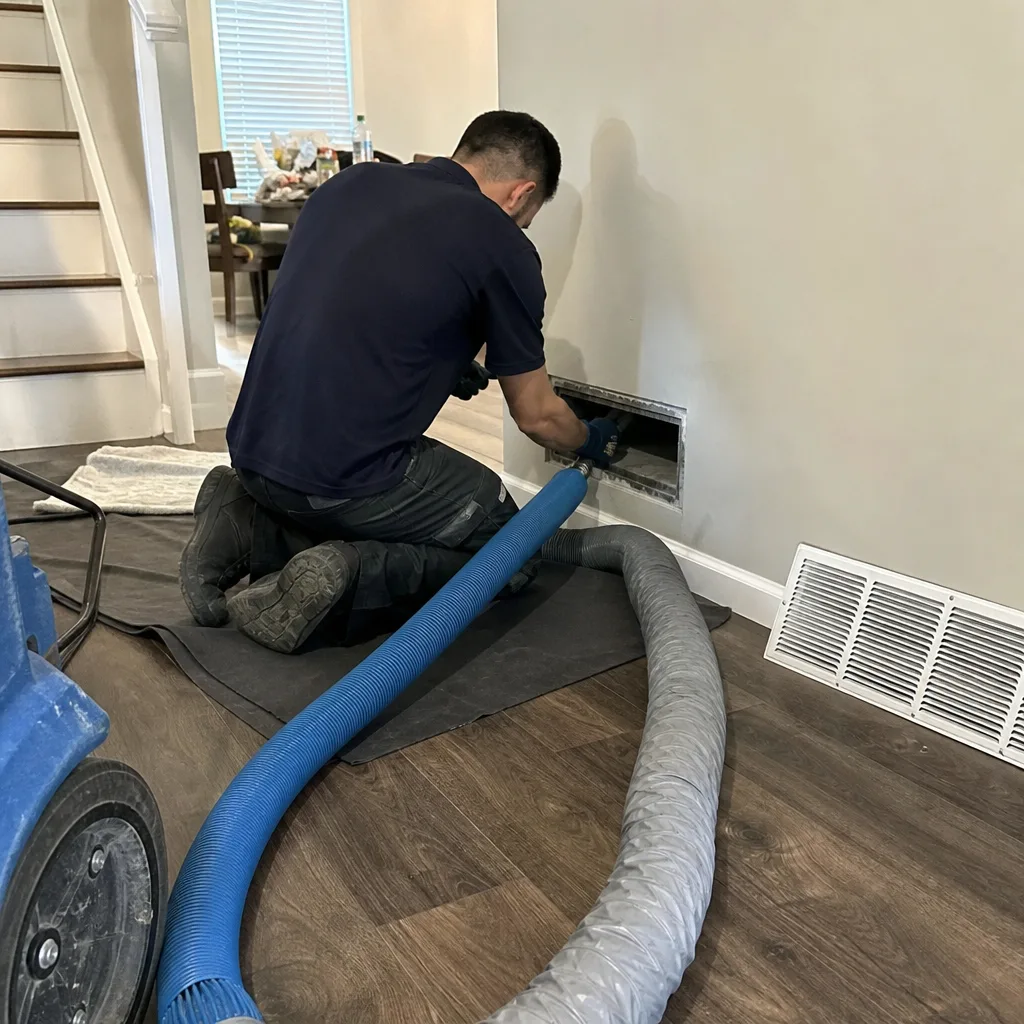 After
After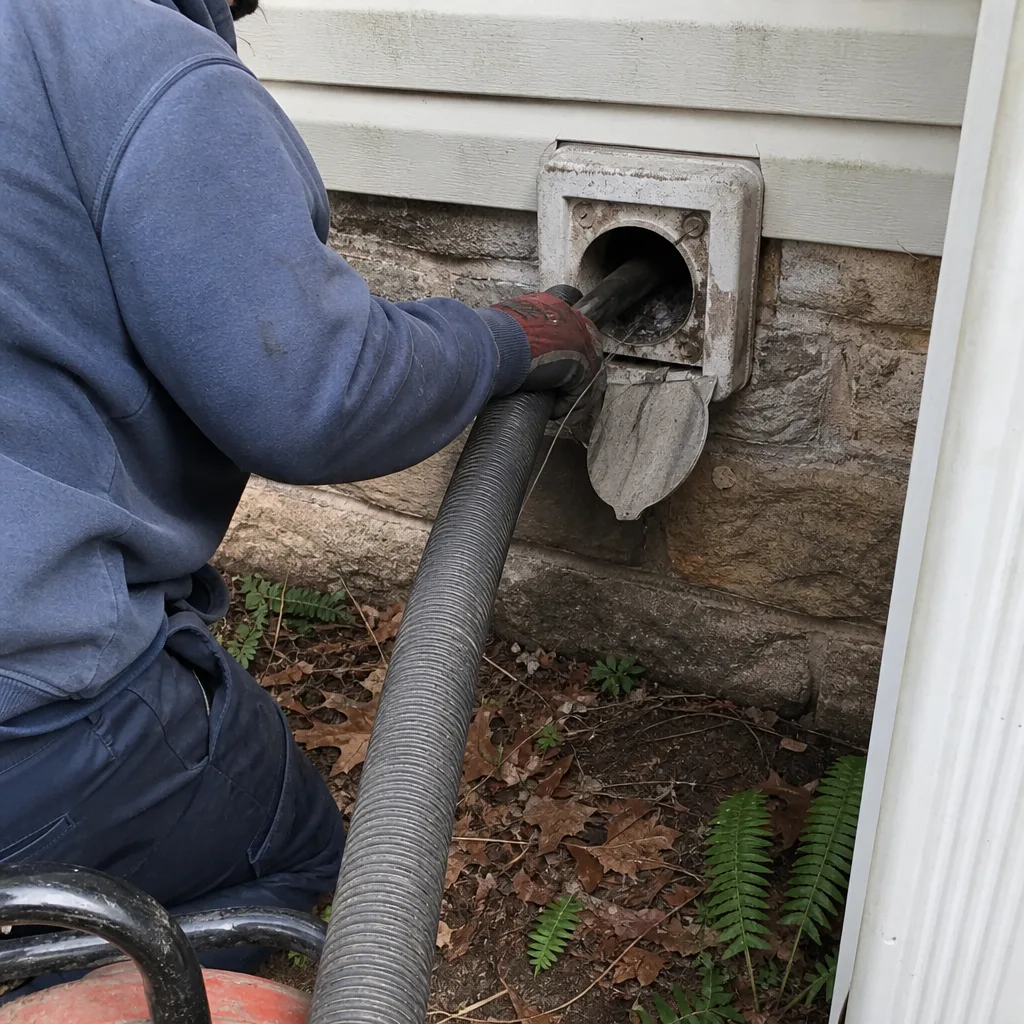 Before
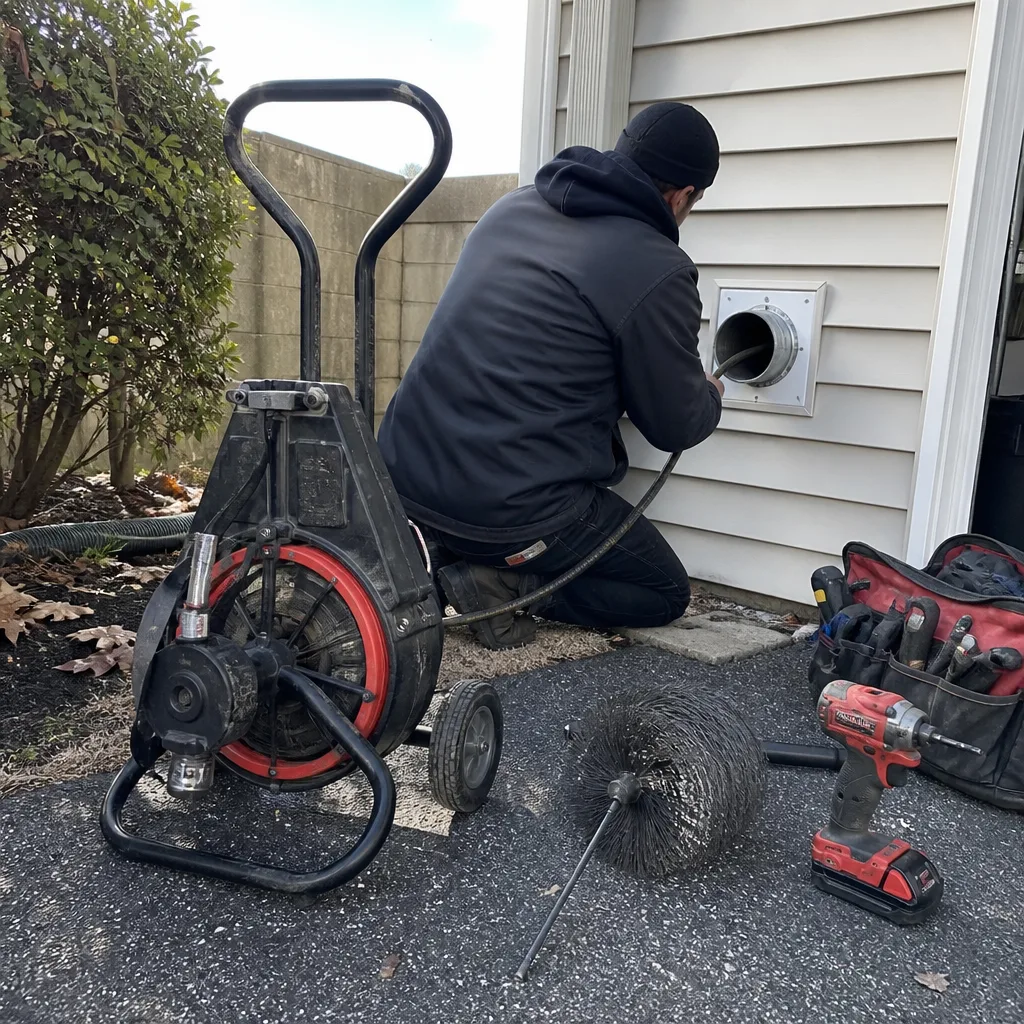 After
AfterAir Duct Cleaning Cost Breakdown: The Rockville Homeowner’s Reference for 2026
Last year in Rockville, a homeowner in the Twinbrook neighborhood showed us a competitor’s invoice for $1,847 on a 2,100-square-foot colonial. The original phone quote was $89. The gap between those numbers wasn’t equipment or labor. It was a series of line items invented after the technician entered the home: “system decontamination,” “biocide fogging,” and “coating application” - services the National Air Duct Cleaners Association (NADCA) explicitly warns against when sold as routine add-ons. In this guide, we’ll show you how legitimate our Air Duct Cleaning services prices are built from countable components, what each should cost in the Rockville market in 2026, and how to recognize when a contractor is choosing a number instead of calculating one.
Quick Answer
Professional air duct cleaning for a typical Rockville home with a standard forced-air system costs between $450 and $850 in 2026, with whole-system pricing that includes all supply registers, return vents, main trunk, and plenum. Prices below $350 typically indicate limited scope or equipment that cannot reach the full system, while invoices above $1,000 without pre-approved scope changes suggest on-site upselling. The legitimate variables are home size, duct material, accessibility, and whether sanitizer application is warranted by visible microbial growth documented in a photo record.
Table of Contents
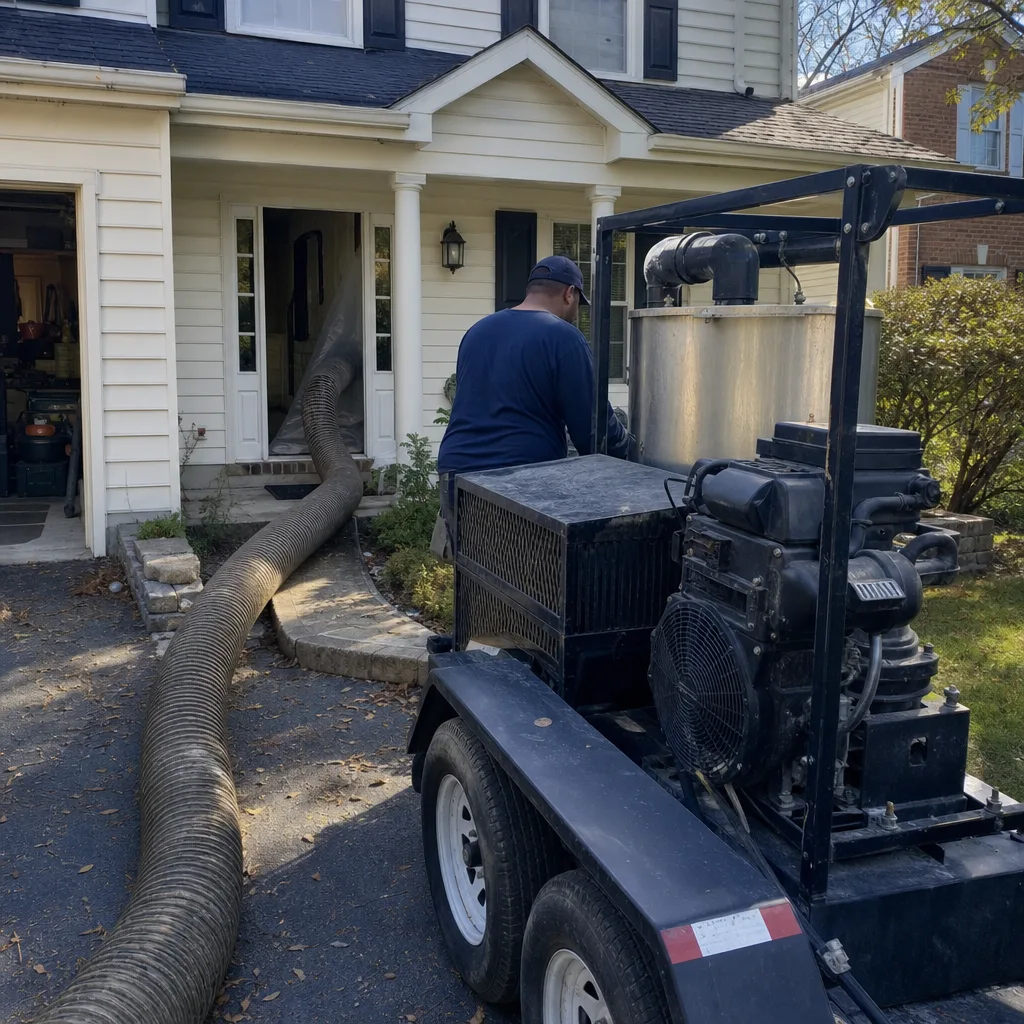
- How Legitimate Duct Cleaning Prices Are Built
- Rockville Market Ranges for 2026
- The Line Items That Inflate Invoices
- How Your Home’s Specifics Affect Cost
- Written Fixed-Price vs. “Starting At” Quotes
- The Real Cost of a Job With No Warranty
- What Your Documentation Should Include
- Choosing a Contractor in Rockville
 Before
 After
AfterHow Legitimate Duct Cleaning Prices Are Built
A proper estimate starts with a scope you can verify by walking your basement or attic. For a standard two-zone forced-air system in a Rockville home, that scope includes: supply registers (the vents that blow conditioned air into rooms), return vents (where air cycles back), the main trunk line (the large central duct that distributes air), the plenum (the sheet metal box attached directly to your furnace or air handler), and the individual duct runs (the smaller branches connecting trunk to registers).
Each of these components requires specific labor and equipment time. Here’s how a legitimate contractor builds the price:
- System access. Removing and replacing register covers, cutting access panels in trunk lines if needed, and protecting floors and furnishings. In older Rockville homes near Rockville Town Center, original hardwood floors and tight crawlspaces can add 15-30 minutes of careful prep work.
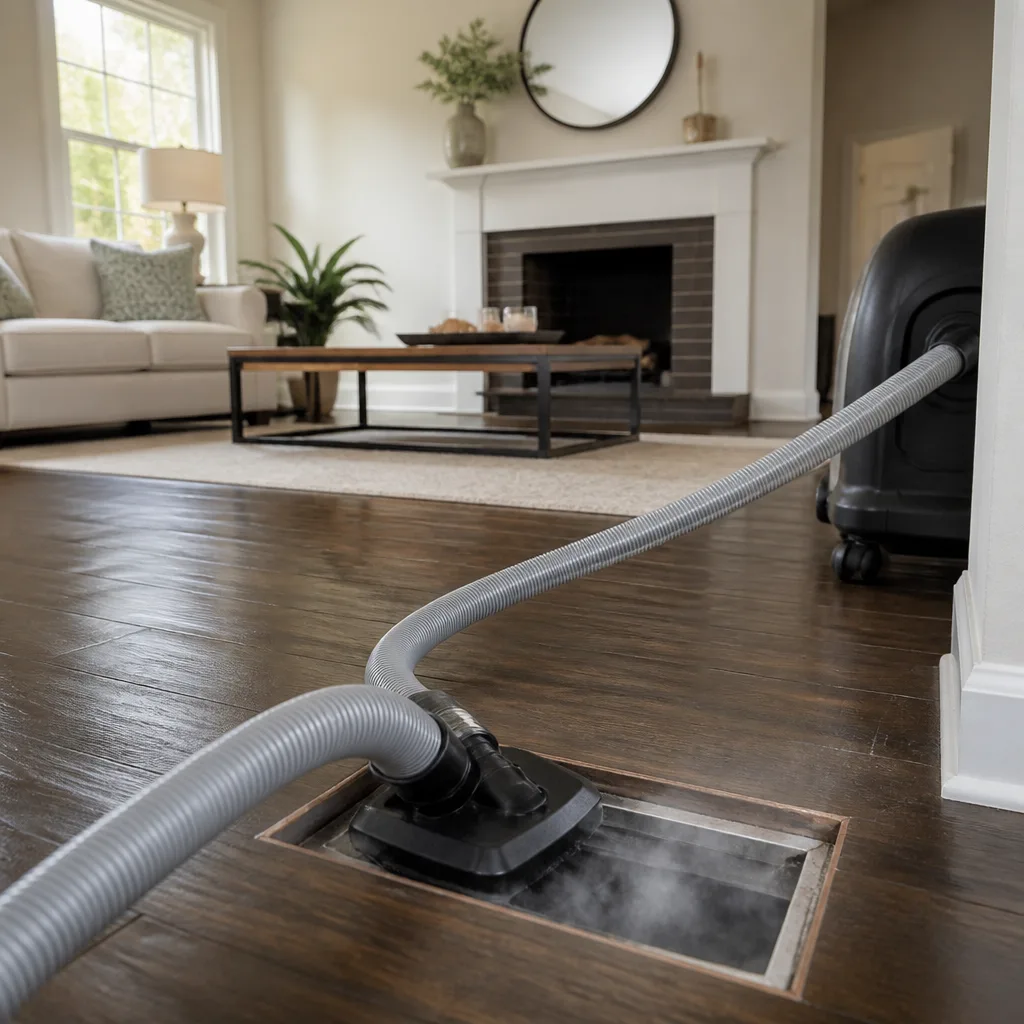
- Negative-pressure extraction. Connecting a vacuum collection device to the trunk line to create suction throughout the system while agitation tools loosen debris. This is the core labor and equipment component.
- Per-register cleaning. Each supply and return requires individual attention with brushes, whips, or compressed air tools to dislodge debris from duct runs. More registers means more time, not a mysterious multiplier.
- Plenum and trunk cleaning. The largest debris accumulation typically occurs at the plenum and first few feet of trunk, where airflow changes direction and velocity drops.
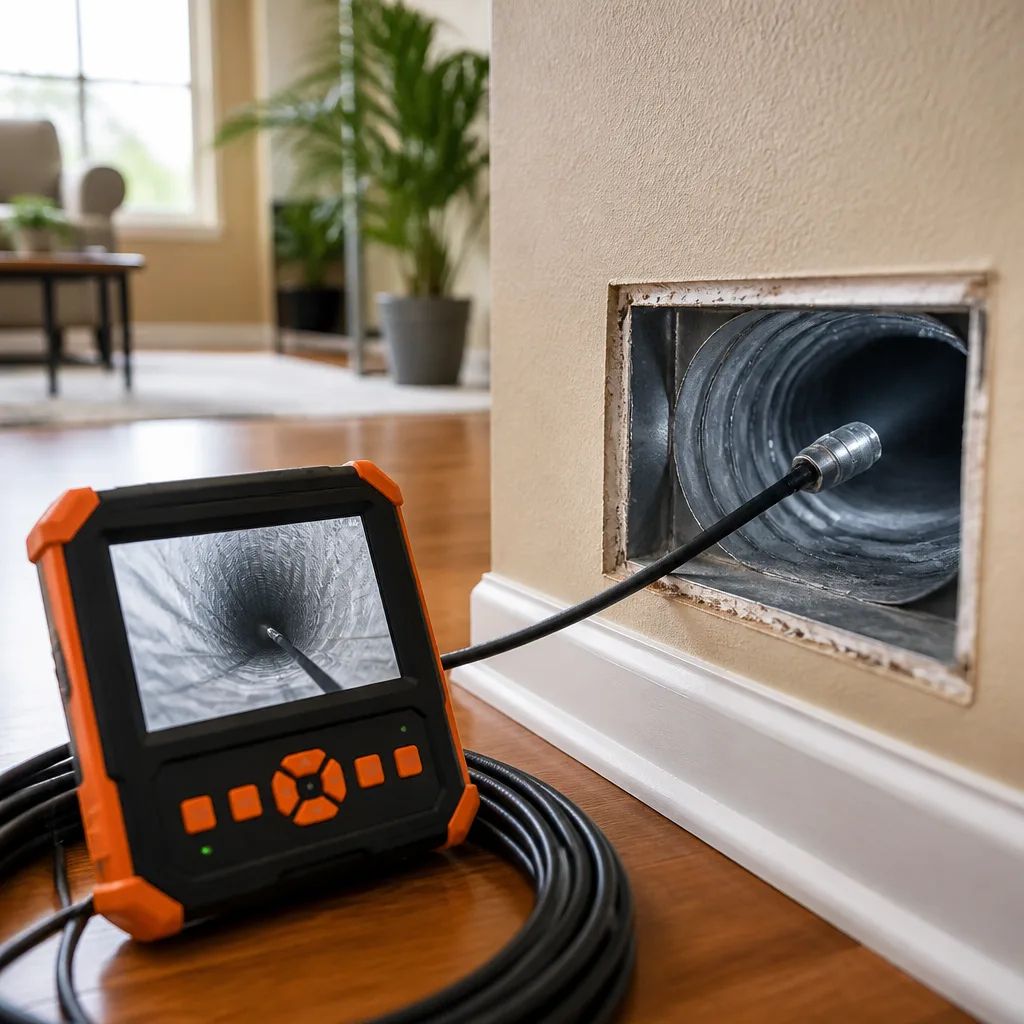
- Documentation. Photographing inside each duct run before and after, assembling the photo record, and delivering it to the homeowner as a standard job record. At CleanRun Air Duct Cleaning Rockville home, this has been mandatory since 2013.
- Sanitizer application (conditional). Only when visible microbial growth is documented in the photo record, applied with equipment from manufacturers like Abatement Technologies or Guardsman, not a fogger from a hardware store.
A contractor who cannot walk you through this component list, with specific counts from your home, has not priced your job. They’ve selected a number designed to get their foot in the door.
Rockville Market Ranges for 2026
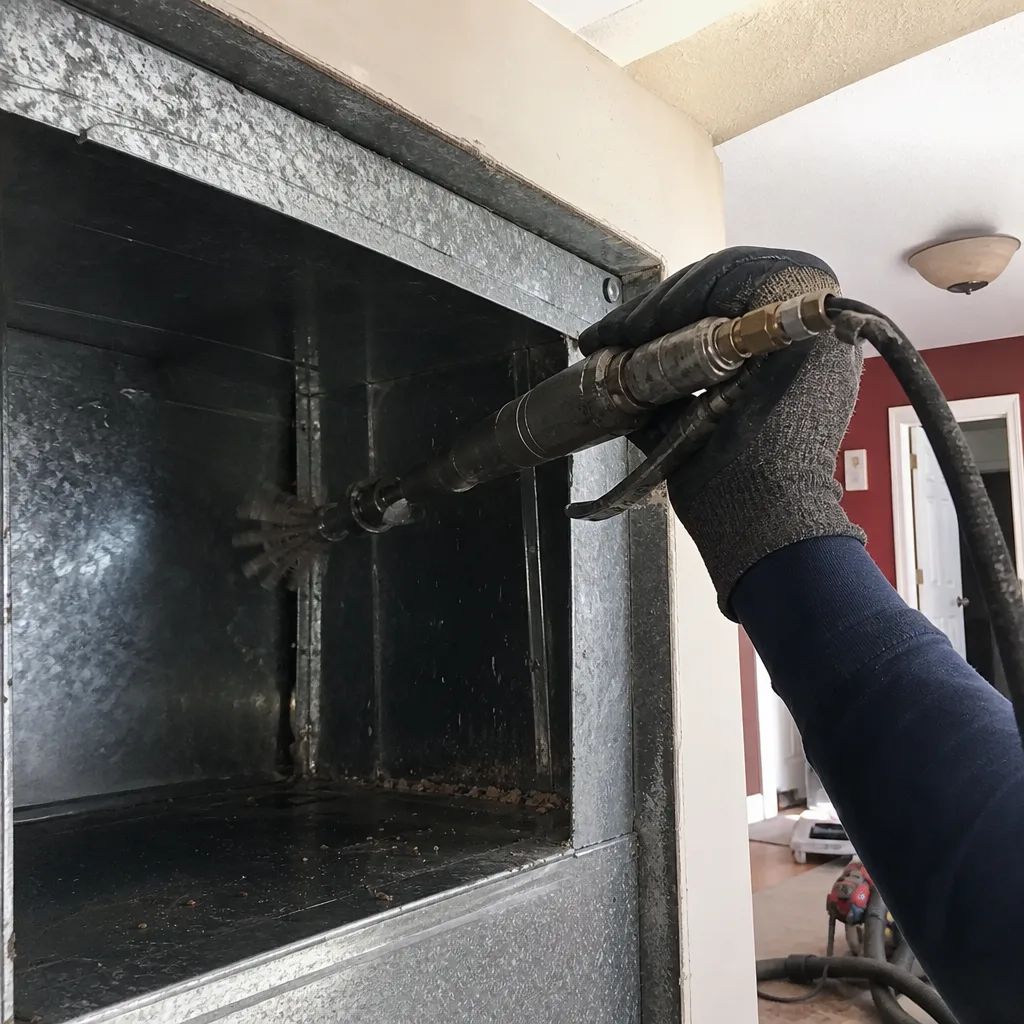
These ranges reflect what we’ve documented across 52,000+ homes since 2013, adjusted for 2026 labor and equipment costs in the Montgomery County market. Every price is whole-system, flat-rate, and agreed in writing before work begins - Haven Standard Clause 1.
| Component / System Type | Typical Range | Notes |
|---|---|---|
| Small home (1,200-1,600 sq ft), single zone, 6-10 registers | $380-$520 | Common in Rockville’s older post-war neighborhoods like New Mark Commons |
| Mid-size home (1,800-2,400 sq ft), two-zone, 12-18 registers | $520-$720 | Standard for Rockville’s 1980s-2000s subdivisions (e.g., Fallsmead, Potomac Woods) |
| Large home (2,600-3,500 sq ft), multi-zone, 20-30 registers | $720-$950 | Often includes basement or attic HVAC units in North Farm, Glen Hills |
| Flex duct systems (additional) | +$80-$150 | More delicate handling, slower agitation; common in homes built 1995-2010 |
| Duct board systems (additional) | +$100-$180 | Cannot use aggressive brushes; fiberboard erodes; prevalent in some 1970s-1980s construction |
| Sanitizer application (conditional) | $120-$180 | Only with documented microbial growth; EPA-registered product applied per manufacturer protocol |
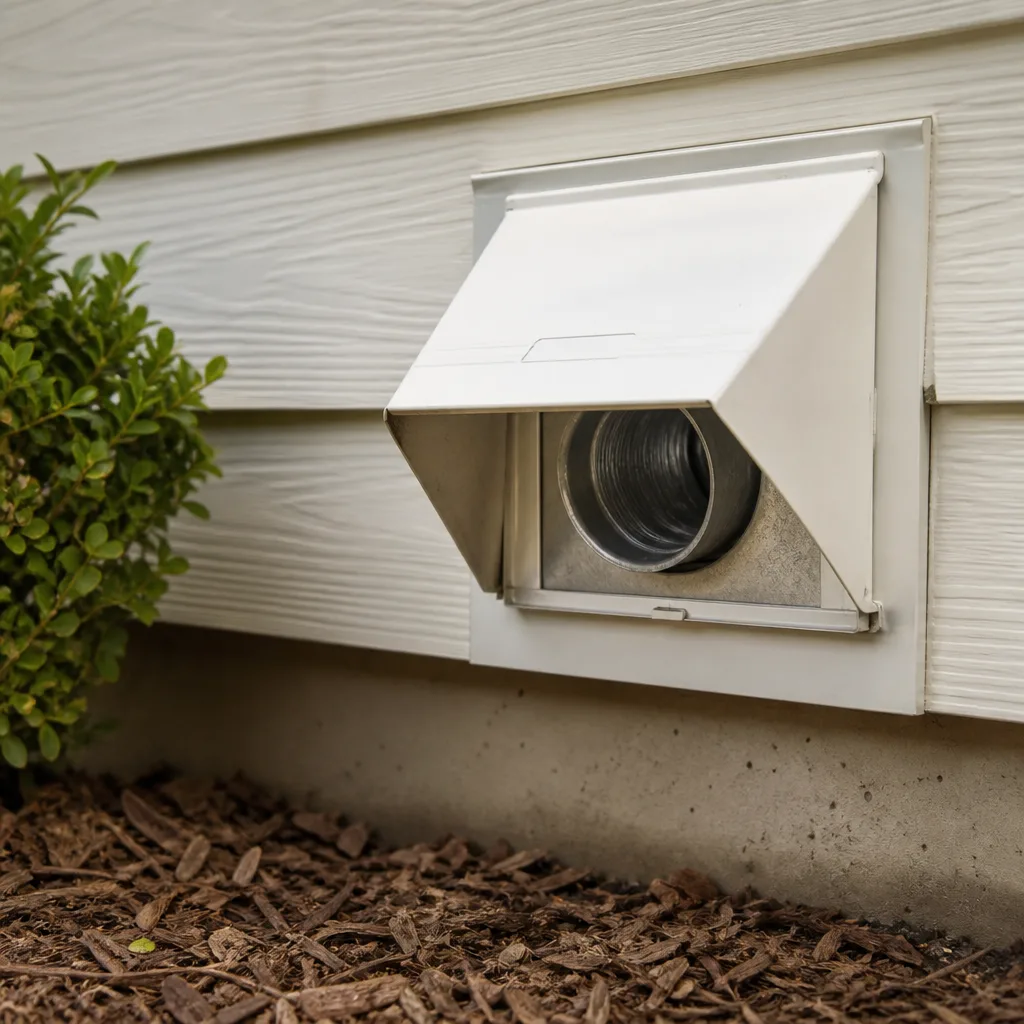
| Dryer vent cleaning (add-on) | $120-$180 | Recommended when vent run exceeds 15 feet or has multiple elbows; Dryer Vent Cleaning in Rockville details |
The $99-$149 offers visible on mailers and social media ads represent a fundamentally different service: typically a shop vacuum at the register face, no trunk or plenum access, no negative-pressure equipment, and no documentation. In our experience, these visits often conclude with a sales presentation for “deep cleaning” at ten times the advertised price.
The Line Items That Inflate Invoices
The Rockville homeowner with the $1,847 invoice received five line items beyond the quoted $89. Four of them appear regularly on inflated invoices nationwide. Here’s what the evidence actually says about each:
“Biocide treatment” or “antimicrobial fogging” sold as routine. The EPA registers specific products for use in HVAC systems, but only when applied to clean surfaces with visible microbial growth. Fogging an entire system prophylactically has no demonstrated benefit for indoor air quality and can leave chemical residues in ductwork. NADCA’s position statement: “Application of antimicrobial chemicals is not typically warranted as part of a routine duct cleaning.” When we document actual mold growth in a Rockville home - more common in humid summer months near Rock Creek - we apply Guardsman or Abatement Technologies products per EPA label directions, with before-and-after photos, at a pre-disclosed price. We do not sell it as insurance.
“Duct coating” or “sealant” applied internally. Products marketed to seal leaks from the inside have poor evidence for effectiveness and can reduce airflow by coating duct walls. The Department of Energy notes that aerosol sealant technology exists but requires specialized equipment and controlled conditions not present in a standard cleaning visit. We do not offer this service. If your ducts leak, we recommend mechanical sealing or replacement, documented with a photo record.
“System decontamination” or “complete purification.” These are marketing terms without technical definitions. A legitimate scope specifies which components are cleaned, with what methods, to what standard. Vague grandeur correlates with vague pricing.
Per-vent pricing that multiplies mysteriously. A quote of “$15 per vent” on a 20-register system sounds like $300. But the invoice reveals separate charges for “returns,” “main trunk,” “plenum,” and “service fee,” pushing the total to $900. Whole-system flat pricing, agreed in writing, eliminates this arithmetic sleight-of-hand.
“HVAC component cleaning” as a surprise add-on. The evaporator coil, blower motor, and heat exchanger require separate access and cleaning protocols. These are legitimate services, but they should be scoped and priced separately, not discovered as “urgent needs” after work begins. Our HVAC Cleaning in Rockville page details proper scope for these components.
How Your Home’s Specifics Affect Cost
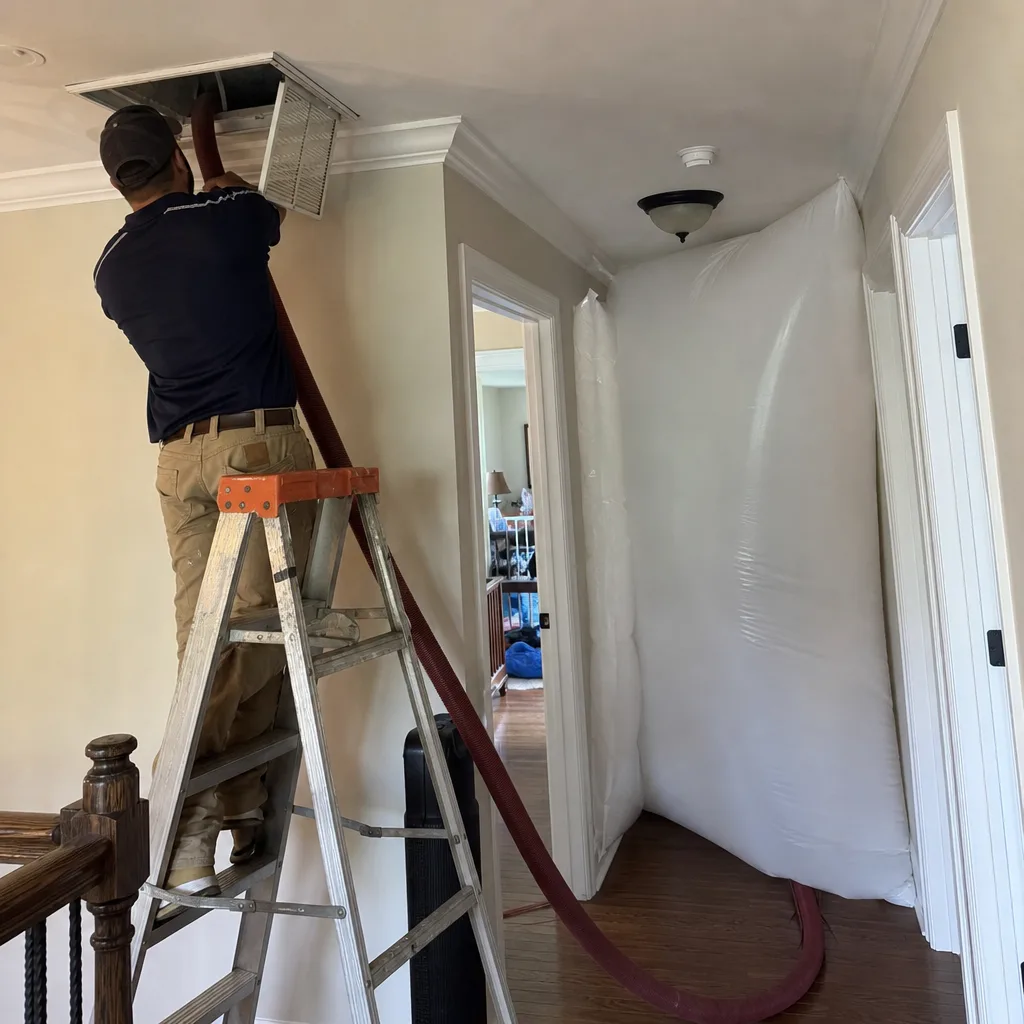
Three characteristics of your Rockville home create legitimate price variation. A contractor should explain which apply and how they affect scope, not use them to justify a number that appeared only after arrival.
Home size and register count. This is the most straightforward variable. A 3,200-square-foot home in Tilden Woods with 26 registers requires roughly twice the labor of a 1,400-square-foot rambler in Twinbrook with 10. The relationship isn’t perfectly linear - setup and breakdown time is fixed - but register count is a countable, verifiable input. Ask your contractor to walk through with you and count.
Duct material. Rockville’s housing stock spans seven decades, and duct construction varies:
- Sheet metal (pre-1980s, high-end construction): Durable, tolerates aggressive agitation with Rotobrush or Nikro equipment. Standard cleaning protocols apply.
- Flex duct (1990s-2010s common): Corrugated plastic inner liner supported by wire coil. Aggressive brushes can tear the liner or detach connections. Requires lower-pressure tools and more technician time. Common in Rockville’s split-level and colonial additions from the 1990s.
- Duct board (1970s-1980s, some production builders): Fiberglass board with foil facing. The interior surface erodes under mechanical agitation, releasing fibers. Requires specialized contact-vacuum methods and cannot be brushed aggressively. We’ve encountered this in several Rockville neighborhoods built during the 1970s energy crisis.
System accessibility. A furnace in a finished basement closet with a drop ceiling is straightforward. A unit in a Rockville crawlspace with 18-inch clearance, or an attic installation in a renovated Cape Cod, adds technician time and sometimes requires temporary access panels. These should be identified during a pre-work walkthrough, not discovered as “complications.”
System age and maintenance history. A system cleaned every five years with quality filters maintains reasonable airflow and accumulates loose, dry debris. A system never cleaned in 25 years, with fiberglass filter bypass and pets, may have compacted debris requiring extended agitation time. In Rockville’s older neighborhoods near the historic district, we regularly find original ductwork from the 1960s with significant accumulation at the plenum - the camera shows it, and the scope adjusts accordingly, with the homeowner’s approval before work proceeds. For a full maintenance schedule, see our Air Duct Cleaning Maintenance Checklist for Rockville Homeowners.
Written Fixed-Price vs. “Starting At” Quotes
The distinction matters because of when the price is set relative to when the technician enters your home. A “starting at $199” quote establishes a floor, not a ceiling. The actual invoice depends on what the technician “finds” - a process with documented incentive to find more.
A written fixed-price estimate, delivered before work begins, requires the contractor to absorb the risk of miscalculation. If we underestimate register count or encounter unusual access, Haven Standard Clause 1 binds us to the written price. This aligns our incentive with accurate scope definition, not with discovering problems.
Here’s what a proper written estimate should include:
- Specific count of supply registers and return vents, verified by walkthrough or photo
- Identification of main trunk line(s) and plenum as included scope
- Equipment method (negative-pressure extraction with named equipment - Rotobrush, Nikro, or equivalent)
- Documentation deliverable: before-and-after photo record of every duct run
- Flat price for the scoped work, with any conditional items (sanitizer, if warranted) priced separately and requiring homeowner approval
- Warranty terms: duration, what triggers remediation, and response commitment
At CleanRun, we do not answer the phone with “let us come take a look.” We ask about home size, register count, duct material if known, and any prior cleaning history. Then we deliver a written price by email or text, with the scope spelled out, before scheduling. If a competitor’s “starting at” quote has you uncertain, our Free Second Opinion puts our written number next to theirs - no charge, no obligation.
The Real Cost of a Job With No Warranty
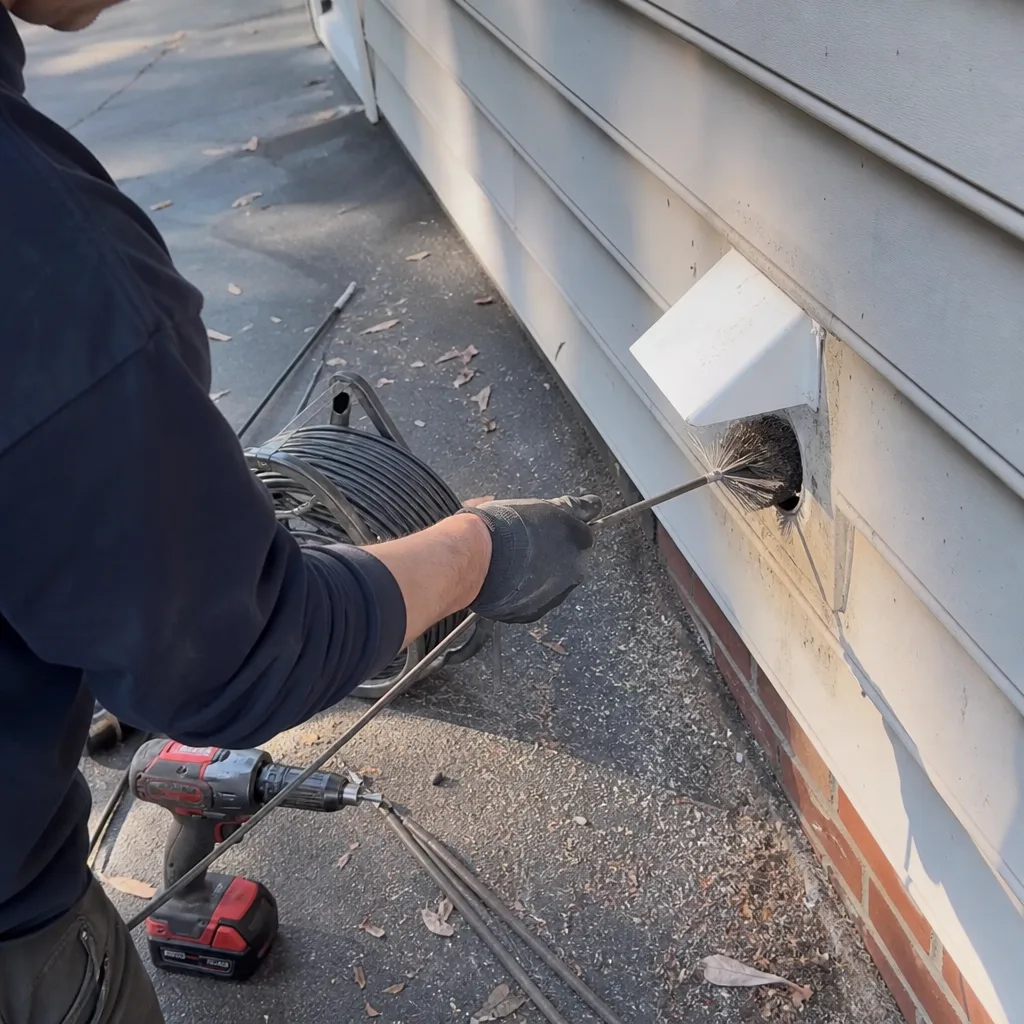
The cheaper job’s true cost includes what happens after the truck leaves. A duct cleaning with no written warranty, or with a “satisfaction guaranteed” statement that lacks defined terms, leaves the homeowner with no recourse if debris remains, registers are damaged, or the system performs worse.
We’ve responded to warranty calls in Rockville where the original contractor’s phone number was disconnected, where “100% satisfaction” required mailing a complaint to a PO box, or where the “guarantee” explicitly excluded “conditions not visible at time of service” - meaning anything the technician chose not to photograph.
The 365-Day Done Right Promise specifies: if the work is not right, we make it right. The terms are written on every job record, not subject to manager discretion. In practice, this means:
- Visible debris in a photographed duct run: return visit, no charge, documented again
- Register damage from removal/replacement: repair or replacement at our cost
- System airflow degradation after cleaning: diagnostic and correction, with photo evidence of cause
For a Rockville homeowner, this changes the cost calculation. A $400 job with no post-service accountability becomes expensive if it requires a second contractor to redo the work. A $650 job with defined remediation terms has a known maximum cost. The price on the invoice is not the only number that matters.
What Your Documentation Should Include
Documentation is how you verify what was done, dispute what wasn’t, and hold a contractor accountable. It is not a bonus or a courtesy. Since 2013, every CleanRun job concludes with a standard deliverable package:
Before-and-after photo record. The inside of every duct run, photographed at the same location, showing the condition before agitation and after extraction. These are time-stamped and delivered as part of the job record. A contractor who shows you a single “representative” photo or describes conditions without images is asking for trust they haven’t documented.
Written scope and price. The estimate you approved, with any changes initialed, and the final invoice matching that scope. Haven Standard Clause 1 requires this alignment.
Equipment log. Which tools were used: Rotobrush brush-and-vacuum system, Nikro negative-pressure collector, or other professional-grade equipment. This matters for warranty claims and for verifying that the methods match what was proposed.
Warranty document. The 365-Day Done Right Promise, with specific trigger conditions and response commitment, signed by the technician and the homeowner.
Homeowners in Rockville’s research-intensive market - particularly in neighborhoods like Cromwell Park and College Gardens where median home values exceed $700,000 - consistently tell us that this documentation was the deciding factor. They could compare specific deliverables across contractors, not rely on verbal assurances.
Choosing a Contractor in Rockville
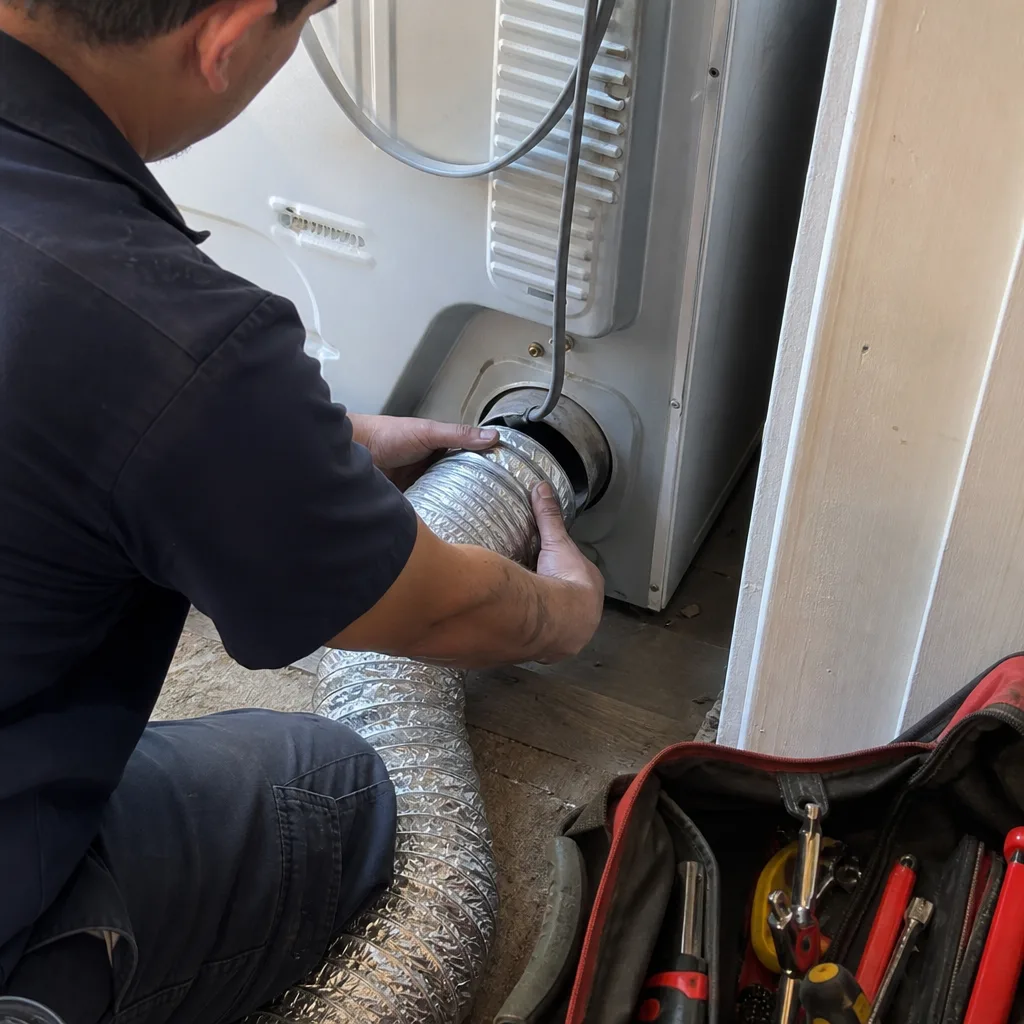
The Montgomery County market includes dozens of duct cleaning providers, from national booking platforms to single-truck operators. Here’s how to evaluate without relying on star ratings that can be purchased or filtered. For additional guidance, explore more guides & resources:
Verify license and insurance. Maryland requires home improvement contractors to hold a license through the Maryland Home Improvement Commission. Ask for the license number and verify it at dllr.maryland.gov. CleanRun publishes ours on every page; it is not buried in a footer.
Request equipment specifics. A contractor using professional-grade negative-pressure systems can name the manufacturer: Rotobrush, Nikro, Abatement Technologies. A contractor using a shop vacuum and compressed air cannot. The equipment list is a proxy for scope capability.
Demand photo documentation protocol. Not “we can take pictures if you want.” The standard practice, every job, every run. If they don’t have a protocol, they don’t have accountability.
Ask about warranty terms before scheduling. Not “are you satisfied” - the specific duration, what triggers service, and response time. Vague warmth here predicts vague accountability later.
Check for neighborhood familiarity. A contractor who serves Rockville regularly knows the housing stock: the flex-duct additions in 1990s splits, the duct board in 1970s production homes, the access challenges in historic district renovations. This familiarity reduces surprise scope changes. We’ve worked in every Rockville ZIP code since 2013; the patterns are consistent enough to price accurately.
Use the Free Second Opinion. If you have a written estimate from another contractor, we’ll put our scope and price beside it in writing. No charge. The comparison often reveals what’s included, what’s excluded, and what assumptions each contractor made.
Common Mistakes to Avoid
- Accepting a phone quote without scope details. “About $400” tells you nothing about register count, trunk inclusion, or documentation. Get it in writing, with component counts.
- Equating low price with value. The $89 coupon special has a business model: arrive, discover “problems,” upsell aggressively. The initial price is marketing, not economics.
- Ignoring duct material. If your Rockville home has flex duct or duct board, aggressive brushing can cause damage that costs more than the cleaning. Verify the contractor’s material-specific protocol.
- Skipping the photo record. Without documentation, you have no evidence of work performed. Every legitimate contractor should provide this without asking.
- Signing blank or incomplete work orders. The scope you approve should match the invoice you pay. Any “additional services recommended” should require separate written approval with price.
- Neglecting dryer vent cleaning. A clogged dryer vent is a genuine fire hazard, and the service is often bundled at lower cost when scheduled with duct cleaning. Our Dryer Vent Cleaning in Rockville page explains proper scope.
- Choosing by speed of availability alone. Duct cleaning is scheduled work, not emergency service. The contractor who can come tomorrow may have capacity for a reason. Quality scheduling typically runs 3-10 days in peak season.
When to Call a Professional
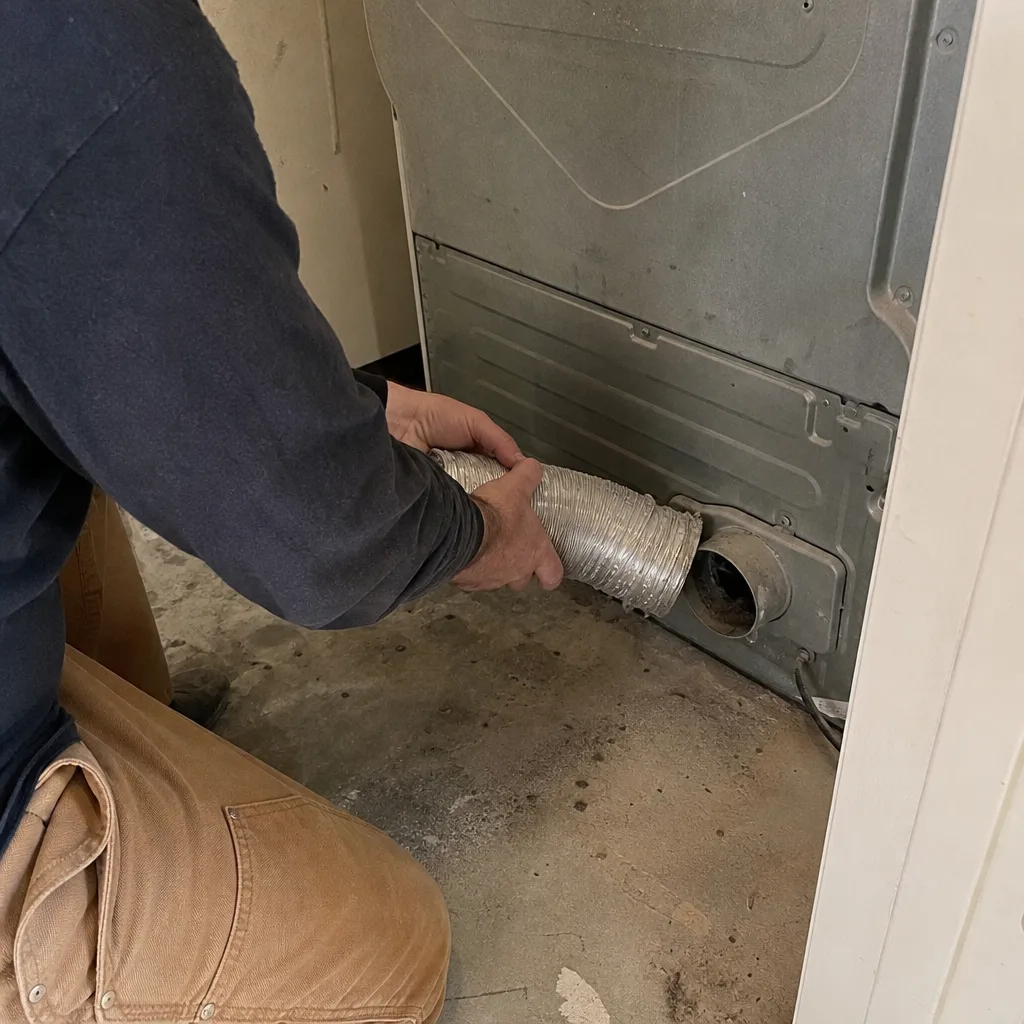
Schedule duct cleaning when you can document need or when system performance suggests obstruction: visible dust emission from registers, uneven heating or cooling across rooms, or a known interval since prior cleaning (typically 5-7 years for Rockville homes with standard filtration). Do not wait for an emergency; duct cleaning prevents problems rather than solving acute ones.
Call immediately if you suspect mold growth (musty odor, visible discoloration near registers) or if a renovation has introduced significant construction debris into the system. In Rockville’s humid summers, particularly in homes near wooded areas like those bordering Cabin John Regional Park, microbial growth can establish within a single season if humidity control fails.
CleanRun Air Duct Cleaning Rockville offers free estimates in Rockville - call (240) 255-4519. Every estimate is written, every scope is countable, and every job carries the 365-Day Done Right Promise.
Frequently Asked Questions
For a typical Rockville home with a standard forced-air system, professional duct cleaning costs between $450 and $850 in 2026, with whole-system flat pricing that includes all registers, trunk lines, and plenum. Larger homes with complex zoning or specialty duct materials may reach $950. Call (240) 255-4519 for a written estimate specific to your home - estimates are free.
Quotes below $350 typically reflect limited scope - often register-face vacuuming without trunk or plenum access - or a business model designed to upsell on-site. The $89-$149 advertised price rarely covers negative-pressure extraction, professional equipment, or documentation. The gap between quote and invoice is where the profit is made. A written fixed-price estimate with component counts reveals what’s actually included.
Require a before-and-after photo record of every duct run, time-stamped and delivered as part of the job record. Without this documentation, you have only the technician’s word. At CleanRun, the photo record has been mandatory since 2013; we show you the images before discussing any additional services.
Every 5-7 years for homes with quality filtration and no special risk factors. Homes with pets, smokers, recent renovations, or located near Rockville’s construction zones may need more frequent service. Change filters per manufacturer schedule; filter bypass is the primary cause of accelerated duct accumulation.
Only when visible microbial growth is documented in the photo record. Routine “fogging” or “biocide treatment” has no demonstrated benefit for indoor air quality and can leave chemical residues. The EPA registers specific products for HVAC use only on clean surfaces with documented contamination. We apply Guardsman or Abatement Technologies products only when warranted, at a pre-disclosed price.
Duct cleaning addresses the distribution system: registers, duct runs, trunk, and plenum. HVAC cleaning includes the air handler components: evaporator coil, blower assembly, and heat exchanger inspection. These require separate access and pricing. Our HVAC Cleaning in Rockville page details proper scope. Be wary of contractors who “discover” these needs after work begins; they should be scoped separately from the start.
Home size affects register count, which is the primary labor variable. Neighborhood characteristics matter for access and duct material: older homes near Rockville Town Center may have original sheet metal with tight crawlspace access; 1990s subdivisions often have flex duct requiring gentler handling. A contractor familiar with Rockville’s housing stock can price accurately without on-site surprises.
The Bottom Line
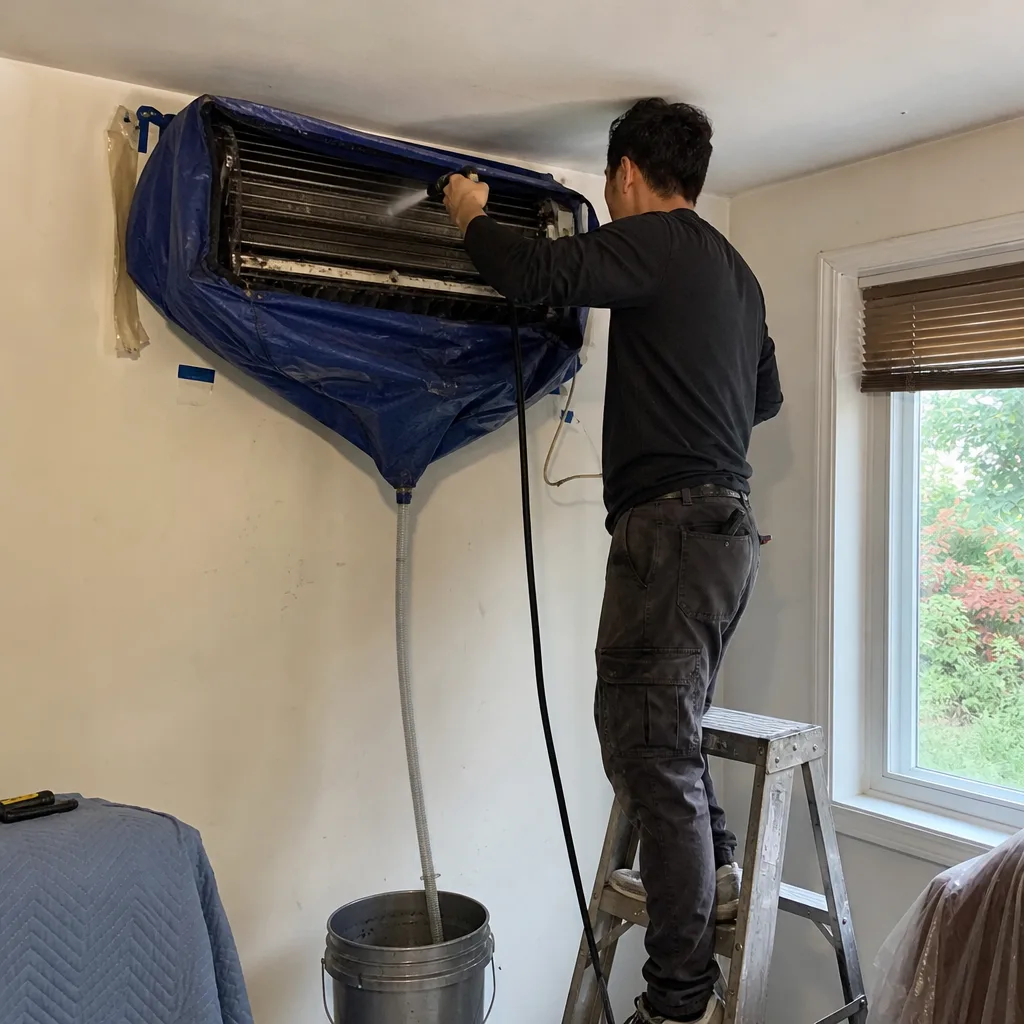
Air duct cleaning in Rockville costs what it costs to reach and document every component of your system with professional equipment and accountable labor. The legitimate range is $450-$850 for typical homes, with variation driven by countable factors: registers, material, accessibility, and conditional sanitizer application. Prices far below this range signal incomplete scope or an upsell business model; prices far above suggest line items invented after arrival. The protection against both is a written fixed-price estimate, a documented photo record, and a warranty with defined terms. These are not premium services. They are the minimum standard for a job you can verify and hold accountable.
Written by Tomas Reyes, Owner at CleanRun Air Duct Cleaning Rockville, serving Rockville since 2013.