
Last updated September 23, 2026
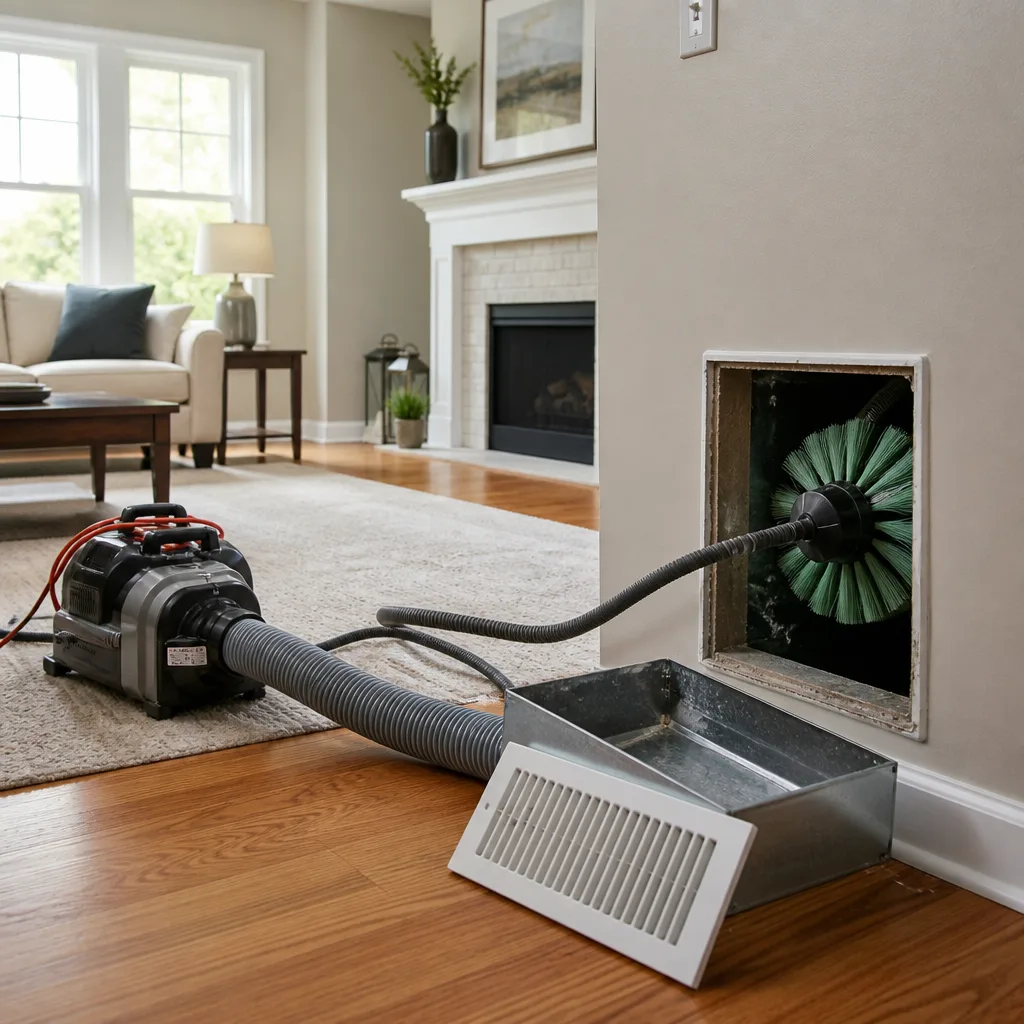
Whole-system duct and dryer vent check with before-and-after photos - you see exactly what came out of your vents
That "$99 whole-house special" is a bait ad - the real number appears once they are in your hallway, or the "clean" is a shop-vac at the register. We photograph the inside of your ducts before and after instead.
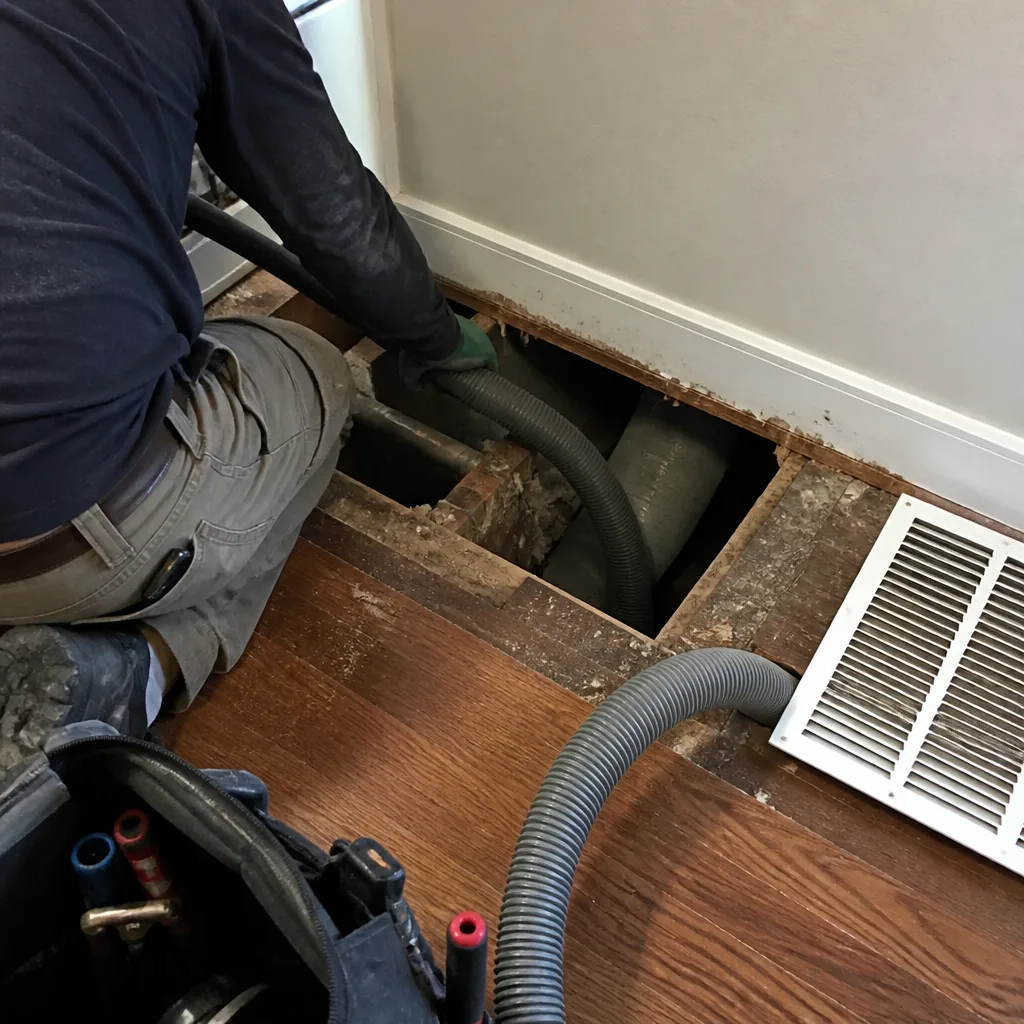 Before
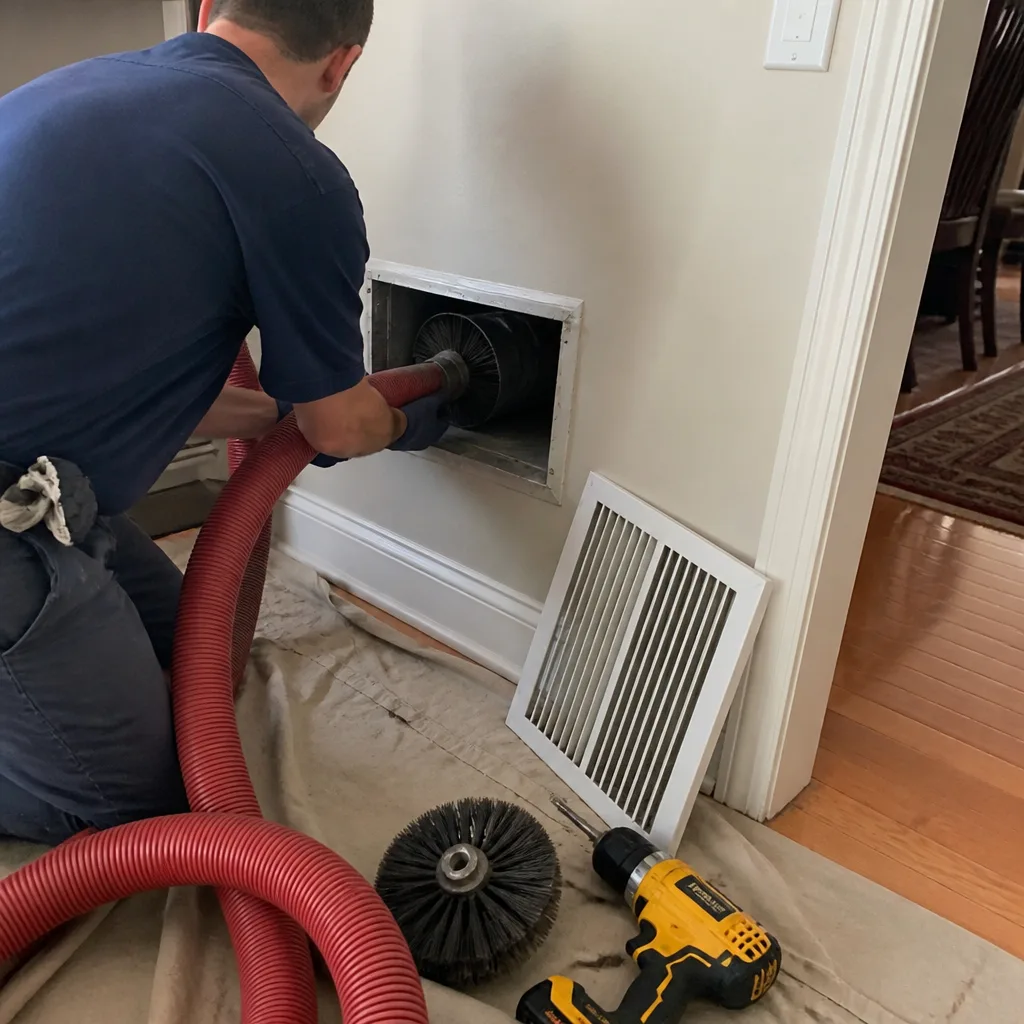 After
After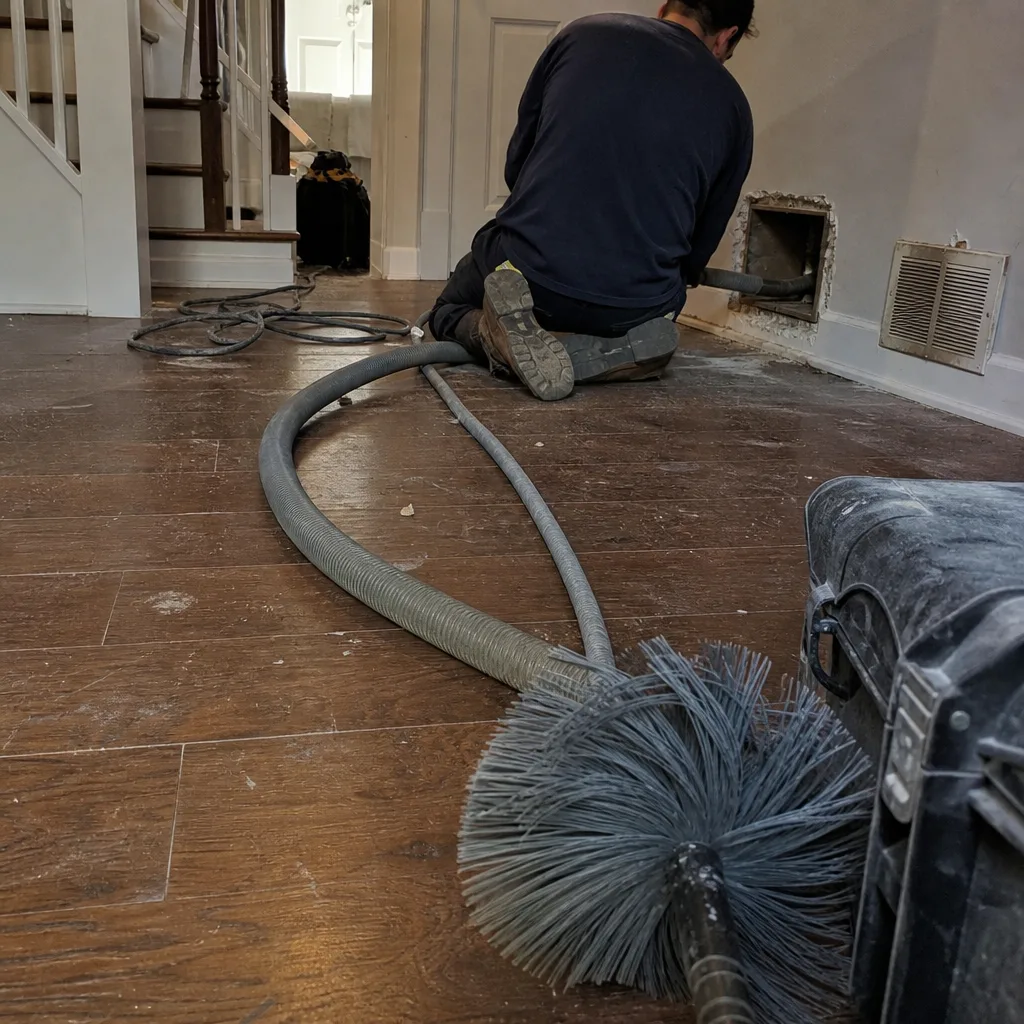 Before
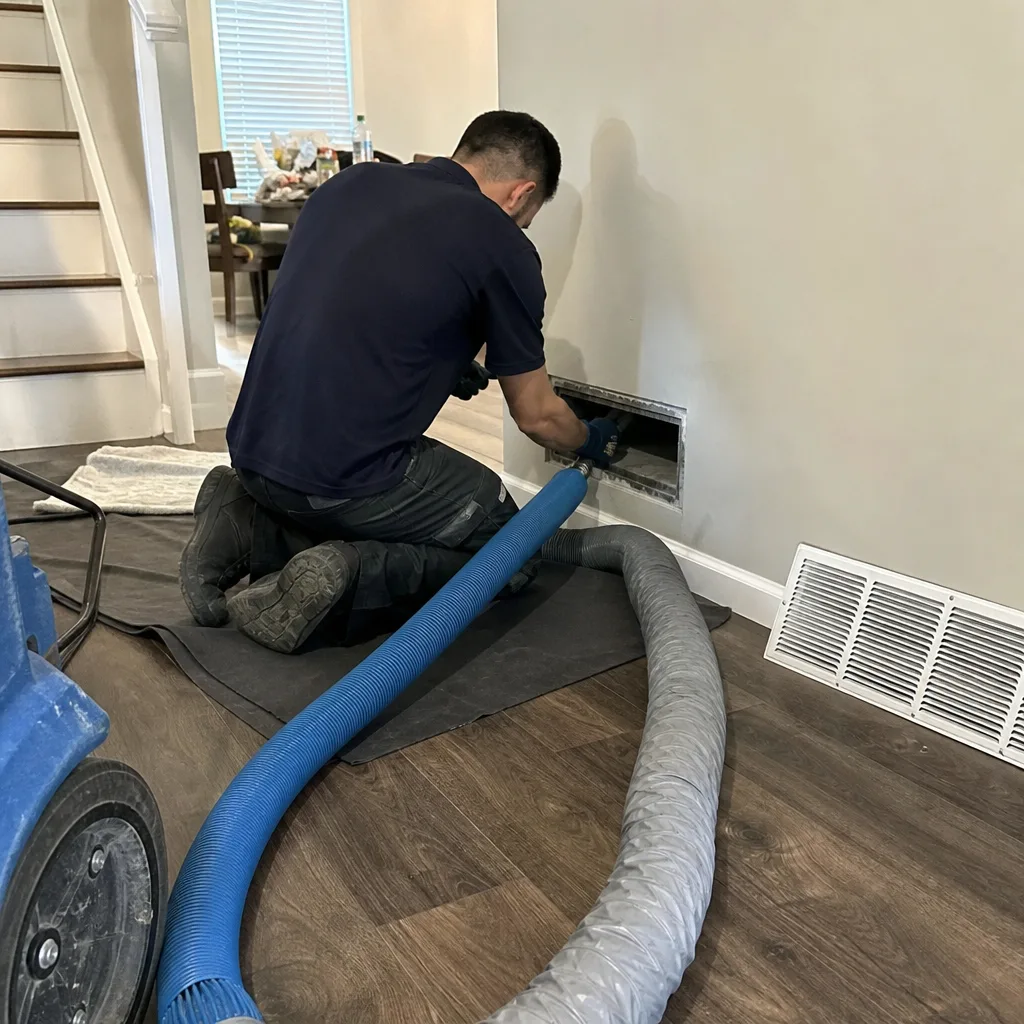 After
After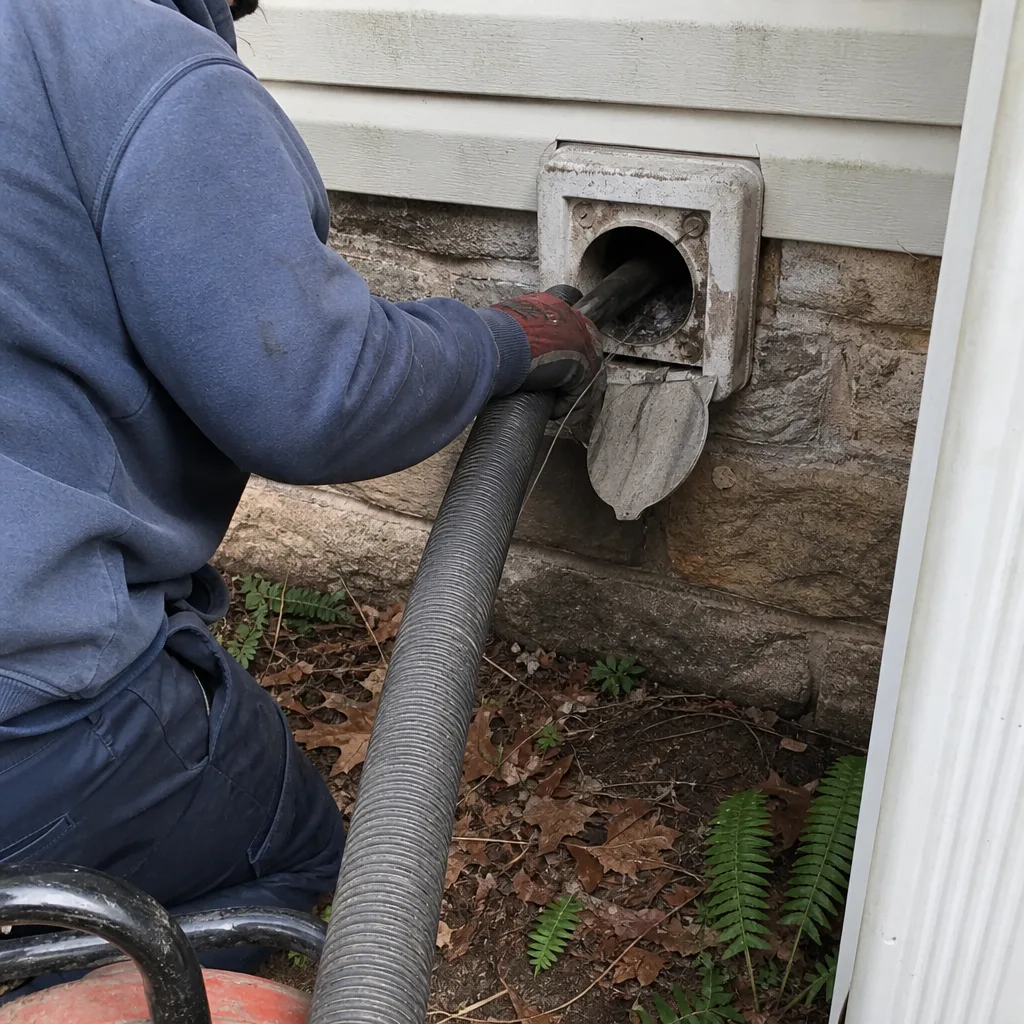 Before
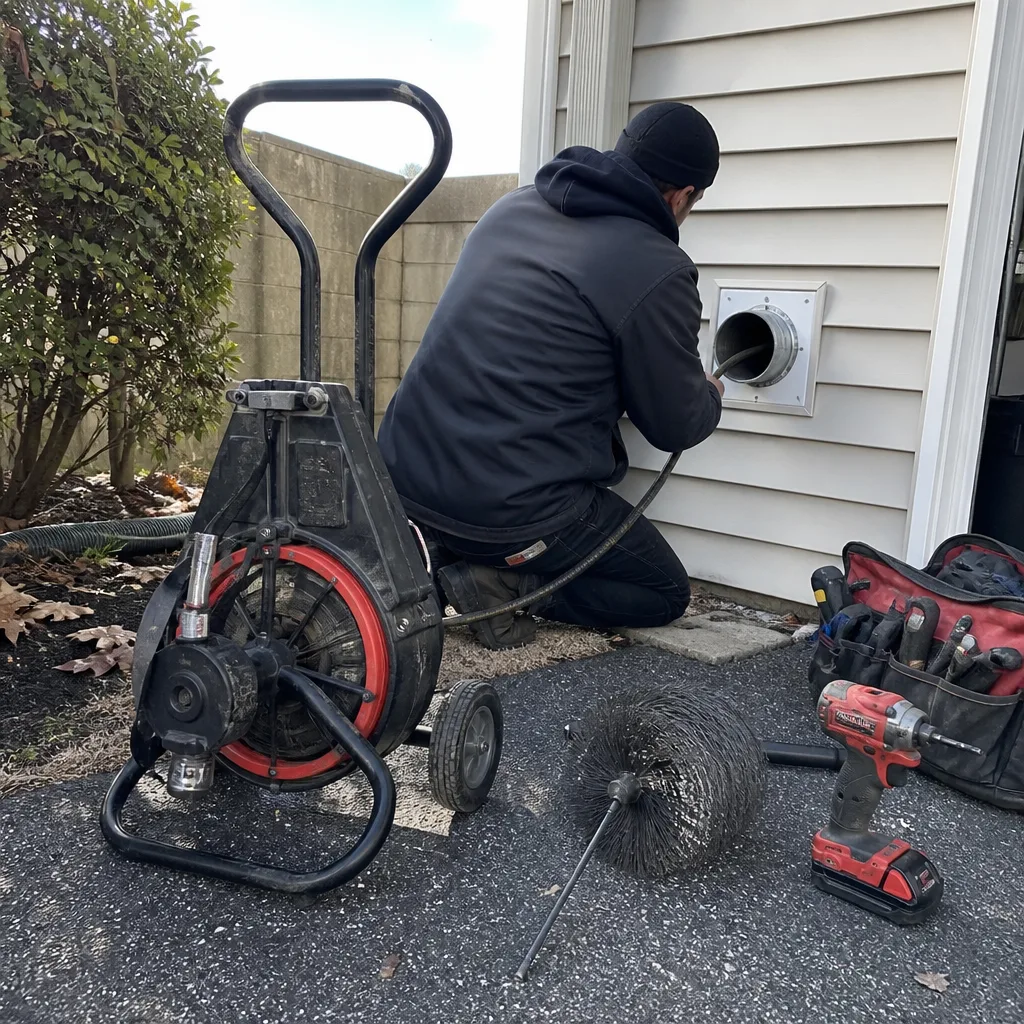 After
AfterSeasonal Air Duct Cleaning Care for Rockville: Year-Round Homeowner’s Guide
Rockville averages 39 inches of rain per year, and summer relative humidity regularly exceeds 70% - conditions that create a measurably higher risk window for microbial growth inside cooling coils and supply ducts than homeowners in drier climates face. That risk is concentrated in a specific six-week period, not spread evenly across the year. Most Rockville homeowners schedule duct cleaning by calendar habit - every September, or every three years - and miss the actual timing when their system needs intervention. This guide connects Montgomery County’s seasonal patterns to specific duct conditions so you act on evidence, not the calendar.
Quick Answer
Seasonal air duct cleaning care in Rockville means matching maintenance to four distinct climate-driven risk periods: late spring humidity (May-June) for microbial prevention, pre-heating inspection (September-October) for combustion safety, post-winter pollen assessment (March-April) for filter and return duct load, and mid-winter filter monitoring (January-February) for accumulated fine particulate. A single annual cleaning scheduled by habit misses at least two of these windows where documented intervention prevents measurable damage - which is why we created our Air Duct Cleaning Maintenance Checklist for Rockville Homeowners to help you match timing to actual risk.
Table of Contents
- The Late-Spring Risk Window: When Humidity Strikes Before AC Runs
- Summer Operation: What Happens Inside Ducts at Peak Cooling Load
- Fall Protocol: Pre-Heating Documentation Before First Ignition
- Post-Winter Pollen Accumulation: Rockville’s Unique Spring Burden
- Visual and Odor Indicators by Season: What Warrants Action vs. Monitoring
- Building a Four-Season Documentation Habit
- Common Mistakes to Avoid
- When to Call a Professional
- Frequently Asked Questions
- The Bottom Line
 Before
 After
AfterThe Late-Spring Risk Window: When Humidity Strikes Before AC Runs
In Rockville, the six weeks from mid-May through June create a condition we document repeatedly: outdoor relative humidity climbs above 65% while indoor cooling systems remain off or run minimally. The ductwork - especially supply lines in basements and crawl spaces - drops below the dew point temperature. Condensation forms on interior metal surfaces. Where dust and organic debris have accumulated over winter, that moisture triggers mold spore germination within 48 to 72 hours.
We have photographed this exact sequence in homes near Rockville Town Center and throughout the 20850 and 20852 ZIP codes. The pattern is consistent. The homeowner runs the AC for the first sustained period in late June. The system distributes musty odor through every register. The camera shows active growth at the first elbow downstream of the evaporator coil, where standing water collected in the pan and humidity wicked into the duct board.
This is not a hypothetical risk. Montgomery County’s climate data shows average May humidity of 67% rising to 72% in June, with soil temperatures lagging air temperature by two to three weeks. Basements in older Rockville neighborhoods - Lincoln Park, West End, sections of Twinbrook built before 1985 - stay cooler longer, widening the condensation window.
What to do during this window:
- Run your bathroom exhaust fans and kitchen range hood during high-humidity days to reduce interior moisture load.
- Inspect the evaporator coil drain pan and condensate line for blockage before first sustained AC operation - a clogged line floods the plenum.
- Remove and photograph your return air filter on June 1. Compare it to your September photo. Heavy loading indicates the system moved significant debris during the humidity window.
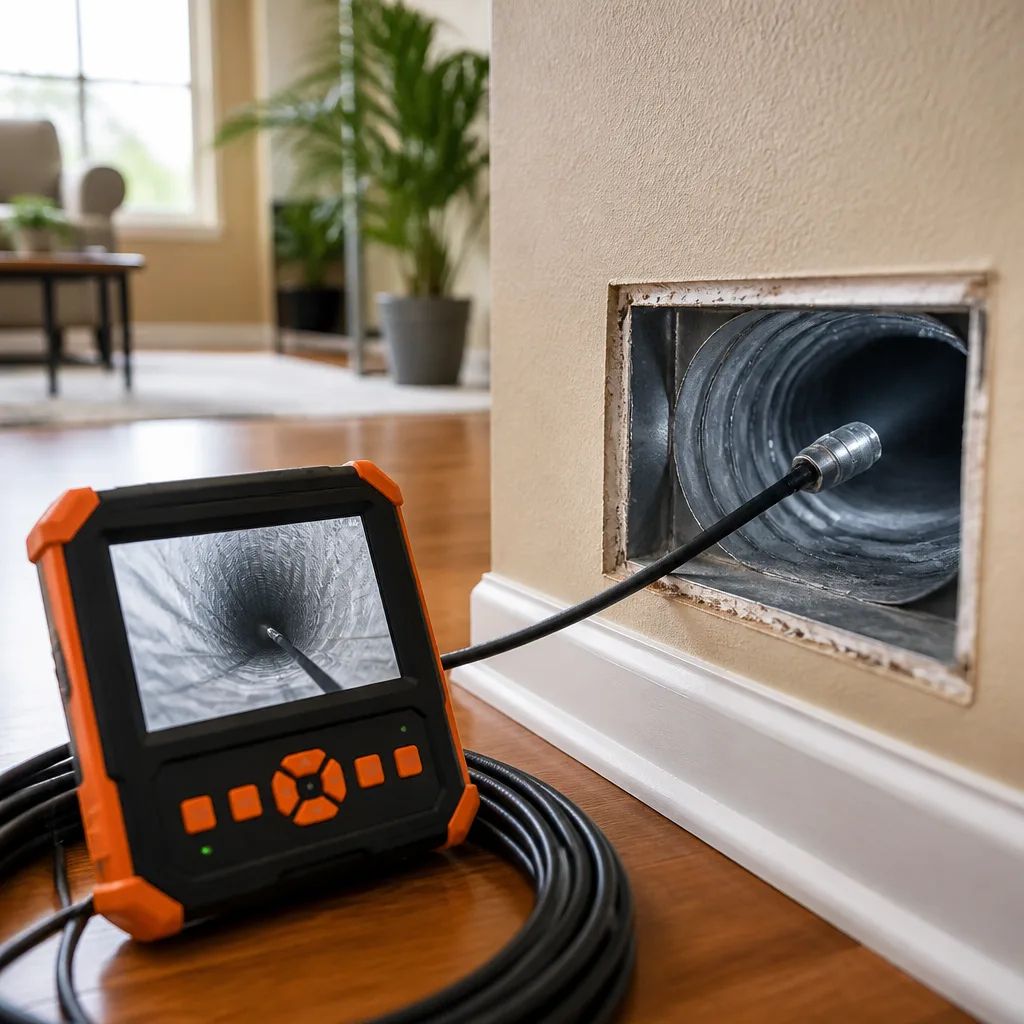
- Schedule duct inspection, not full cleaning, if you detect musty odor at first AC startup. A camera scope determines whether growth is localized (cleanable) or systemic (requires full remediation with antimicrobial treatment).
The cost of late-spring inspection in Rockville typically runs $149-$219 for camera scoping of all runs, with written findings delivered same day. Full cleaning with antimicrobial application, when warranted, ranges $450-$750 per system for homes under 3,500 square feet. We publish these ranges under Haven Standard Clause 1: written price before any work starts, every time.
Summer Operation: What Happens Inside Ducts at Peak Cooling Load
July and August in Rockville push HVAC systems to continuous operation. The supply ducts carry 55°F air through attic and wall chases that may reach 140°F surface temperature. This temperature differential creates constant expansion and contraction at joints and seams. Where ducts were poorly sealed during original construction - common in Rockville’s 1960s-1980s housing stock - conditioned air leaks into wall cavities, and unconditioned attic air pulls into the return side.
The documented result: your system runs longer to achieve thermostat setpoint, and the return duct operates under negative pressure that draws in attic dust, insulation fragments, and in some older homes, rodent debris. We have found fiberglass insulation particles packed three inches deep in return plenums during August inspections in the Fallsmead and Potomac Woods areas.
Summer is also when homeowners notice the symptoms that drive service calls: uneven cooling between rooms, dust accumulation on registers within days of cleaning, or a persistent “wet sock” odor from microbial growth on the coil. These symptoms have specific causes that documentation identifies:
- Uneven cooling: Often indicates disconnected flex duct in attic runs, visible on camera as a complete separation or a sag creating a low point where condensation pools.
- Rapid register dusting: Signals return-side leakage pulling unfiltered air from wall cavities or attic space. The filter loads unevenly, with clean streaks where air bypasses it.
- Wet sock odor: Typically microbial growth on the evaporator coil or in the drain pan, not in the ductwork itself. A scope confirms location before any cleaning is specified.
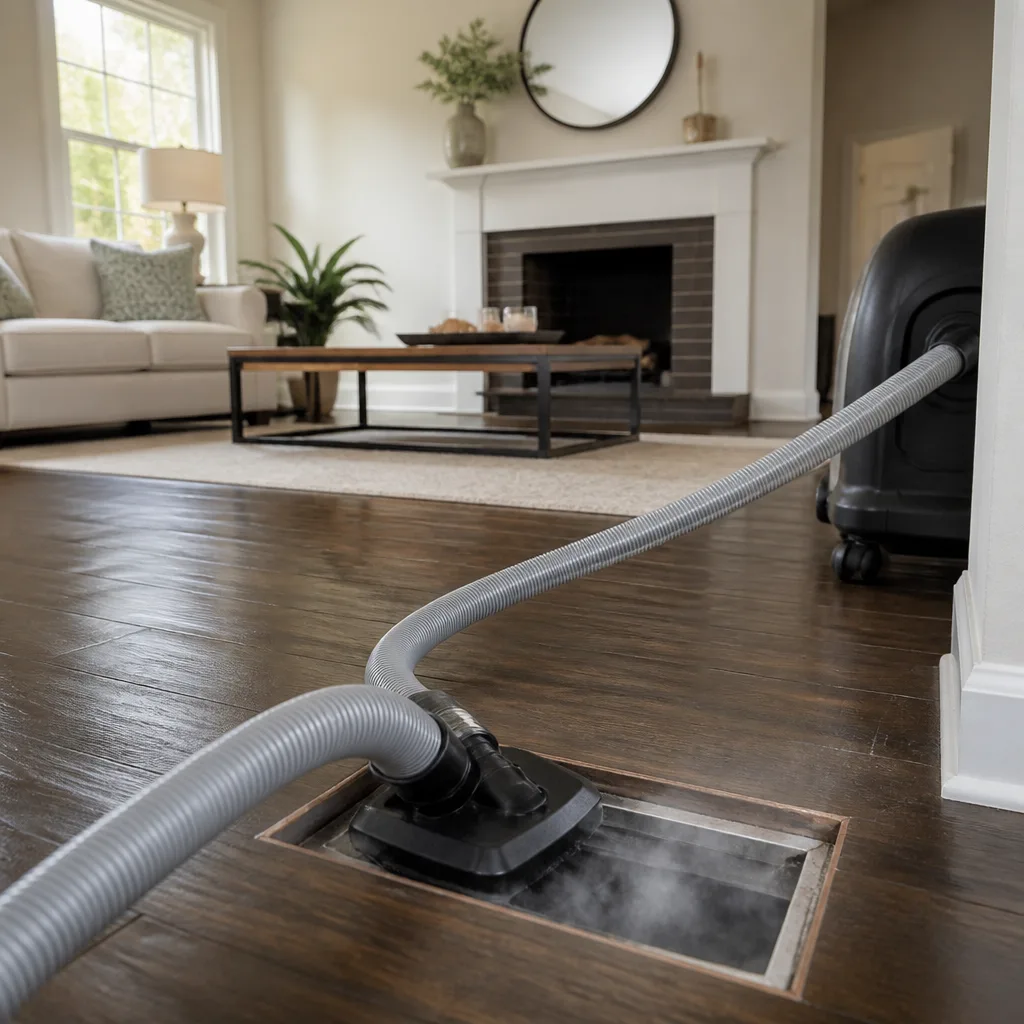
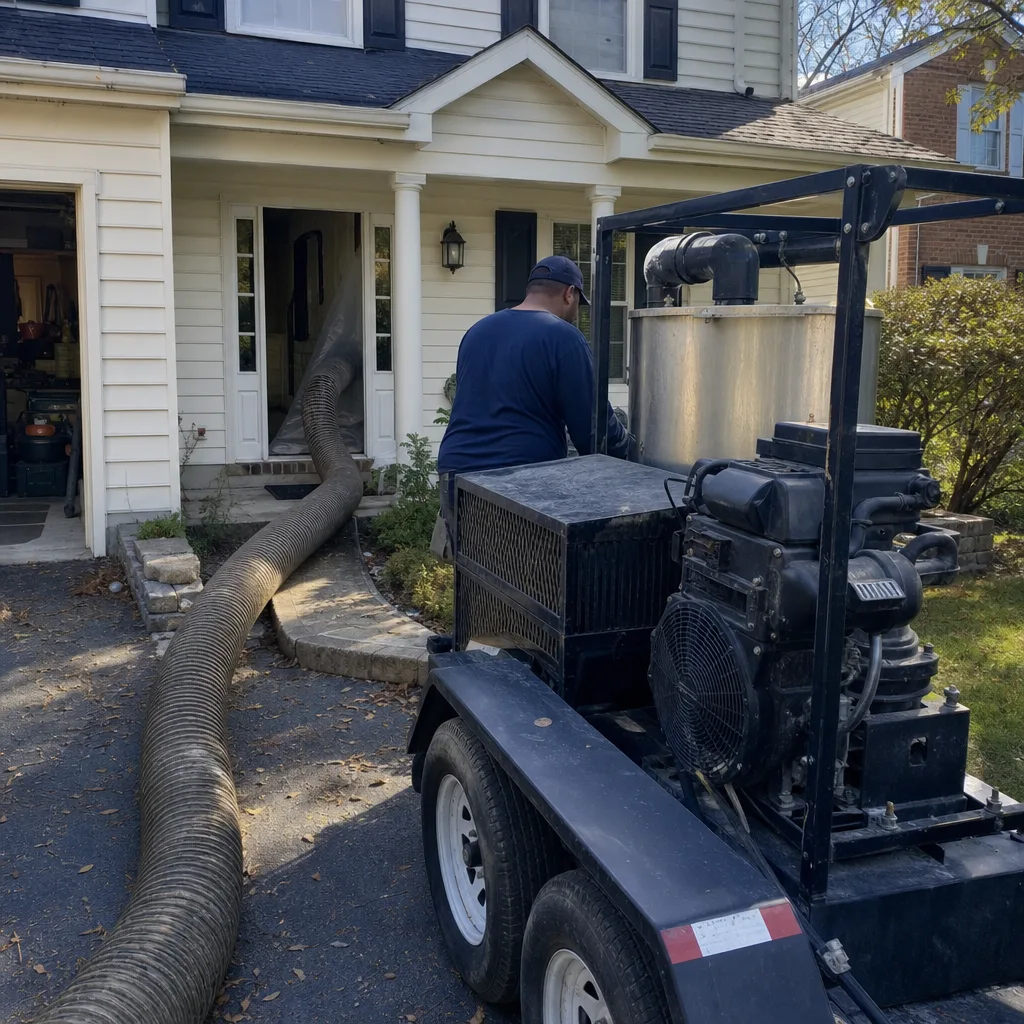
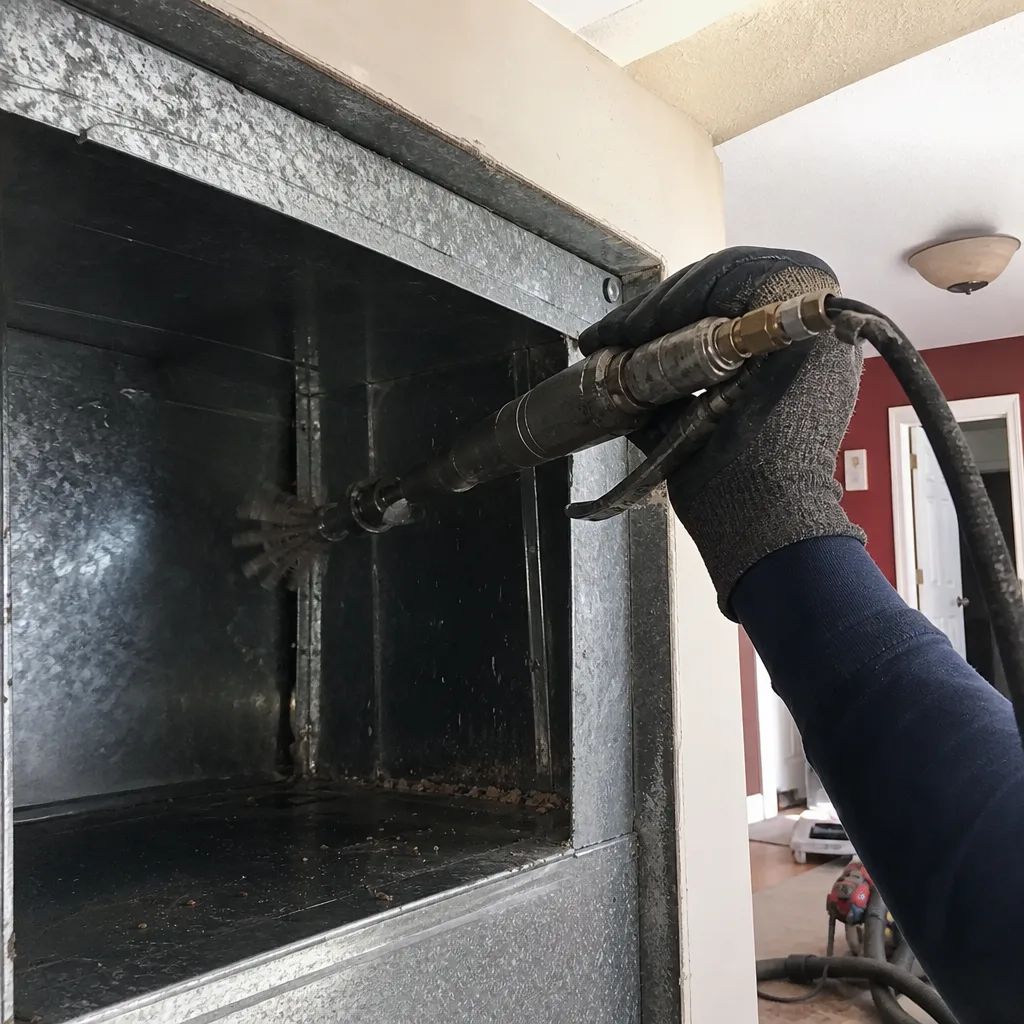
Our crews use Rotobrush and Nikro negative-pressure extraction equipment during our Air Duct Cleaning services, with before-and-after photography of every run. The negative-pressure system - a large vacuum mounted at the air handler that pulls 4,000+ CFM through the duct network - ensures dislodged debris exits the system rather than resettling. We deliver the photo record as a standard job deliverable, not an add-on. You see what was there and what remains.
One practical note for Rockville’s summer peak: energy bills that spike 30% or more above the same month prior year often trace to duct leakage rather than equipment failure. A $189-$289 duct leakage test with thermal imaging identifies the location and severity before you spend $4,000 on a compressor replacement you may not need.
Fall Protocol: Pre-Heating Documentation Before First Ignition
Rockville’s heating season typically begins with the first sustained cold snap in mid-October. The transition from cooling to heating is the highest-risk period for combustion safety and the most overlooked opportunity for preventive documentation. Every gas furnace inspection should include three specific points of evidence before the first ignition cycle.
First: the heat exchanger. This metal chamber separates combustion gases from the air your family breathes. Cracks or separations allow carbon monoxide into the supply ducts. Visual inspection through the burner compartment identifies obvious failures; combustion analysis with a digital analyzer measures CO levels in the flue gas, with elevated readings indicating incomplete combustion or exchanger breach. We document both methods on every fall inspection. Haven Standard Clause 4: Documented Safety Verification requires it.
Second: the furnace plenum and supply trunk. Summer cooling leaves moisture residue on these surfaces. First heating cycle flash-dries that moisture and releases any microbial growth into the airflow. A scope inspection in September identifies whether summer conditions created contamination requiring cleaning before heating distribution begins.
Third: the return air path from filter to blower. Fall in Rockville brings leaf debris, mold spores from decaying vegetation, and the first heating-driven air circulation that has not operated in six months. Filters loaded with summer debris restrict airflow, strain the blower motor, and can collapse into the return duct, bypassing filtration entirely.
Our fall protocol for Rockville homes includes:
- Combustion analysis with digital CO reading, documented in writing.
- Camera scope of heat exchanger surfaces visible from burner compartment.
- Photography of filter condition, blower wheel, and evaporator coil (if accessible).
- Written scope of any duct cleaning or sealing needed before heating season, with price, before any work proceeds.
Fall duct cleaning in Rockville, when indicated by inspection, typically ranges $400-$700 per system. The investment is measurable: a clean heat exchanger and sealed duct system operates 15-25% more efficiently than a contaminated, leaky one, per Department of Energy modeling for Mid-Atlantic climate zones.
Post-Winter Pollen Accumulation: Rockville’s Unique Spring Burden
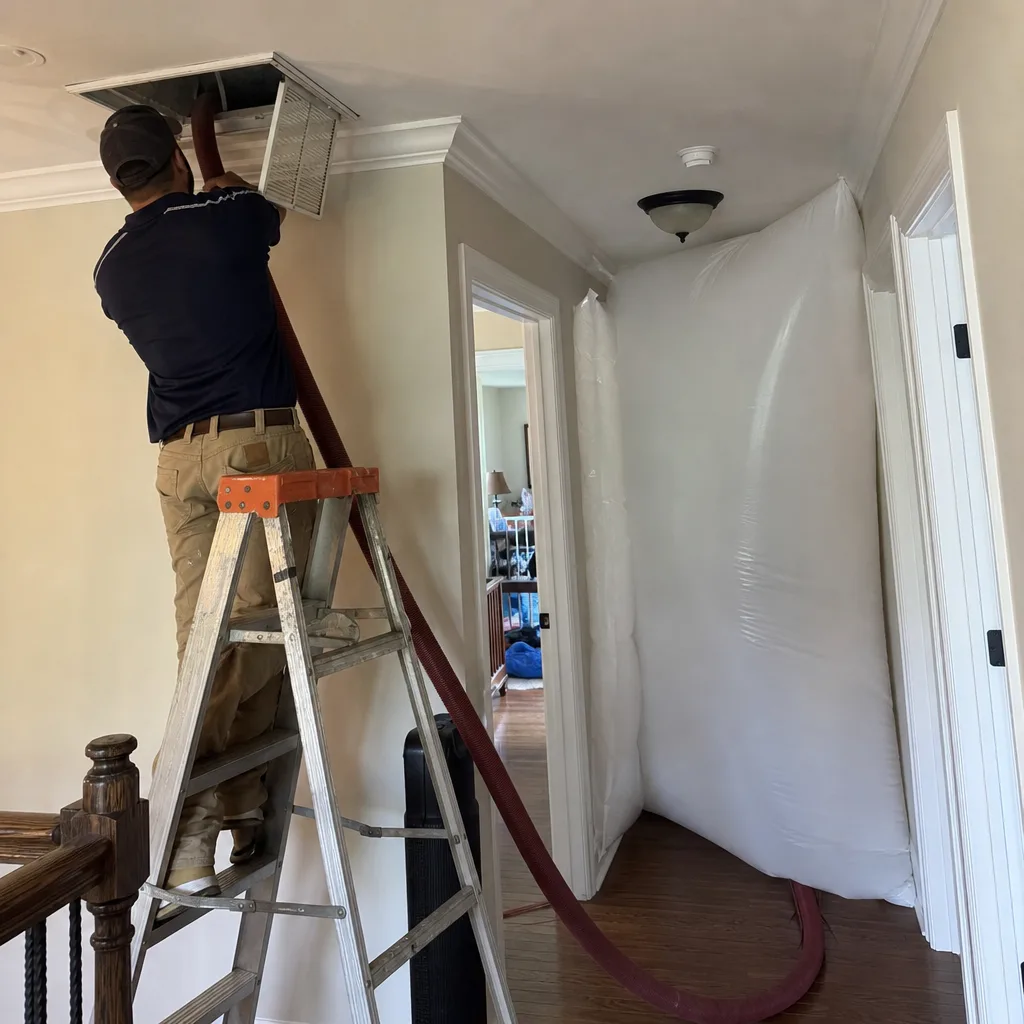
Rockville sits in the Piedmont transition zone where urban tree canopy meets agricultural pollen sources to the north and west. Our spring pollen season runs February through May, with distinct waves: elm and cedar in late February, oak and birch peaking in April, grass pollens extending into June. This is not a single event but a cumulative loading that affects duct systems differently than summer dust or fall leaf debris.
Pollen particles range 10-100 microns, with the most allergenic fractions below 20 microns. Standard fiberglass filters rated MERV 8 capture roughly 70% of these particles on first pass. The remainder enters the return duct, where electrostatic attraction causes it to adhere to duct walls - especially at elbows, transitions, and where flex duct has internal ridges that create turbulence zones.
What we find in Rockville’s post-winter inspections, particularly in homes near Rock Creek Park and the wooded sections of Derwood and North Potomac, is a fine yellow-green film coating return duct interiors. This is not generic dust. It is pollen residue that standard vacuuming does not fully remove because the electrostatic bond exceeds the suction force of household or light commercial equipment.
The practical implication: spring filter changes are necessary but not sufficient. A homeowner who changes filters monthly from March through May still sees pollen loading in returns. The question is whether that loading requires professional removal or can be managed through the season.
Our documentation standard applies here. We photograph the return trunk and first branch lines during March inspections. If the coating is superficial - less than 1/16 inch and non-adherent - we recommend continued filter upgrades (MERV 11-13 during peak pollen) and inspection the following year. If the coating is adherent, exceeds 1/8 inch, or shows mold colonization where pollen provides organic substrate, we specify negative-pressure extraction with agitation using Rotobrush contact cleaning. The brush head spins at 450 RPM, physically breaking the electrostatic bond so vacuum extraction removes the material.
Post-winter cleaning in Rockville, when indicated, ranges $450-$750 per system. We do not specify it unless camera evidence supports the need. Haven Standard Clause 1 again: written price based on documented condition, not calendar scheduling.
Visual and Odor Indicators by Season: What Warrants Action vs. Monitoring
Homeowners often ask us to interpret symptoms. We have developed a seasonal framework based on 52,000+ documented inspections, with more guides & resources published monthly for Rockville homeowners. Not every indicator requires immediate service. Some warrant monitoring with a photo archive. Others demand prompt intervention.
Late Spring (May-June)
Musty odor at first AC startup: Action. Indicates moisture-driven microbial growth. Scope to determine extent.
Water staining on ceiling below duct runs: Action. Condensate leak or duct sweating. Risk of ceiling damage and mold amplification.
Light dust on registers after winter heating: Monitor. Normal seasonal accumulation. Photograph and compare in 30 days.
Summer (July-August)
Uneven cooling between rooms: Action. Indicates duct disconnection, blockage, or design imbalance. Thermal imaging and pressure testing identify cause.
Black debris around register edges: Action. Soot from candle burning or duct leakage pulling attic air. Camera scope determines source.
Register condensation (sweating): Monitor if occasional; action if persistent. Indicates supply air temperature too low or humidity too high. May require dehumidification or duct insulation upgrade.
Fall (September-October)
Burning dust odor at first heat cycle: Monitor if dissipates in 30 minutes. Normal for dust on heat exchanger. Action if persists - indicates excessive accumulation or possible filter bypass.
Visible rust on register screws or surrounding ceiling: Action. Chronic moisture issue. Inspect for duct leakage or insulation failure.
Filter collapse into return grille: Action. Indicates excessive pressure drop from overloaded filter or undersized return. Upgrade filter media or increase return area.
Winter (January-February)
Static electricity shocks: Monitor. Normal for dry winter air. Action if accompanied by visible sparking at registers - indicates potential electrical issue in duct-mounted components.
Dust streaks on walls near registers: Action. “Ghosting” from particulate deposition indicates excessive airborne dust, often from return leakage or inadequate filtration.
Whistling or roaring at registers: Action. Indicates high velocity from undersized ducts or blocked returns. Pressure testing identifies restriction.
The key discipline: photograph every indicator before deciding. A photo archive transforms subjective worry into objective comparison. We have had Rockville homeowners bring us three years of register photos that clearly showed progressive staining - evidence that supported immediate cleaning where a single snapshot might have seemed ambiguous.
Building a Four-Season Documentation Habit
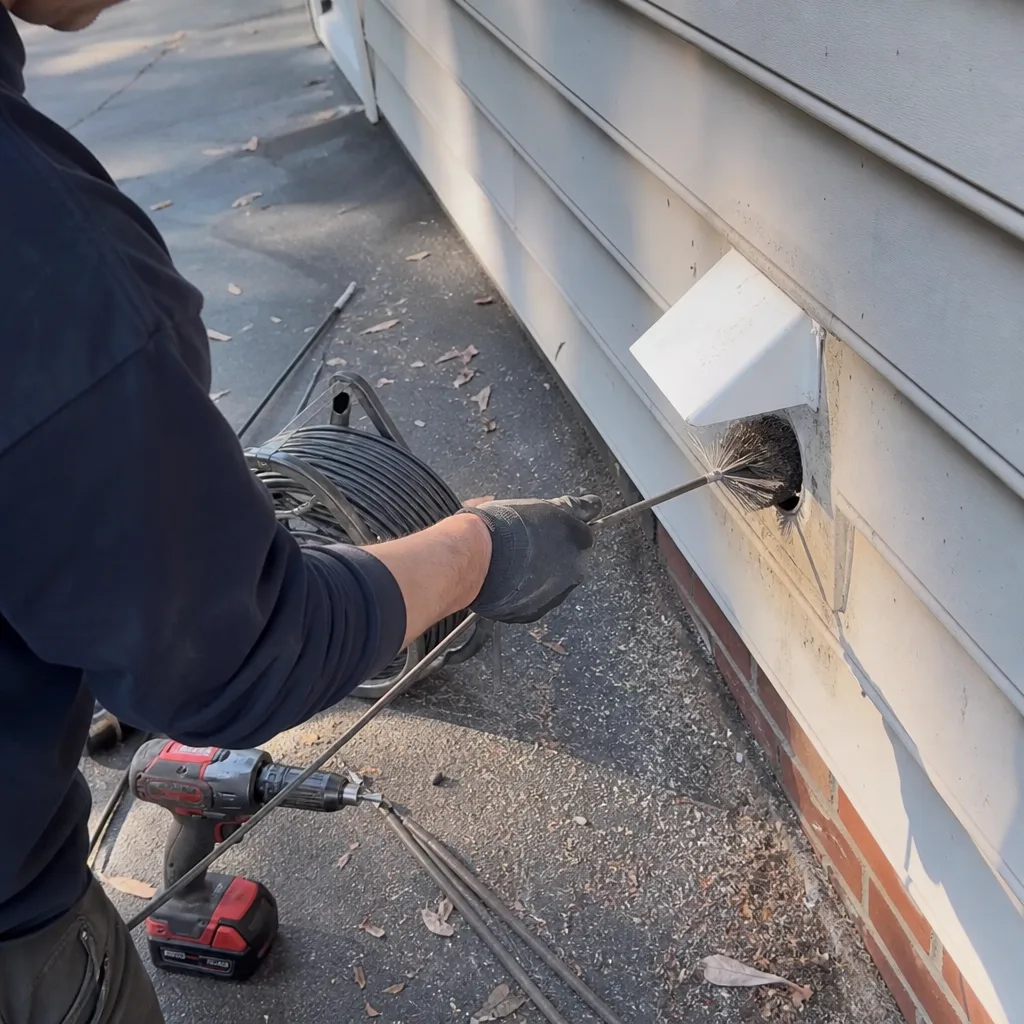
The most effective tool for seasonal duct care is already in your pocket. A smartphone camera, used consistently, creates a baseline that any contractor - including CleanRun Air Duct Cleaning Rockville home - can interpret against. The habit takes ten minutes per season and requires no special equipment.
What to Photograph
- Return air filter: Date-stamped, same angle, same lighting, before replacement. Shows seasonal loading rate.
- Supply register interiors: Remove register, photograph duct opening with flash. Shows debris accumulation at terminal points.
- Return grille and duct opening: Same method. Returns show loading earlier than supplies.
- Condensate drain pan: During AC season, photograph before and after pouring a cup of water through to verify drainage.
- Any visible ductwork in basement, attic, or crawl space: Annual documentation of insulation condition, support integrity, and connection security.
When to Photograph
- March 1: Post-winter filter and register baseline. Captures pollen loading from late winter.
- June 1: Pre-summer filter change, first AC startup odor check, condensate pan inspection.
- September 15: Pre-heating documentation. Filter, registers, and any visible furnace components.
- December 1: Mid-winter check. Filter loading rate, register condition, any new stains or debris patterns.
How to Store and Use
Create a single album or folder per calendar year. Name files with date and location: “2024-03-01_MasterBedroom_Register.jpg”. When you hire any contractor, share the album. A technician with baseline photos scopes more efficiently, quotes more accurately, and cannot claim conditions that your archive contradicts.
We have used customer photo archives to identify that a “sudden” mold problem in a Rockville colonial actually developed over 18 months of documented register staining. The customer saved $1,200 by avoiding unnecessary full-system replacement that another company recommended based on a single alarming snapshot.
For homeowners who want professional documentation without full service, we offer seasonal inspection visits at $149-$219. The deliverable: camera scope of all runs, written findings, and digital photo record delivered within 24 hours. No cleaning is performed unless you approve a written scope and price. This is Air Duct Cleaning in Rockville practiced as documentation-first service.
Common Mistakes to Avoid
- Scheduling by calendar, not condition. The September cleaning your neighbor recommends may miss your system’s actual risk window. Inspect first, schedule based on evidence.
- Accepting per-vent pricing. This model incentivizes superficial work. Rockville homes have 12-22 vents; per-vent quotes often exclude the plenum, trunk lines, and blower compartment where the real loading occurs. Insist on whole-system pricing with line-item scope.
- Ignoring the return side. Supply ducts deliver conditioned air; returns pull air back to the handler. Returns load faster and first. Any scope that does not include return trunk and branch lines is incomplete.
- Using ozone or chemical foggers as primary treatment. Montgomery County’s indoor air quality guidelines discourage uncontrolled chemical application in occupied spaces. Physical removal via negative-pressure extraction is the documented standard. Chemical treatment, when used, follows mechanical cleaning and is applied with controlled dwell time.
- Replacing equipment without duct inspection. A new furnace or AC connected to leaky, contaminated ducts performs below its efficiency rating and fails prematurely. Inspect ducts before major equipment investment.
- Trusting visible register cleaning as “duct cleaning.” Vacuuming registers and the first foot of duct is cosmetic. True cleaning reaches the trunk lines and plenum. Ask to see the camera footage from the full run length.
- Skipping post-service documentation. Without after photos, you have no verification that work was performed to specification. Every professional cleaning should include photographic evidence of every run cleaned.
When to Call a Professional
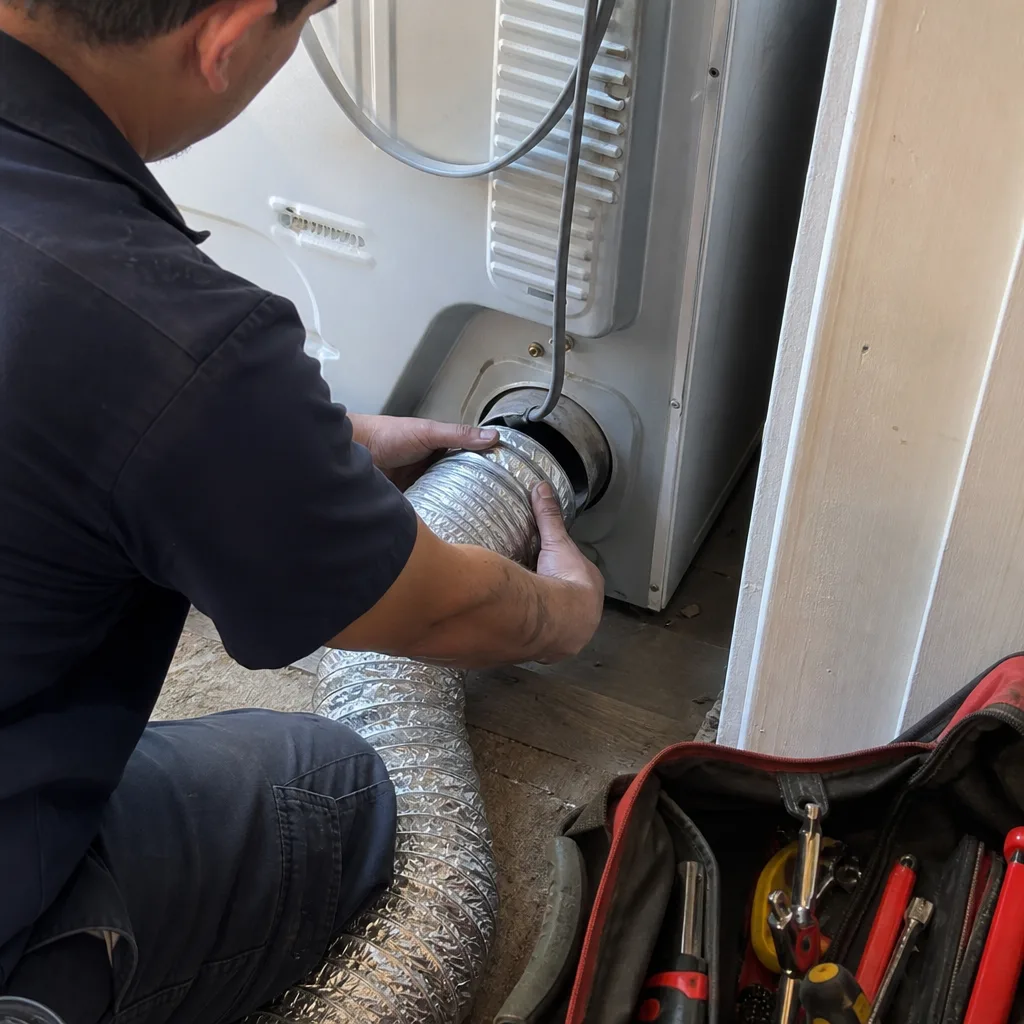
Call for documented inspection when you observe persistent musty odor, visible mold growth on registers or in visible ductwork, water staining near duct runs, or heating/cooling performance degradation that filter changes do not resolve. In Rockville’s climate, these symptoms have specific seasonal patterns that professional camera scoping identifies correctly.
CleanRun Air Duct Cleaning Rockville offers free estimates in Rockville - call (240) 255-4519. Every estimate includes written pricing before any work begins, under Haven Standard Clause 1. Our crews use Rotobrush, Nikro, and Abatement Technologies equipment, with background-checked, uniformed technicians identified by name before arrival. The 365-Day Done Right Promise applies to every job, backed in writing, not as a policy subject to manager approval.
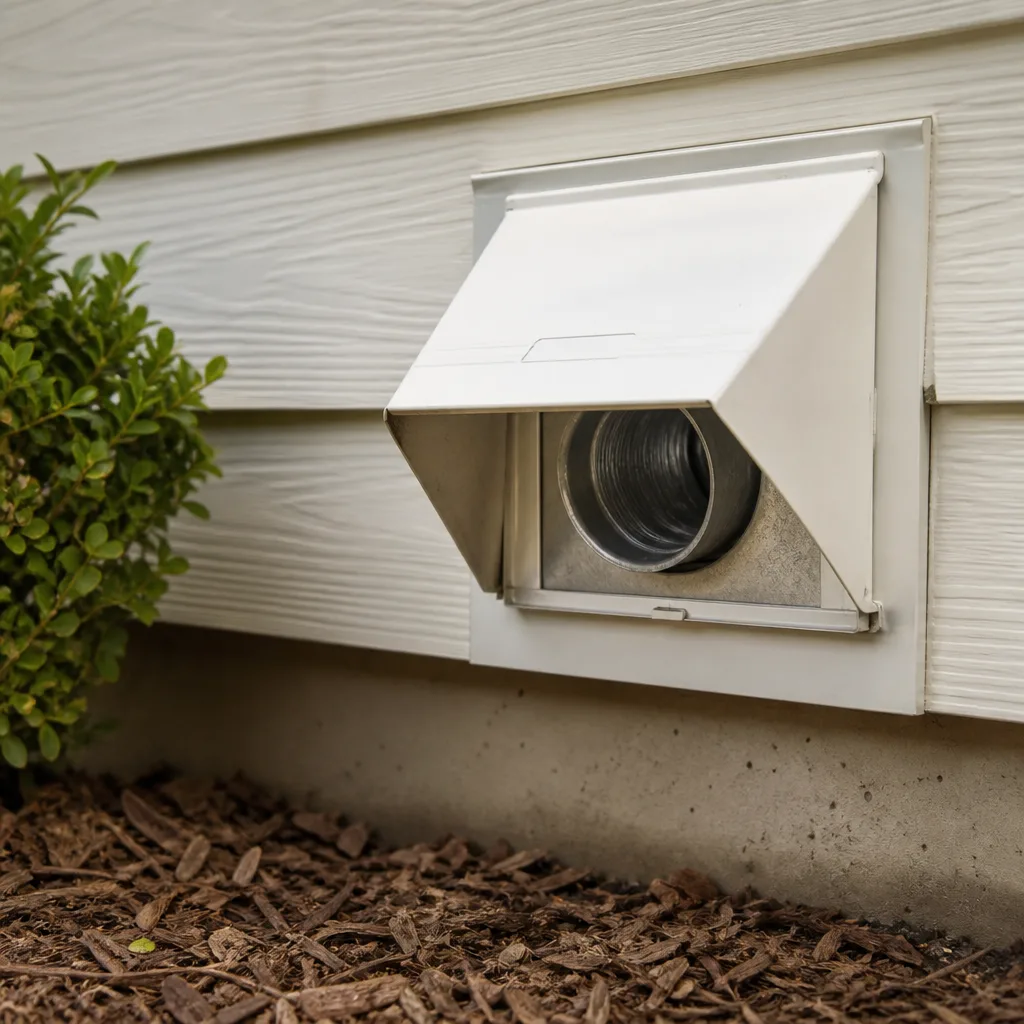
We also provide Dryer Vent Cleaning in Rockville and HVAC Cleaning in Rockville as integrated services, with the same documentation standard: photo record, written price, written guarantee.
Frequently Asked Questions
Whole-system air duct cleaning in Rockville typically ranges $400-$750 for homes under 3,500 square feet, depending on system configuration, accessibility, and contamination level. This includes negative-pressure extraction of all supply and return runs, plenum cleaning, and blower compartment service, with before-and-after photography of every run included as standard. We deliver a written price before any work starts - no exceptions, per Haven Standard Clause 1. Call (240) 255-4519 for an exact quote; estimates are free.
Low quotes typically use per-vent pricing that excludes trunk lines and plenums, or deploy portable shop vacuums without negative-pressure containment. The result is surface cleaning of register areas while debris remains in the system. We have re-cleaned Rockville homes where a $199 service left the trunk lines untouched. Our pricing reflects whole-system scope, professional-grade equipment from Rotobrush and Nikro, and documented photo verification. The cheaper quote often costs more when rework is required.
You receive a Documented Photo Record of every duct run, before and after, as a standard deliverable on every CleanRun job. This practice has been in place since our first job in 2013. The photos show the interior condition at each access point, with timestamps. If a contractor cannot or will not provide this documentation, the work is not verifiable.
Frequency depends on conditions, not calendar years. Homes with pets, recent renovation, or located near Rockville’s high-pollen zones may need inspection every 18-24 months. Homes with excellent filtration, tight duct systems, and low occupancy may extend to 3-4 years. The correct interval is determined by camera inspection, not habit. Our March and September inspection visits establish whether cleaning is indicated or can be deferred.
Rockville’s combination of mature tree canopy, clay-heavy soils that retain moisture, and urban heat island effects creates longer humidity persistence than Frederick or Hagerstown to the west. Basements in 20850 and 20852 ZIP codes stay cooler longer into late spring, extending the condensation risk window. Our inspection data shows 40% higher incidence of moisture-related microbial growth in Rockville basements compared to our Montgomery County average.
Register and grille cleaning, filter changes, and condensate pan flushing are appropriate homeowner maintenance. Internal duct cleaning requires negative-pressure containment equipment, rotary agitation tools, and camera verification that the work reached the full run length. Without these tools, DIY efforts redistribute debris rather than remove it. We do not recommend inserting household vacuums or brushes into duct interiors - damage to flex duct, disconnection of joints, and personal injury from sharp metal edges are documented risks.
The Bottom Line
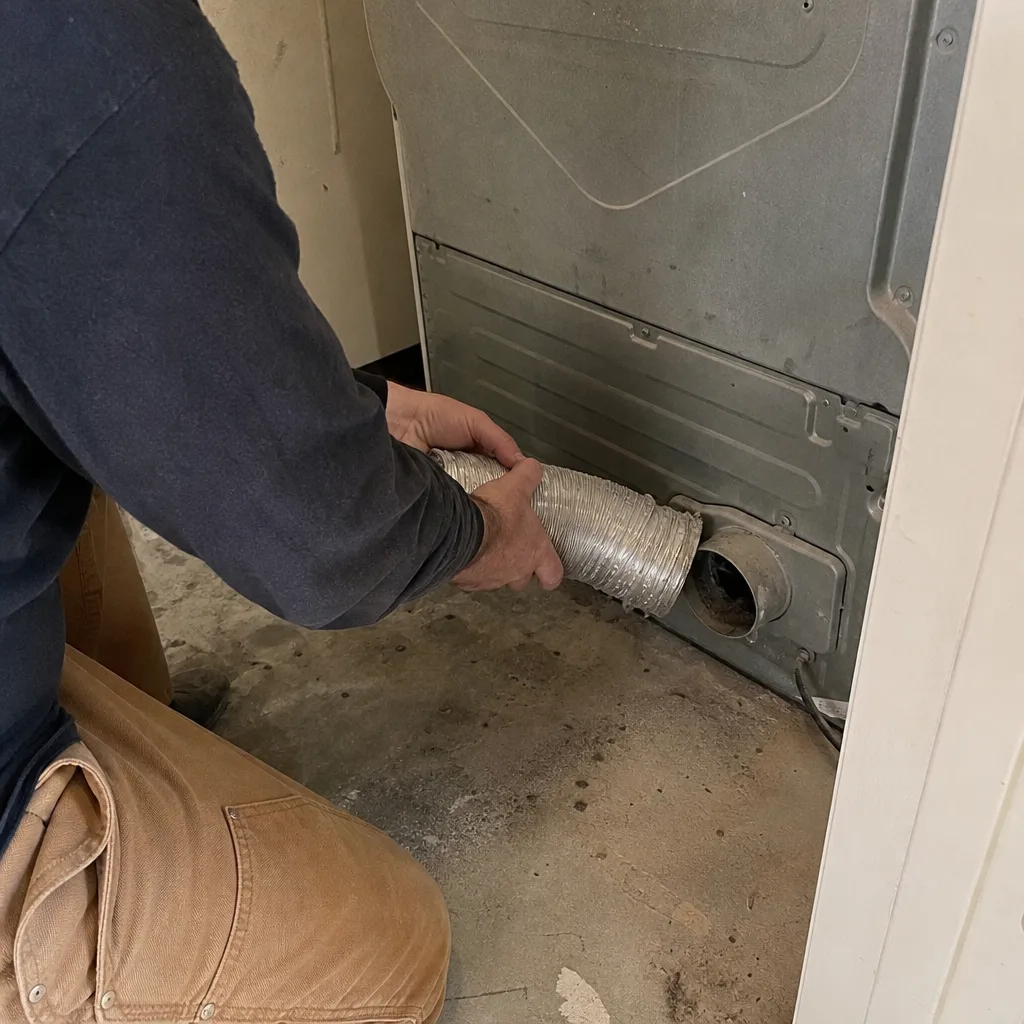
Rockville’s four-season climate creates distinct, predictable risk periods for duct systems: late-spring humidity driving microbial growth, summer peak load exposing leakage and coil contamination, fall transition demanding combustion safety verification, and spring pollen loading returns with electrostatic debris that standard filters do not fully capture. A single annual cleaning scheduled by habit misses at least two of these windows. The discipline that prevents damage is documentation - seasonal photography, written inspection findings, and evidence-based scheduling of intervention. The homeowners who fare best are not those who clean most often, but those who act on documented condition rather than calendar assumption.
Written by Tomas Reyes, Owner at CleanRun Air Duct Cleaning Rockville, serving Rockville since 2013.